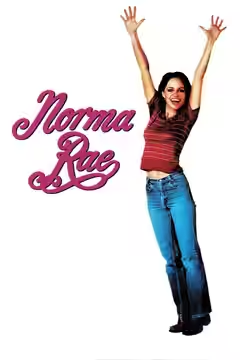
Martin Ritt’s story of a Southern mill hand who takes up with a union organiser is plain, loud and simple-minded about its bosses, and it hardly matters. Sally Field plays her without vanity, and John A. Alonzo puts you on the factory floor.
Norma Rae (Sally Field) runs a loom in a textile mill in a small Southern town, as her father Vernon (Pat Hingle) and her mother Leona (Barbara Baxley) do. Early on, Leona loses her hearing at her machine for an afternoon and the mill doctor says it happens. Reuben (Ron Leibman), a union organiser from New York, arrives with a box of leaflets, and nobody in town wants to be seen with him. Martin Ritt’s film, written by Harriet Frank Jr. and Irving Ravetch, is about what happens when the one woman on the floor who cannot keep her mouth shut talks to him.
It is a strong film with one plain weakness. Ritt has no interest in whether the company has a case. The men in the front office wear short sleeves and neckties, say “outside agitator” and mean it, and nobody with a name in the film thinks the mill is anything but loud, dangerous and badly paid. What is not settled is what it costs to say so in a town with one employer, and that is the film Ritt actually made.
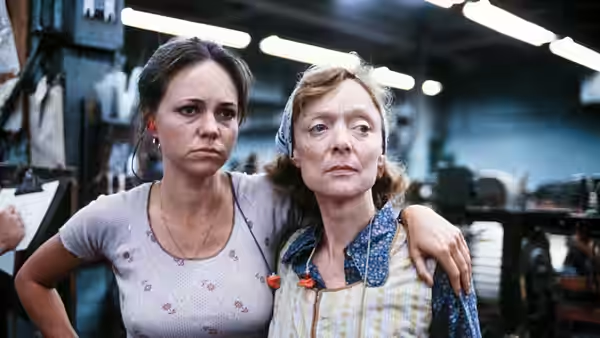
Field, until then best known from television comedy, plays a woman it takes a while to like. She is a widow with children by two men, answers back to everyone, and sleeps with a married man because it is something to do on a Saturday. The film does not soften any of this and Field does not ask for credit for it. Watch her when management makes her a spot-checker and sets her walking the floor with a clipboard, timing her friends: she works out the promotion is a bribe a day after everyone else has, and her face does the working out.
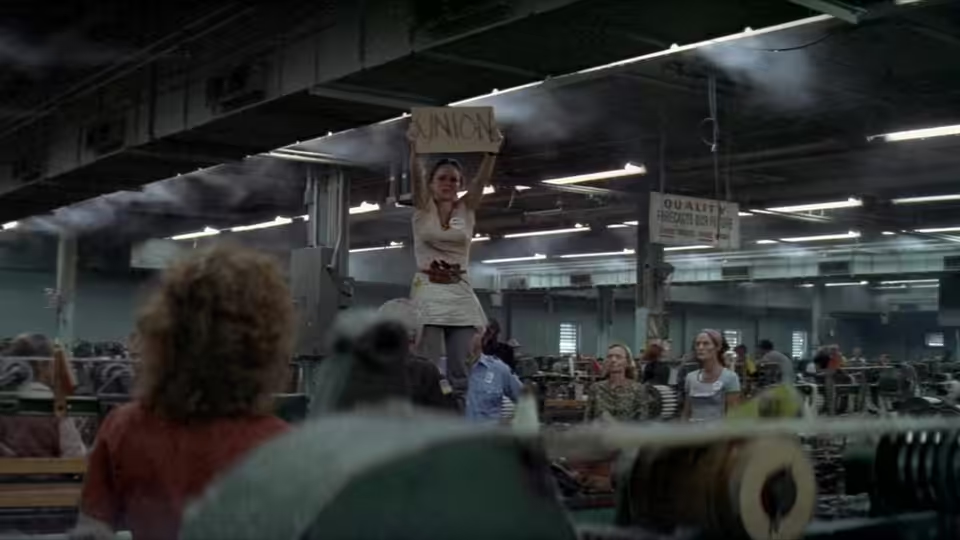
The scene with her mother is where the film had us. Baxley sits at her machine while Norma Rae shouts at her, and looks up smiling, because she can see her daughter’s mouth moving and has no idea anything is wrong. We were frightened by it, more than by anything the company does afterwards, because nobody in that room switches off a machine. John A. Alonzo shoots the floor in flat overhead light with lint hanging in it, every surface furred white, and the hard Southern daylight outside is no relief. On the floor the soundtrack is the looms, and the actors lean into each other’s ears to be heard, so when Sidney Levin cuts to a quiet kitchen it feels like coming up out of water. David Shire’s music stays out of the mill, where it could not compete. Walter Scott Herndon gives the mill hands one good chair each and Reuben a rented room full of paper.
Ron Leibman plays Reuben as a fast-talking city man who knows he is a joke to these people and has decided to be a useful one. Beau Bridges plays Sonny, a divorced father who proposes almost at once and means it, then spends the rest of the film finding out what he agreed to. One argument with her in a kitchen at night says more about what organising costs the people who did not sign up for it than any speech Reuben makes. Gail Strickland, as Bonnie Mae on the next machine over, has to decide whether being seen with Norma Rae is worth it.
Ritt had been here before. He made The Molly Maguires about Pennsylvania coal miners in 1970, and Frank and Ravetch had written Hud for him in 1963. This is the warmest of the three and the least angry, and we think that is a choice. He wants us to like these people enough to mind what happens to them, and we did.
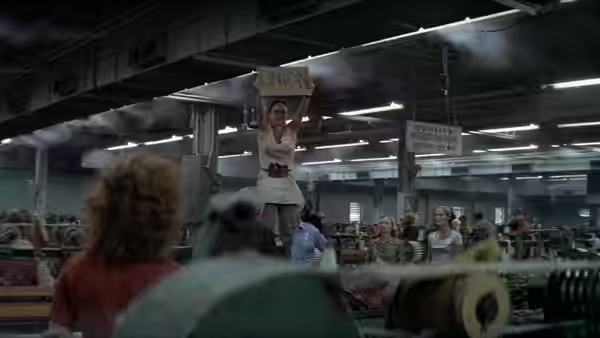
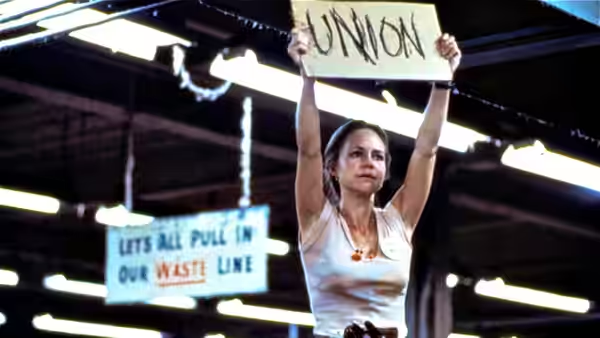
There is a scene late on, on the mill floor, which you have probably seen even if you have never seen the film. We will not describe it, except to say that Field does it without a word and that Levin holds on it exactly as long as it needs.
At 110 minutes it does not waste an evening of yours. Turn the sound up. The mill is meant to hurt, and Ritt was right not to turn it down.