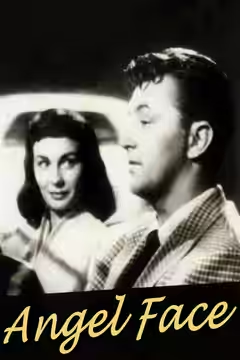
Jean Simmons makes Otto Preminger’s crime drama chilling, with Robert Mitchum an effective partner. It is worth the evening for the leads, though the writing does too little to explain Diane’s disturbed mind.
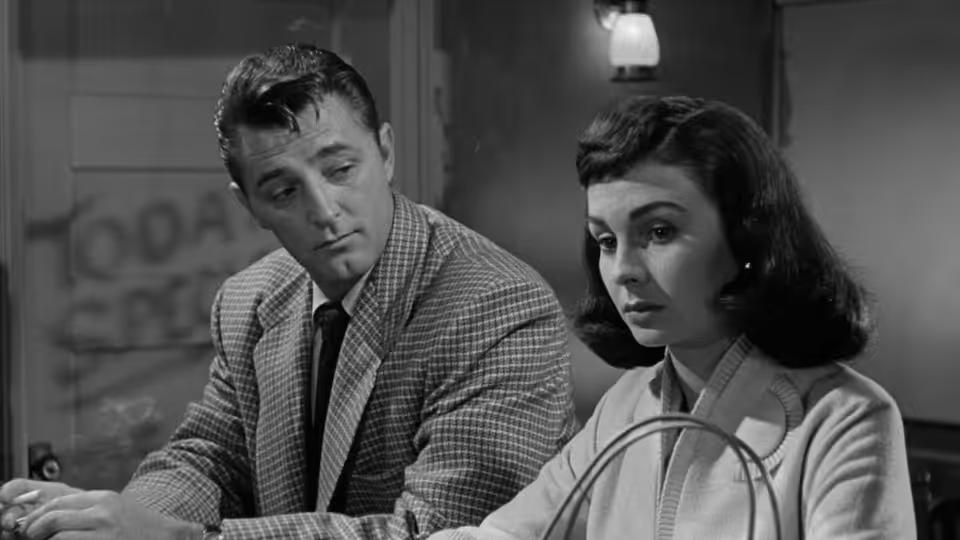
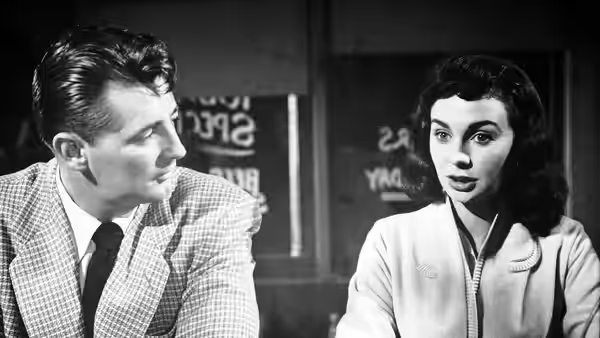
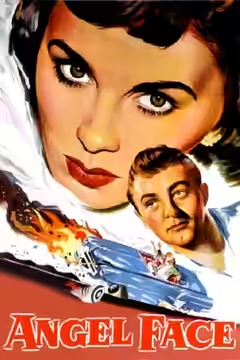
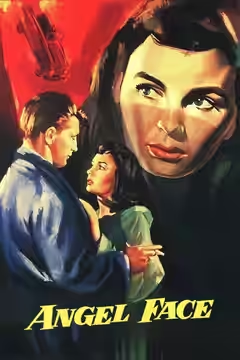
Otto Preminger’s Angel Face is a good crime drama with a troubling performance from Jean Simmons at its centre. It takes passion seriously enough to make it frightening, and Robert Mitchum gives her a partner who can hold our attention beside her. The attraction is credible, which matters here: without it, there would be little to do except wait for someone to exercise better judgement. Our reservation is that the film leaves Diane’s motives insufficiently examined.
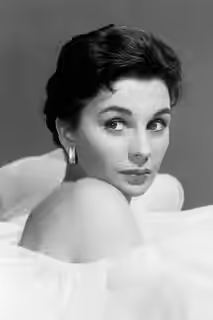
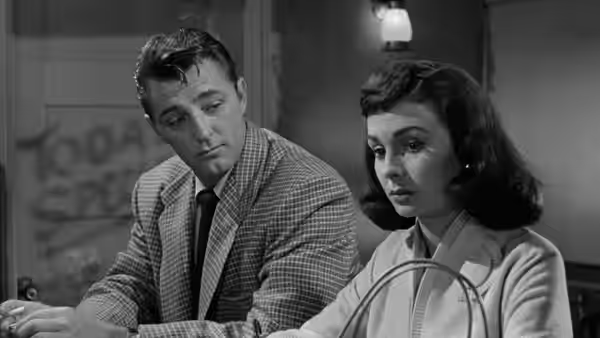
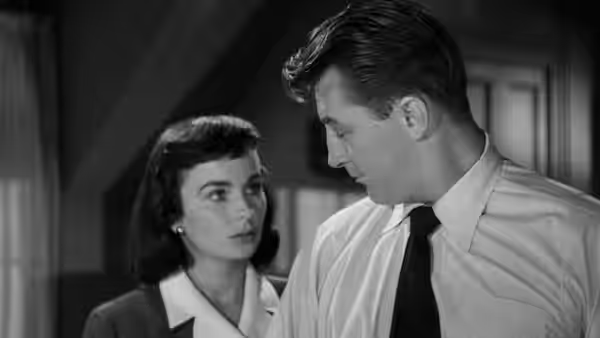
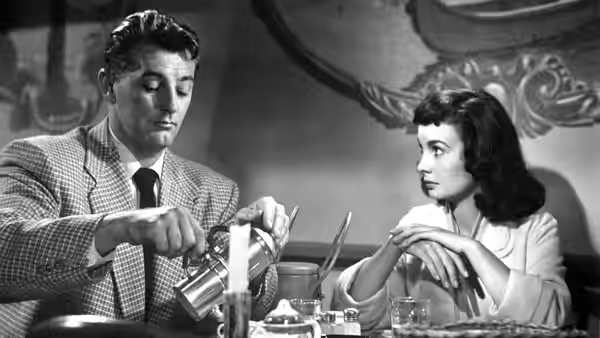
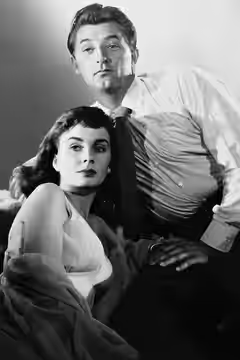
Jean Simmons plays Diane Tremayne Jessup, and the important quality is how little reassurance her beauty provides. We found her chilling. The possibility of cruelty does not cancel her appeal, and that makes watching her uncomfortable in a way a more plainly threatening performance would not. We are encouraged to notice the face, then to question the kindness we have been willing to attribute to it. She makes that mistake feel embarrassingly easy.
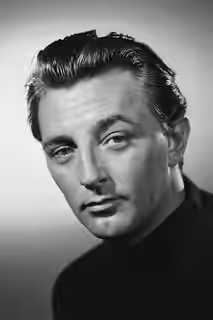
Robert Mitchum’s Frank Jessup is crucial to the effect. He remains interesting in his own right, giving us a reason to care about their involvement beyond the question of what Diane might do. The two actors make the screenplay’s demands feel playable without turning every exchange into a contest for attention. Their work together supplies much of the film’s tension, and neither performance would be as effective without the other.
Harry Stradling’s cinematography serves that discomfort well: Diane’s appearance stays attractive enough to complicate our judgement. Frederic Knudtson’s editing is effective at keeping the central performances in proportion, allowing both actors to contribute to the unease. The concentration is useful, although it also makes the surrounding characters seem less substantial. The craft is most persuasive when it keeps our attention on the leads and lets their appeal remain part of the difficulty.
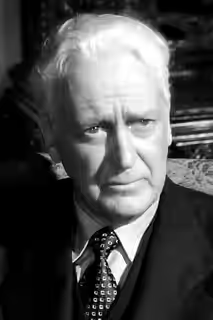
The screenplay is credited to Oscar Millard, Ben Hecht and Frank S. Nugent, and our difficulty lies in the treatment of Diane. Her disturbed behaviour is compelling, but beauty concealing psychopathy is a limited explanation of a person. Mona Freeman’s Mary Wilton and the Tremaynes played by Herbert Marshall and Barbara O’Neil give the story a wider cast, yet Diane dominates our interest. The script does not quite answer the questions its leading actress makes us ask about her.
Dimitri Tiomkin’s music is a less essential part of the film’s appeal. The performances already make passion feel threatening, and the score adds less than we would like to that effect. Within crime drama, Preminger’s emphasis on attraction is a strength: the danger matters because the attachment remains believable. The limitation is the familiar suspicion that a beautiful, unstable woman will be made to explain too much of what goes wrong.
At 91 minutes, Angel Face asks for a modest stretch of the evening. The leads justify that time, even when the writing leaves us with questions it does not seem interested in answering. Watch it for Robert Mitchum and Jean Simmons, accepting that the screenplay leaves too much of Diane unexplained.