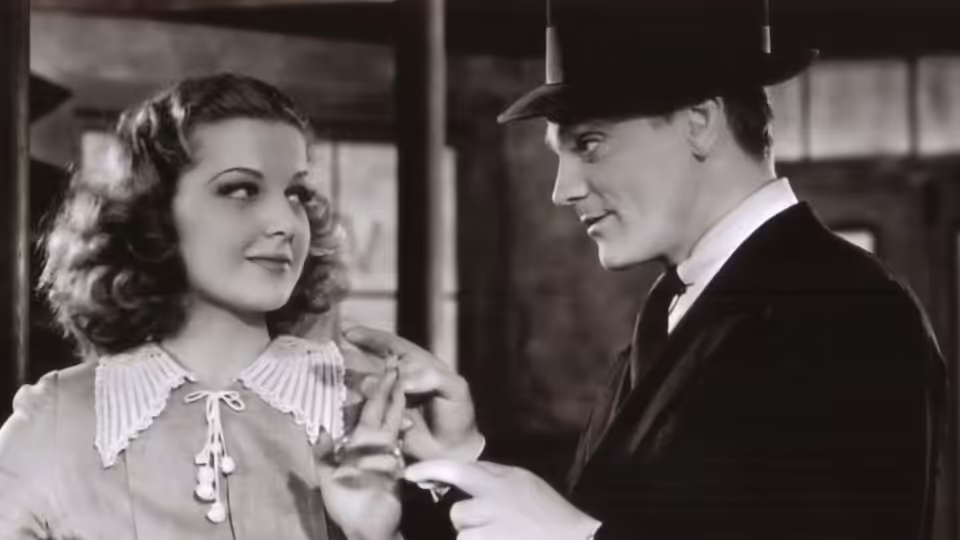
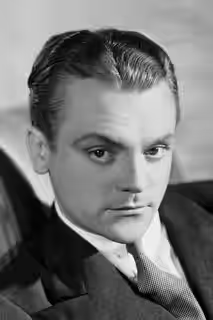
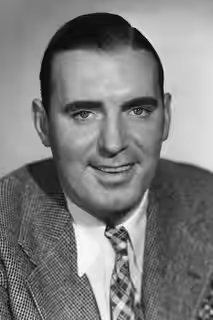
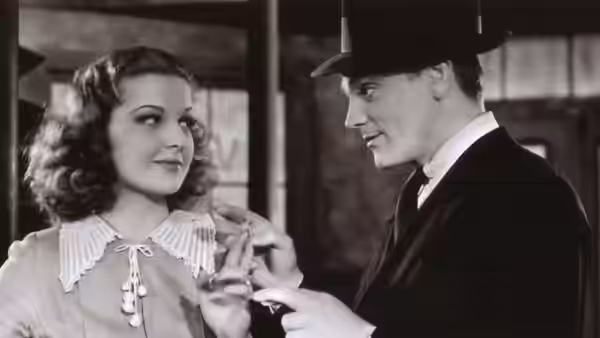
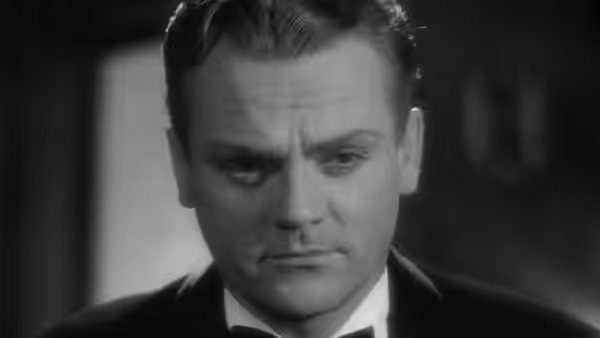
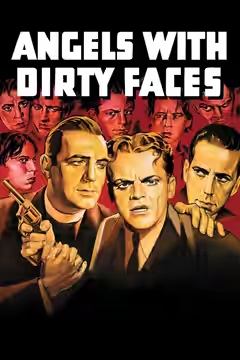
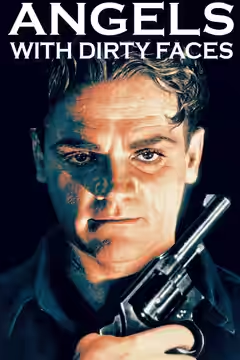
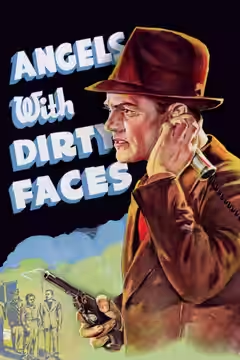
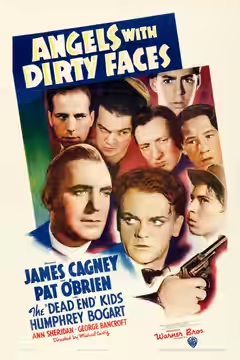
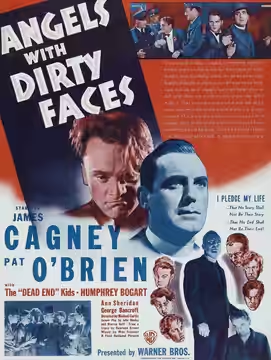
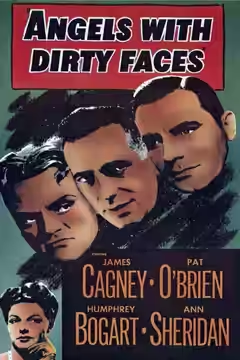
James Cagney and Pat O’Brien give Michael Curtiz’s gangster drama a warmth that makes its moral questions matter. The dialogue can creak and the melodrama presses hard, but their performances make it well worth seeing.
Angels with Dirty Faces is worth seeing for the uneasy affection between James Cagney and Pat O’Brien. Michael Curtiz gives its questions about crime and responsibility enough urgency to survive some heavy moralising. Rocky Sullivan is immediately attractive company, and the film understands how much trouble that causes. We need to understand why anyone would listen to him, and James Cagney makes that easy. The difficulty comes when the screenplay wants to make its disapproval equally clear.
James Cagney gives Rocky a confidence that makes the heavier dialogue easier to accept. There is pleasure in watching someone so certain of his effect on other people, especially when the performance allows warmth into that certainty. We caught ourselves warming to Rocky against our better judgement. The ease between James Cagney and Pat O’Brien does it: their regard for each other makes the disagreement feel personal. A less companionable leading performance would have made the film considerably simpler and considerably less interesting.
Pat O’Brien deserves as much credit for that connection as his more forceful partner. Jerry Connolly could easily become someone whose chief function is to tell us what to think. The performance gives him enough feeling to make his position seem costly, and enough firmness to keep the scenes from belonging entirely to Rocky. We believe that these men matter to each other. That belief gives the film something to work with when the writing grows insistent.
The youngsters make the question of influence harder to put aside. Their presence gives the adults’ behaviour consequences beyond an argument between two men, though the film can press this point too firmly. Warren B. Duff and John Wexley’s screenplay is least persuasive when it seems anxious that we might misunderstand the lesson. Some of the dialogue has the stiff emphasis of words intended to be remembered. The actors are more convincing when they can make a response feel immediate.
Sol Polito’s cinematography gives the performances a welcome force, keeping our attention on the people carrying this dispute. The visual emphasis feels right for a film whose success depends so heavily on our response to its leading actors. Owen Marks’s editing supplies a briskness that helps the crime drama withstand the weight of the moral discussion; the 97-minute running time feels sufficient. Max Steiner’s music is less restrained, and its insistence sometimes makes the melodrama harder to accept. We would have trusted the actors with more of that emotional work.
As a gangster film, it takes the attraction of criminal confidence seriously enough to make condemnation uncomfortable. That is a worthwhile difficulty, and Curtiz handles it most persuasively through the central relationship. The social commentary becomes less convincing whenever the people begin to sound like examples in a lesson. Even then, the energy of the performances keeps the film from becoming merely dutiful. Its warmth survives the preaching.
There is a particular pleasure here for anyone who enjoys actors holding their own against emphatic material. James Cagney has the greater immediate appeal, but Pat O’Brien makes the partnership worth our time. Watch it for both of them, with a little patience for the moments when the dialogue starts handing down judgement.