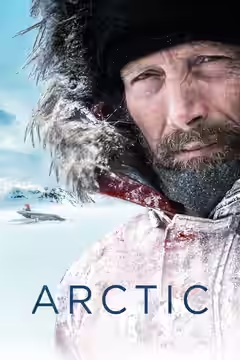
Mads Mikkelsen makes Arctic a gripping, quietly humane survival drama. Joe Penna’s patience sometimes becomes repetition, and the score presses too hard, but the practical detail makes the struggle worth following.
Arctic is a gripping survival film with a performance strong enough to carry its slower stretches. Joe Penna keeps the story close to the practical business of staying alive, with little dialogue to interrupt it. That suits a lead who can hold our attention without asking for sympathy. The film needs patience, though not quite as much as it sometimes demands. Its strongest passages give us a job to understand and a reason to care whether it gets done.
The fishing rig is a useful example. Atli Geir Grétarsson’s production design gives us something more interesting to inspect than another expanse of snow: a piece of equipment on which a life might depend. We were surprised by how anxious the fishing made us. The task is so plain, and the need for food so immediate, that the scene needs no extra explanation. Joe Penna lets such practical details carry the tension, trusting us to understand what failure would mean.
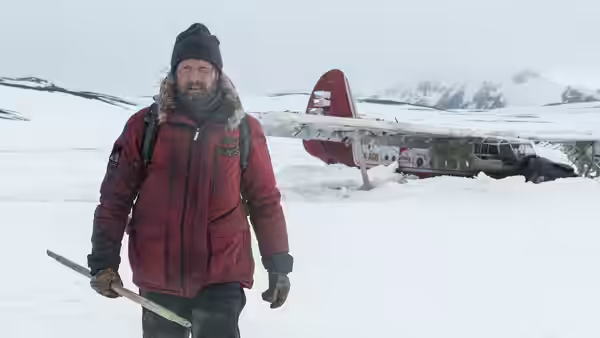
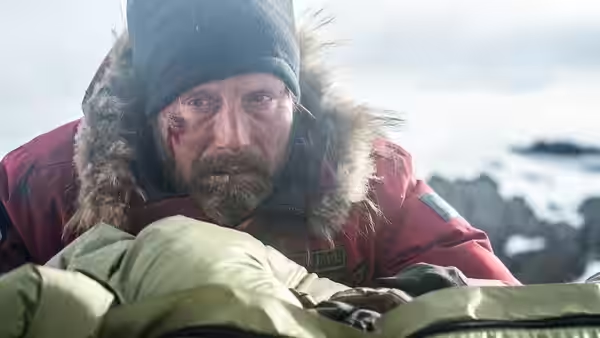
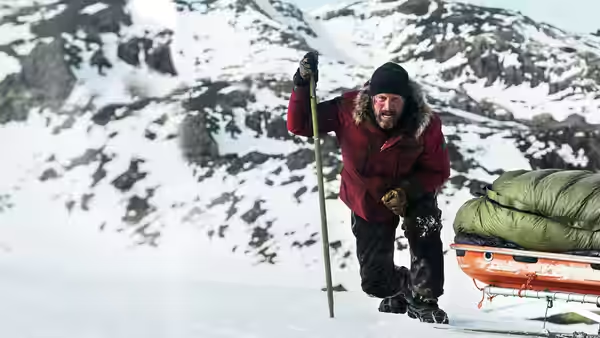
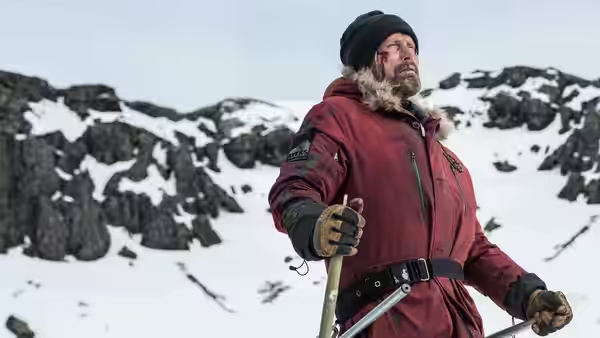
Mads Mikkelsen makes H. Overgård’s competence believable without making him seem beyond exhaustion. There is warmth in the performance, too, which matters in a film that gives its central figure so little to say. We do not need a lengthy account of his past to care about the man doing this work. The spare screenplay by Joe Penna and Ryan Morrison does, however, leave the actor responsible for supplying much of the character’s inner life.
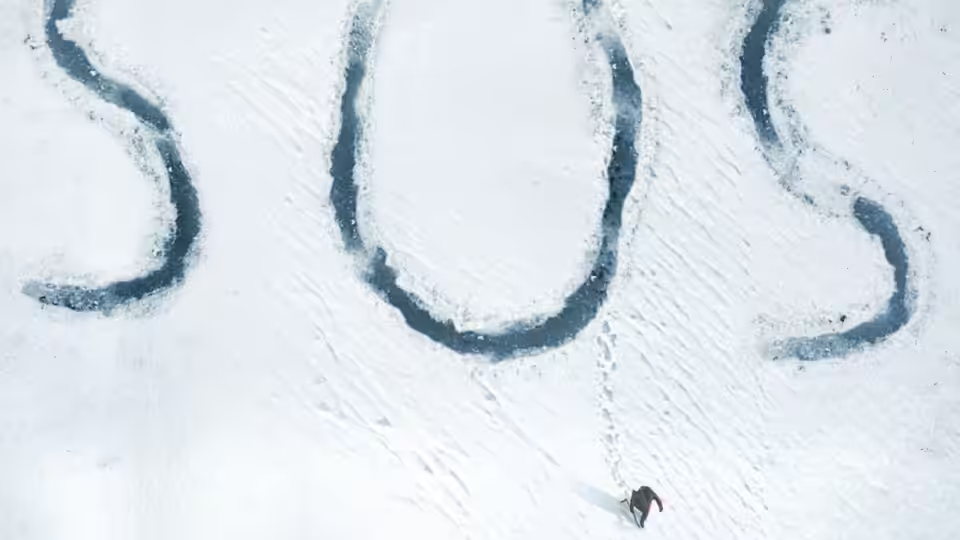
Tómas Örn Tómasson’s cinematography keeps the Arctic landscape clear and stark, and the snow never looks inviting. The crisp images make the place convincing even when the drama starts to feel familiar. There is pleasure in looking at these expanses, but the photography does not make the struggle seem comfortable. That helps the film hold our attention through stretches when little changes, although attractive photography cannot indefinitely compensate for a story that has slowed down.
Ryan Morrison’s editing is less reliable at giving that struggle momentum. There are stretches when repeated effort adds little to our understanding of the danger, and the pace begins to drag. The film becomes more absorbing when H. Overgård is pushed beyond his routine; before then, the slow passages sometimes feel overextended. At 98 minutes, it has room for patience without quite justifying every stretch of waiting.
Joseph Trapanese’s music also presses too hard. The score can make the hardship feel heavily underlined, drawing attention away from the plain physical work that is more persuasive. Nothing in Mads Mikkelsen’s performance needs that much encouragement from the soundtrack. The film is moving because a person continues to make an effort in punishing conditions, and its restraint elsewhere makes the musical insistence harder to excuse.
Within the survival genre, Arctic offers a familiar predicament and a welcome interest in practical behaviour. Its attention to the responsibility of helping someone else gives the struggle greater emotional weight, without requiring much speech about it. That is enough to make its slow patches worth tolerating, though anyone hoping for a succession of thrills should temper that expectation. Give it an evening if watching someone work through a problem can hold you; the performance rewards the attention.