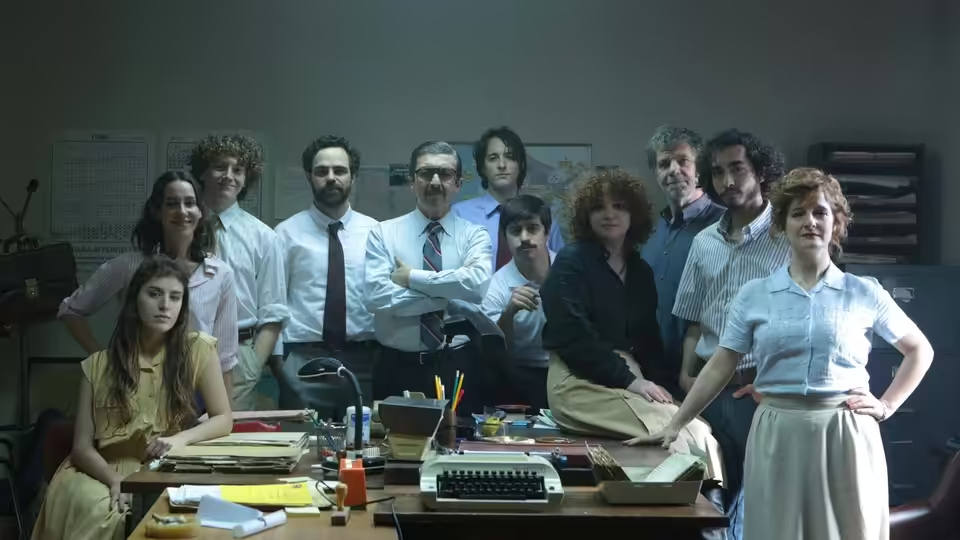
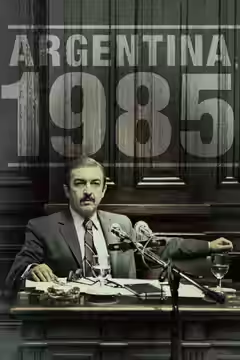
Santiago Mitre makes an affecting courtroom drama, with Ricardo Darín giving the prosecution a tired, funny, recognisably human face. The historical background needs more space, but the testimony earns the film’s emotional force.
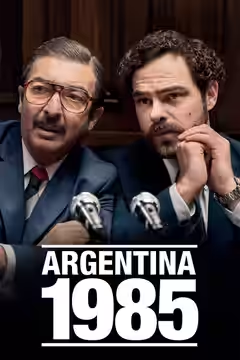
Argentina 1985 is a moving courtroom drama with a persuasive lead performance and some gaps in the history. Santiago Mitre makes a war-crimes prosecution understandable without requiring its prosecutor to be noble every time he opens his mouth. Julio Strassera, played by Ricardo Darín, has a family as well as a case, and the film takes both seriously. The familiar legal-drama approach works because the people involved remain recognisable beneath the weight of the subject.
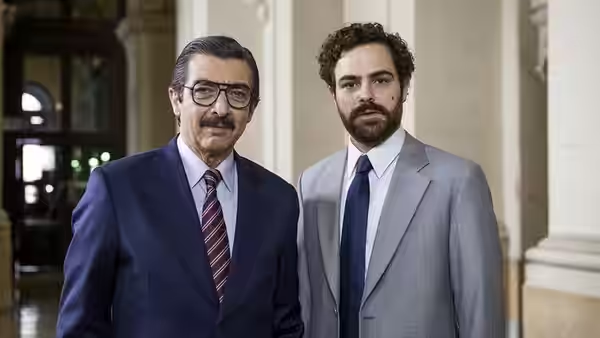
Darín gives Strassera a weariness that can be funny without making his responsibilities seem small. He is convincing as someone capable of carrying out the work and equally capable of finding it exhausting. The domestic scenes make good use of that distinction: a prosecutor who can command our attention in court need not be quite so commanding at home. The family exchanges give the performance room for irritation and awkwardness, qualities that make his commitment to the prosecution more believable.
Mariano Llinás and Santiago Mitre’s screenplay gives the family scenes enough space to matter. The humour helps us settle into Strassera’s life, and makes the cost of the prosecution easier to grasp than another explanation of its importance would. Some of the procedural dialogue is flatter, with lines that seem chiefly interested in getting the necessary information across. The changes between family scenes and legal business do not always maintain the same easy pace, and a few exchanges feel dutiful.
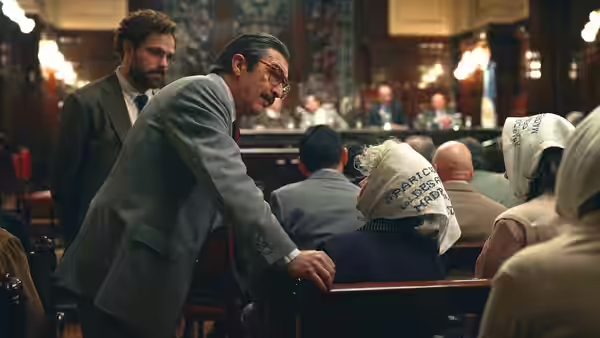
When the witnesses speak, that ease disappears. We were horrified by the accounts of the crimes, which the film allows us to hear without turning the suffering into sensational entertainment. Javier Juliá’s cinematography keeps the courtroom exchanges clear, while Andrés Pepe Estrada’s editing gives the spoken evidence room to register. Those choices matter in a genre so often concerned with a lawyer’s ability to dominate a scene: here, listening to what has been done to people is harder than following the prosecution’s progress.
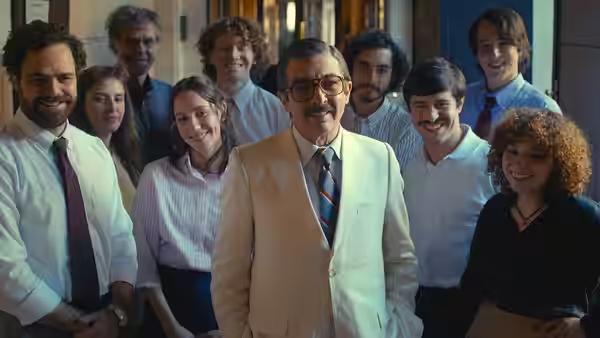
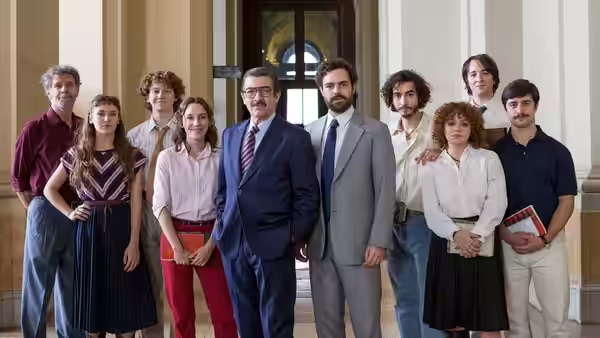
The period detail is convincing without becoming an excuse to inspect the furniture. Mónica Toschi’s costumes contribute to that sense of an ordinary working world, and the courtroom reconstruction gives the proceedings a credible setting. Pedro Osuna’s music is more insistent about the emotion than we need, given the force of what is being said. Mitre is most persuasive when he allows a speaker to hold our attention without additional encouragement.
The larger weakness is the historical background. Mitre gives us a clearer sense of the prosecution’s human demands than of the political circumstances surrounding it, leaving anyone unfamiliar with Argentina’s past with questions the film does not answer. A courtroom drama need not become a history lecture, but this one could explain more about the circumstances in which the prosecution takes place. That would also give the quieter procedural passages more purpose, rather than simply making them feel like necessary preparation.
At 141 minutes, the film asks for a proper evening and occasionally makes us aware of the time. Darín and the testimony are good reasons to give it one, provided a complete account of the history is not what we are after. Watch when there is time to listen, rather than merely follow a case.