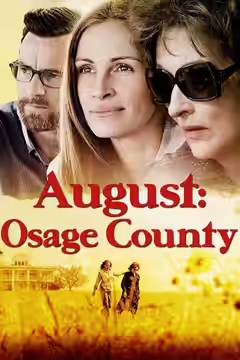
Julia Roberts and Julianne Nicholson make the family quarrels worth listening to, but John Wells lets too much of the drama become a shouting match. There is good acting here without enough reason to recommend the film.
August: Osage County has enough sharp acting to keep a family row interesting, but not enough control to make two hours of rows worth the trouble. Tracy Letts’s screenplay offers plenty of opportunities for people to be cruel, funny and furious, sometimes in the same exchange. John Wells lets the actors press those opportunities so hard that the quieter responses struggle to register. The film wants us to recognise something painful about families, but too often the shouting makes it difficult to care who has been hurt.
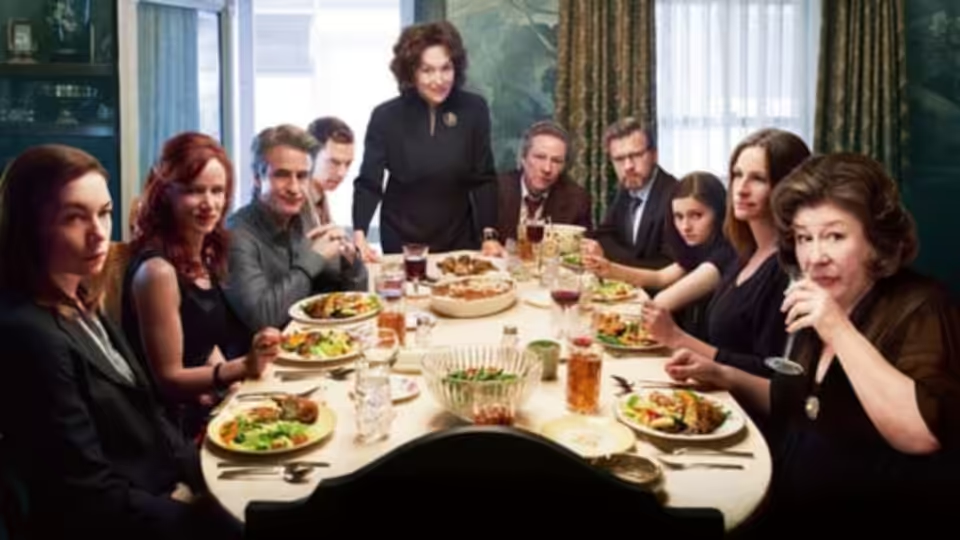
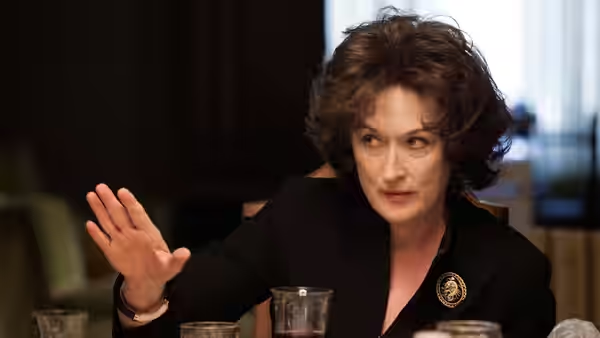
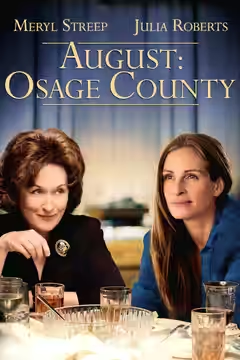
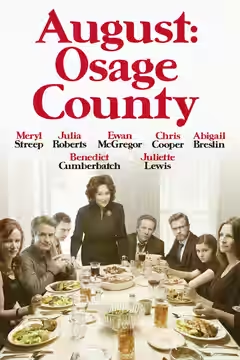
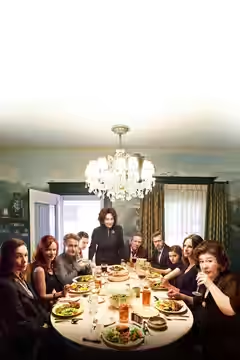
Meryl Streep makes Violet Weston aggressively watchable, particularly at the family dinner, where her pleasure in making everyone uncomfortable is plain. We laughed at her relish for hurting people, then felt worn down by it. The performance leaves little doubt about how much damage this woman can do, but its emphatic delivery also makes the next attack too easy to anticipate. John Wells gives the display plenty of room and does too little to interrupt its rhythm.
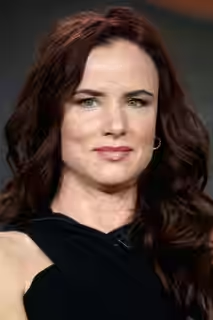
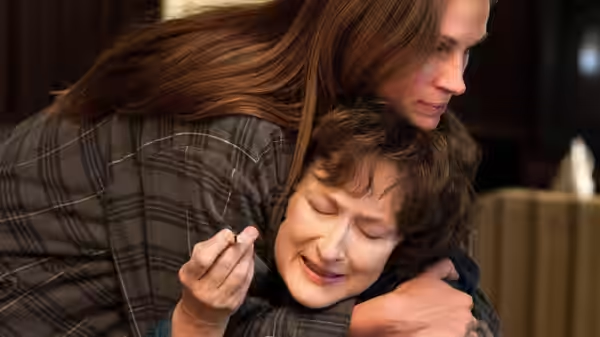
Julia Roberts is more involving as Barbara Weston because anger does not exhaust what there is to watch in her face. Her close-ups suggest someone who dislikes her own behaviour even while refusing to stop, and that makes the quarrelling more uncomfortable. Julianne Nicholson, playing Ivy Weston, holds our attention without demanding it; her quieter performance gives us time to notice a response instead of simply waiting for the next speech. Both actors make the family seem capable of hurting people without raising their voices.
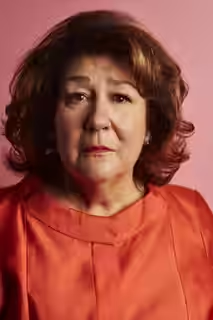
Chris Cooper gives Charlie Aiken a similar advantage, making the longer speeches feel like something a person might need to say. His control is welcome in company where so much dialogue arrives already underlined. Margo Martindale brings a convincing mixture of force and feeling to Mattie Fae Aiken, and her performance makes the family’s unpleasantness harder to dismiss as mere theatrical entertainment. But the crowded subplots keep dividing our attention, and the supporting actors cannot all make their material feel equally necessary.
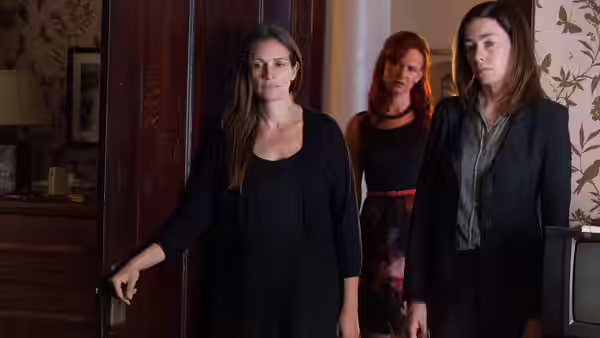
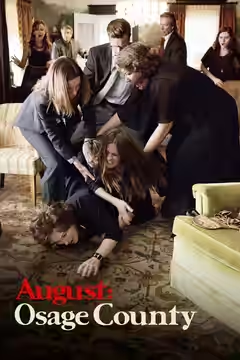
Adriano Goldman’s cinematography is most useful when Julia Roberts is allowed to hold a close-up. Elsewhere, the attention paid to individual performances makes it harder to watch the family behaving together, which is surely part of the pleasure of assembling this cast. David Gropman’s production design leaves less impression than it should because John Wells makes so little dramatic use of the shared space. We need to notice who is listening and who would prefer to leave, even when somebody else has the speech.
Stephen Mirrione’s editing does not find enough difference in pace between the disputes, so their accumulation becomes tiring. The interruptions from other strands further weaken the momentum, giving the film more business without making its central confrontations more involving. Gustavo Santaolalla’s music is too ready to supply tenderness when the performances might have found something more awkward and less reassuring on their own. The score insists on sadness at moments when we still need the people to convince us.
A family drama can stay in one place and still give us plenty to notice; confinement is not the difficulty here. At 121 minutes, this one has time to let resentment develop through something other than another confrontation. Its dark comedy works often enough to suggest a sharper, less exhausting film, and the restrained performances show that the dialogue does not always need such strenuous help. If relentless family arguments already feature in the evening’s plans, there is little reason to add these.