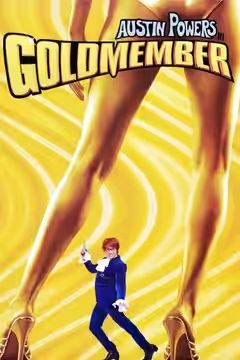
There are good laughs in Austin Powers in Goldmember, particularly when Michael Caine joins in, but Jay Roach’s comedy keeps returning to jokes that need more than another outing. The repetition wears it down.
Jay Roach’s Austin Powers in Goldmember is funny in patches and tiring in between, with too little story to make the waiting worthwhile. The third outing relies heavily on familiar characters and routines, often giving us another version of a joke we already know. We laughed at the opening: its sight gags have the timing and care that the film later struggles to sustain. The cameos are briskly handled, and for a while the business of putting on a show seems enough.
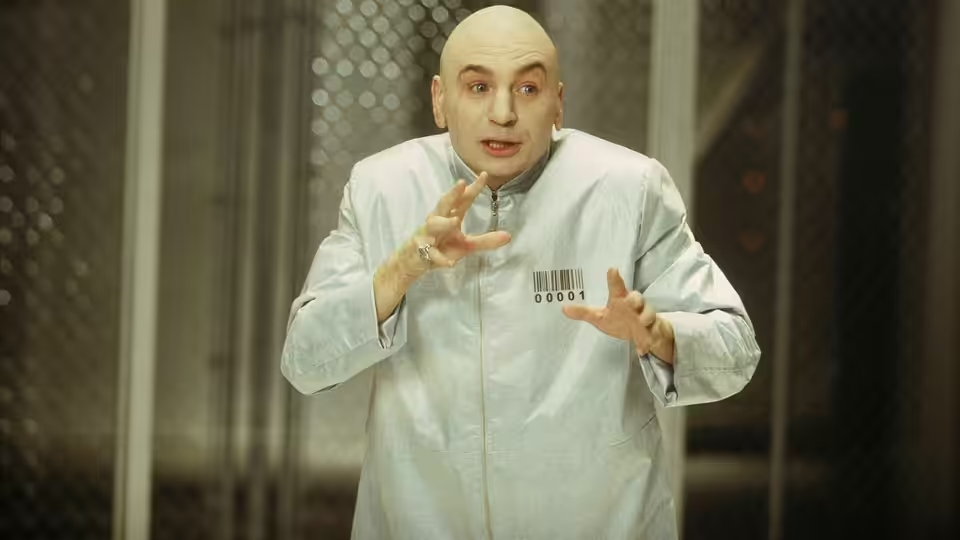
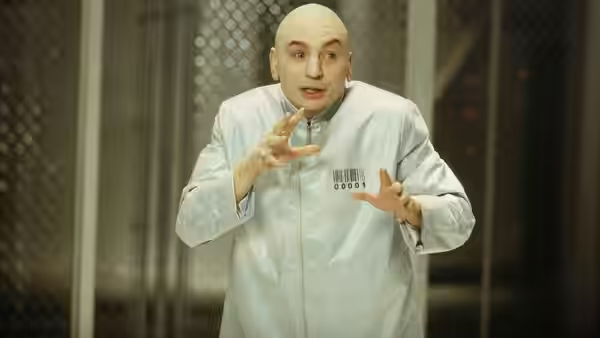
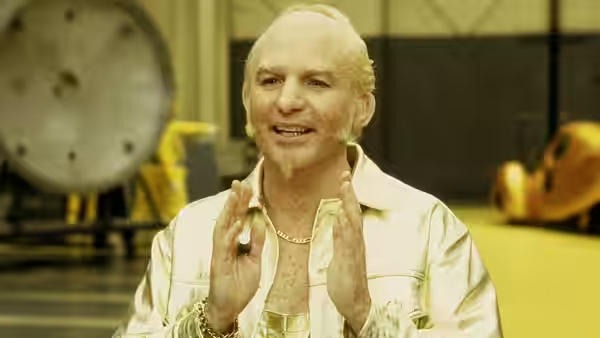
Mike Myers takes four roles, as Austin Powers, Dr. Evil, Goldmember and Fat Bastard, and the effort is plainly there. His comic interludes can still justify stopping the story, but too many continue after their useful life has ended. The toilet humour is particularly wearing, and several routines need to end much sooner. Mike Myers and fellow screenwriter Michael McCullers seem reluctant to discard anything that might earn one more laugh, even when getting there means a considerable wait.
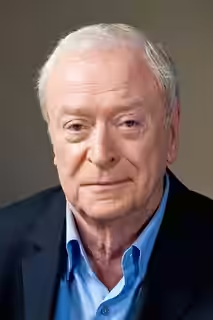
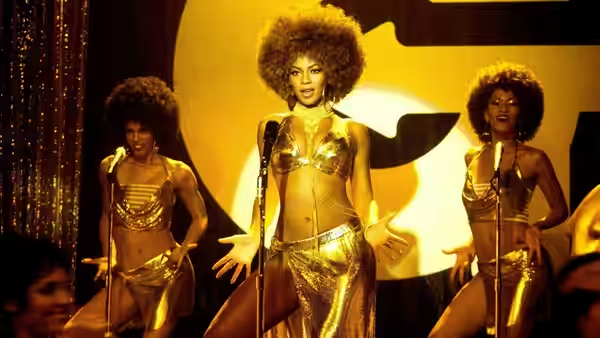
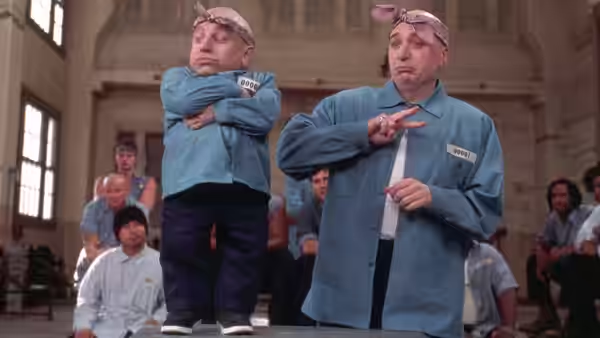
Michael Caine is a considerable help as Nigel Powers, bringing an ease that makes the busier performances look unnecessarily hard-working. We enjoyed him most because he seems comfortable letting a joke arrive without announcing it first. Beyoncé gives Foxxy Cleopatra enough energy to hold her place amid the distractions, although the film offers limited room for that energy to develop. Mini-Me’s sparing dialogue allows Verne Troyer to get on with the comedy without another protracted verbal routine.
Peter Deming’s photography serves the visual jokes well, giving them the clarity they need without making a fuss about it. Rusty Smith’s production design is similarly suited to this broad comedy, though the surroundings cannot hold our interest when a routine falters. The prison musical number gives Jay Roach something substantial to stage, and its change of pace is welcome. There is more pleasure in watching that sequence develop than in waiting through another extended bout of toilet humour.
The editing by Jon Poll and Greg Hayden favours a pace that becomes wearing. Scenes can feel hurried while individual jokes remain on screen beyond the point where they deserve another beat. George S. Clinton’s music adds to that determined forward push, sometimes making the effort to entertain feel more insistent than cheerful. At 94 minutes, this ought to be light work, but the stretches between successful gags feel longer than they should.
The screenplay’s lack of an engaging story matters because the weaker jokes have so little else to support them. The implausible plot would matter less if the laughs arrived more reliably. Here, waiting for a particular performer to return becomes more absorbing than whatever the characters are meant to be doing. Michael Caine and Verne Troyer carry a disproportionate amount of our interest, which makes their absences noticeable.
There is enough invention here to explain why admirers will forgive the repeated material, and the opening makes a persuasive case for staying. The trouble is how often the film behaves as though familiarity alone should earn a laugh. We would reserve it for those already fond of these characters and tolerant of a joke being given several chances. Anyone less attached can leave them to it.