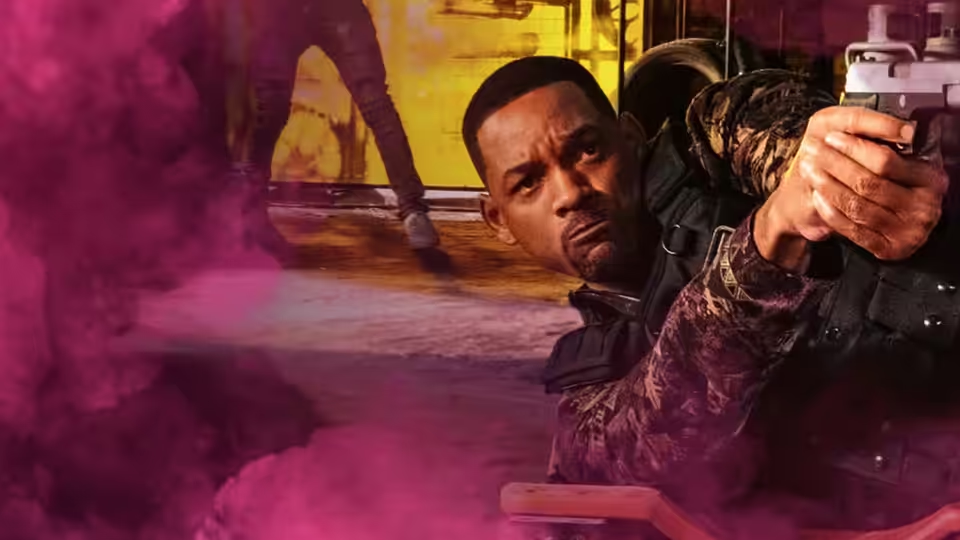
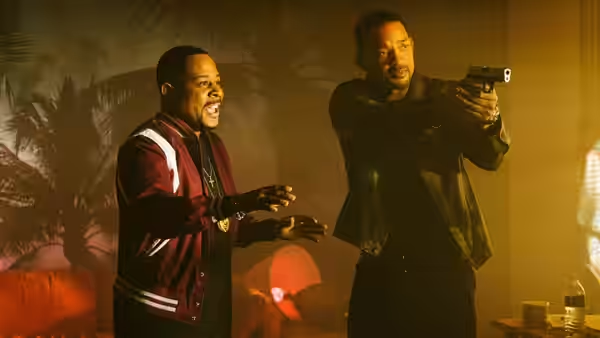
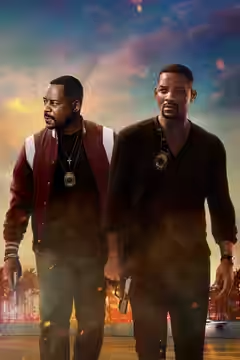
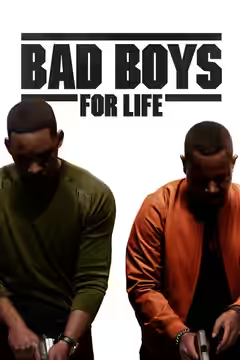
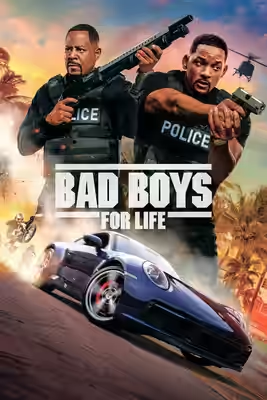
Will Smith and Martin Lawrence remain good company in a serviceable sequel with an overworked crime plot. Their affectionate sparring supplies most of the pleasure; the attempts to give it greater weight are less reliable.
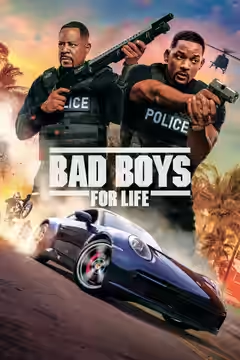
Bad Boys for Life is at its most appealing when it lets its ageing partners consider how much longer they want to do this. The film finds some warmth in that question, then keeps interrupting it with a crime plot that grows more elaborate than it needs to be. We found it decent, uneven entertainment, with enough affection between the leads to keep the familiar business tolerable. It remains dependent on how much we enjoy watching these two together.
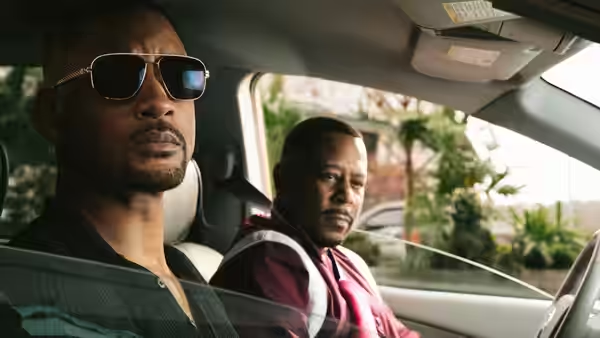
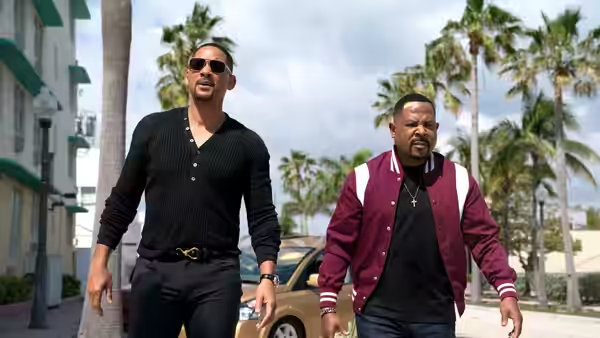
Martin Lawrence understands the value of letting the other man finish before registering his objection. As Marcus, he makes weariness funny without making the character seem merely useless, and his reactions give the swagger around him a necessary check. We laughed at the exasperation on his face, rather more often than the jokes themselves deserved. That pleasure depends on the timing between him and Will Smith, who remains happy to provide the confidence for someone else to puncture.
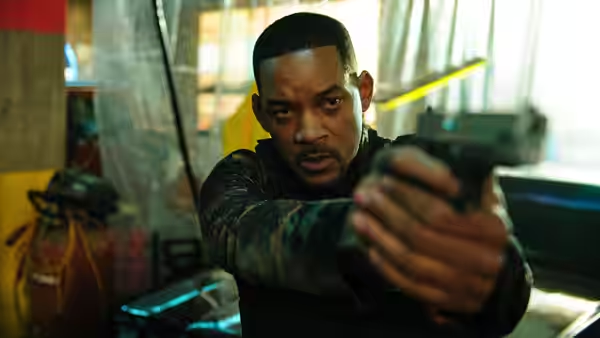
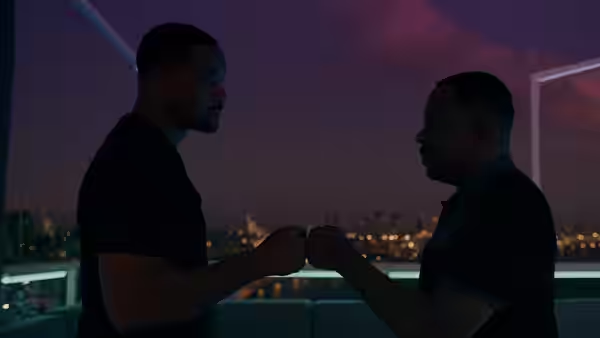
As Mike, Will Smith is also allowed some sadness and regret, which gives his performance a welcome uncertainty. The friendship feels sufficiently established for the quieter exchanges to matter. The difficulty is that the film keeps turning towards the next escalation before those exchanges can develop much further. Wanting these men to acknowledge their age is a promising reason to make another instalment, and the script only intermittently pursues it.
Directors Adil El Arbi and Bilall Fallah make a sound practical choice in keeping the action legible. The pursuit sequences are easy to follow, with enough attention to where people are for the danger to register. Robrecht Heyvaert’s cinematography keeps the movement clear even when several things compete for our attention. Editors Dan Lebental and Peter McNulty maintain that momentum within the action, although the stretches between it can feel needlessly extended.
Jon Billington’s production design provides polished surroundings without giving them much character of their own. That suits the film’s preference for keeping our attention on its stars, but it leaves the settings feeling interchangeable. Lorne Balfe’s music does the expected work of pushing the excitement along; it rarely gives a sequence anything more distinctive. Little in the look or sound stays with us as readily as either lead’s comic reactions.
The screenplay by Chris Bremner, Joe Carnahan and Peter Craig is less sure of how much complication this partnership requires. The arrival of the AMMO team provides some welcome fresh company, but the plotting keeps asking for more attention than its familiar turns repay. There is also an awkwardness in asking us to take the men seriously while treating their violence so casually. For a buddy police film, that is hardly an unfamiliar failing, but the attempts at maturity make it harder to ignore.
At 124 minutes, there is more of it than the comic partnership can comfortably carry. Still, the warmth between the leads is worth something, especially when the film stops trying to prove how much action it can deliver. The directors have given their stars room to be older without losing all their foolishness. Come for the company, and allow for a case that demands more patience than it deserves.