Frank Borzage’s small New York romance is bright while James Dunn is being rude to women on boats, and slow and sentimental once he has married one. Worth an evening for the courtship and one scene with a doctor.
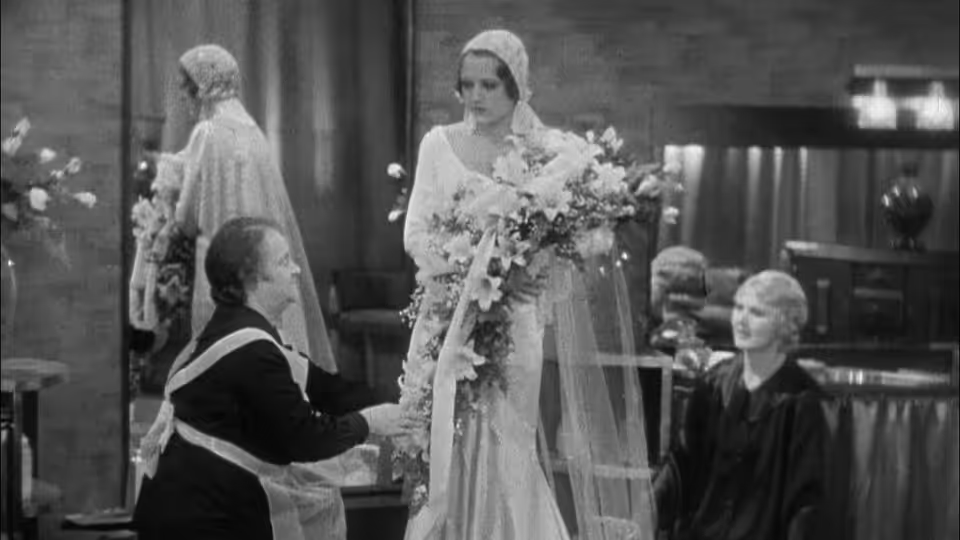
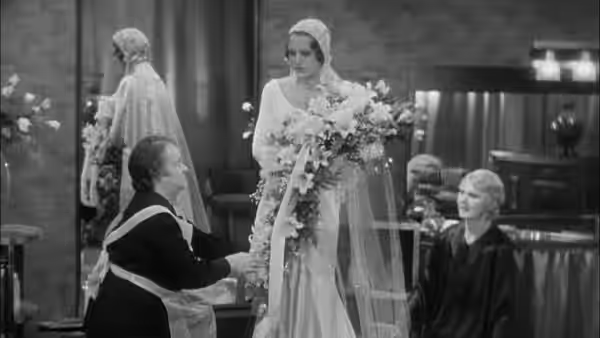
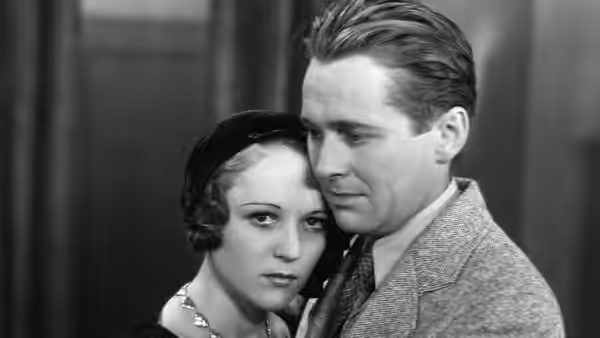
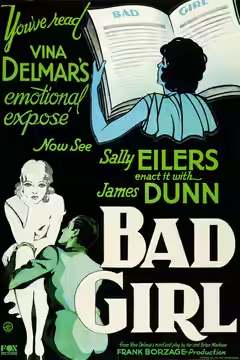
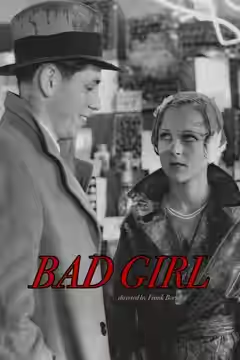
Frank Borzage’s Bad Girl runs 90 minutes and concerns two young people in New York who meet on a boat back from Coney Island, marry within days, and then spend the rest of the picture failing to tell each other the one thing that matters. Brian Marlow and Rudolf Sieber adapted it from Viña Delmar’s novel, and the title is a fraud of the pleasant kind: nobody in it is bad. It is a small film about small people, made early in the sound era, and it is half a good one. The half that works is the courtship.
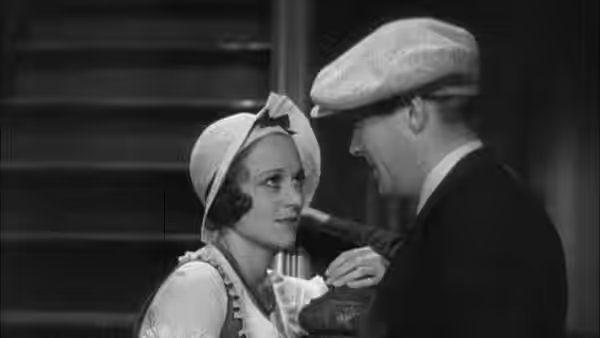
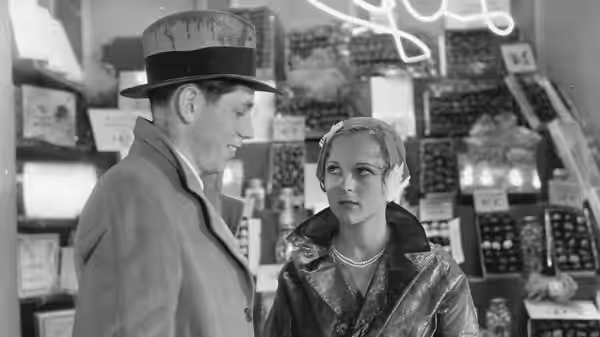
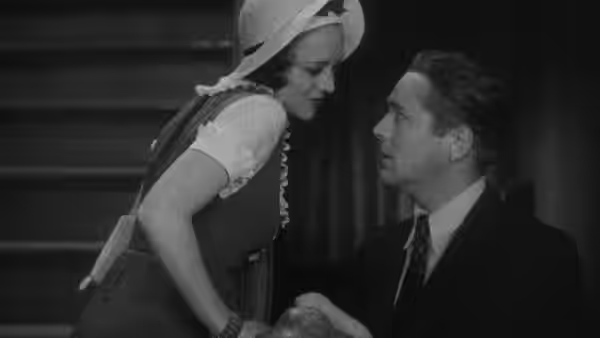
James Dunn plays Eddie Collins as a young man who has decided that women are a waste of an evening and says so to anyone who asks. He fixes radios and wants a shop of his own more than he wants company. Dunn talks fast and out of the side of his mouth, and the script gives him a run of put-downs that still land. We laughed, several times and without being coaxed, at a man being rude to a pretty girl on a boat because he could not think of anything else to do with his hands. That is a harder thing to play than it looks, and Dunn plays it.
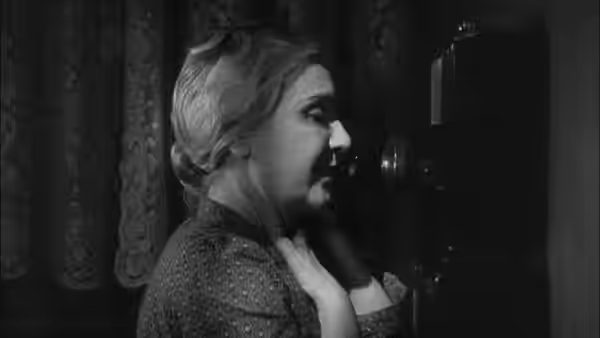
Sally Eilers has the less rewarding part. Dorothy Haley is a nice girl whose brother Jim (William Pawley) treats a late night as a hanging offence, and Eilers is asked mostly to be wounded by other people. She is better in the wisecracking scenes than in the tearful ones, and there are more of the latter as the film goes on. Minna Gombell, as her friend Edna Driggs, is the one to watch. Gombell has a dry, tired delivery, a woman who has heard all of it before, and every scene improves when she walks into it.
Chester A. Lyons photographs it plainly, which suits the material. The rooms are small, the light comes from a window or a lamp, and the camera is mostly set down and left alone, as it usually was in 1931 when the microphone dictated where people could stand. Margaret Clancey’s cutting keeps the early scenes moving; a conversation ends when it has done its work. Dolly Tree dresses Dorothy in the sort of clothes she could afford and Edna in the sort she could not, and the difference does some of the storytelling.
Then the marriage happens, and the film changes. The second half turns on something the couple do not tell each other, and we will not say what. The secret is fine. What hurts is that the film treats a misunderstanding as if it were a plot, so scene after scene consists of two people in a flat saying the opposite of what they mean and then walking out. It becomes talky, and the talk gets slower. There is one exception. Eddie has a long scene alone with a doctor, Dr. Burgess (Claude King), and Dunn drops the wisecracks and asks a stranger for help. We were more moved than we had any reason to expect, and it is because for once the film lets a character say the plain thing.
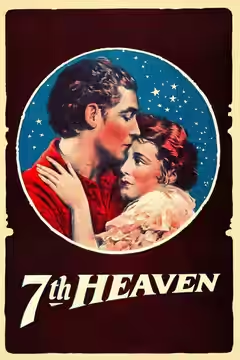
Borzage had made 7th Heaven four years earlier, and the standard he set there for lovers in a garret is one this film does not reach. That picture moved; this one sits. The two reviews we have read are harder on it than we are. Variety in 1930 called it workmanlike and Slant, decades later, found it dated, and both have a point about the second half. But the first forty minutes are livelier than either allows, and Dunn’s Eddie is a real person rather than a type, which is more than most romances of the period manage.
Watch it at home, where a film this small belongs, and do not expect anything the title promises. If Dunn on the boat makes you want to stay, stay; the doctor is worth waiting for, and the rest you can talk over.