Film review

7th Heaven

1927 · Directed by Frank Borzage · 1h 59m · MPA NR

In a sentenceSeven floors up, no lift, and the climb is the whole point

DramaRomance

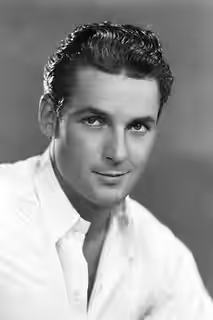
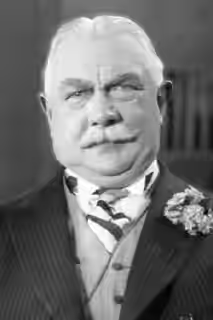
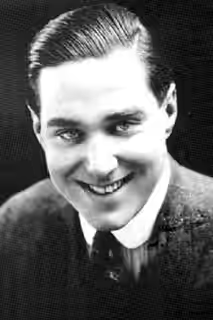
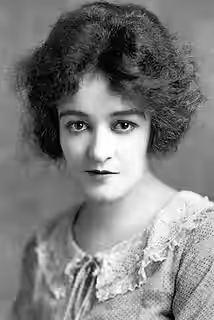
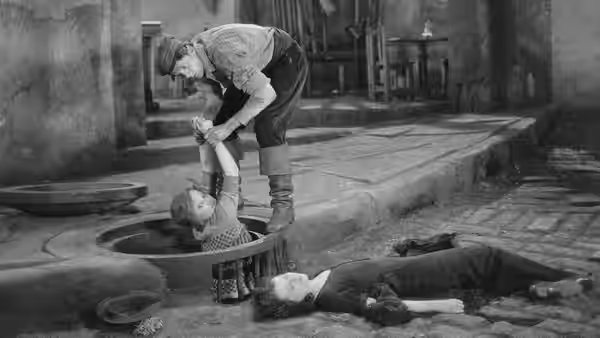
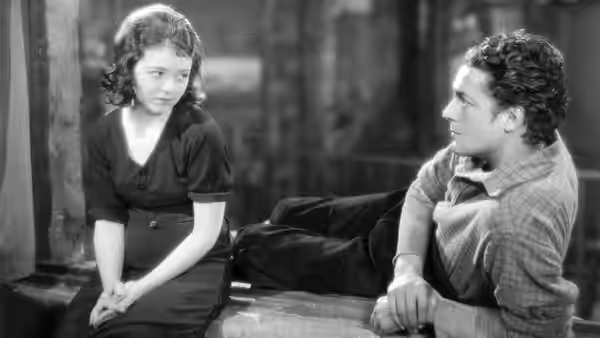
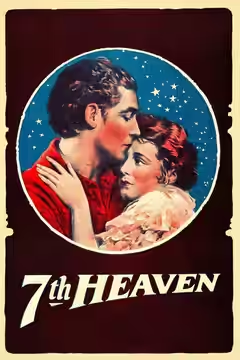
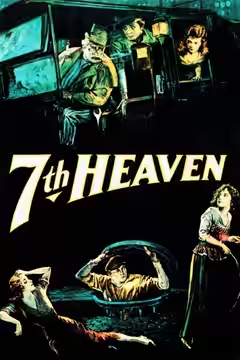
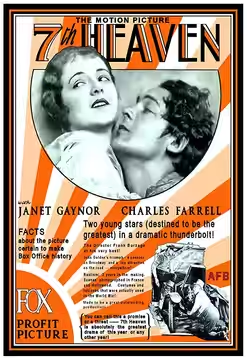
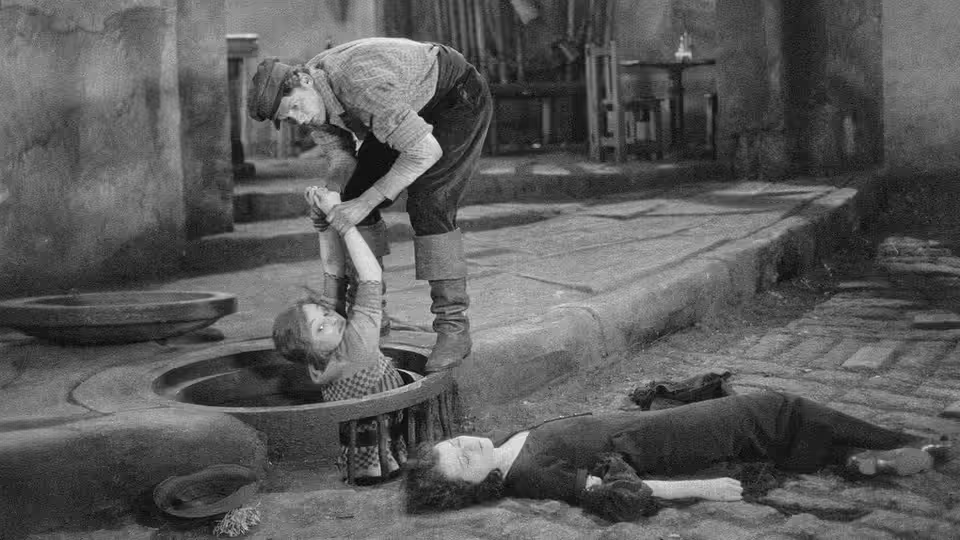
Paris, in the years just before the First World War. Chico (Charles Farrell) works in the sewers and wants a job as a street washer, up in the daylight, and has been telling God so, loudly and without result. Diane (Janet Gaynor) lives nearby with her sister Nana (Gladys Brockwell), a drunk who beats her with a whip. When Nana chases Diane into the street, Chico stops her, and when a policeman arrives he claims Diane is his wife to keep her out of trouble. The police say they will check, so Diane must move into Chico’s room on the seventh floor, above the taxi driver Boul (Albert Gran) and the neighbours Gobin (David Butler) and Madame Gobin (Marie Mosquini). Father Chevillon (Émile Chautard) finds Chico his job, and a wealthy aunt and uncle come looking for Diane.

Fi1m review

Frank Borzage’s silent romance about a Paris sewer worker and the beaten girl he takes in is every bit as sentimental as its reputation, and it earns nearly all of it. Janet Gaynor is the reason; Charles Farrell shouts a little.

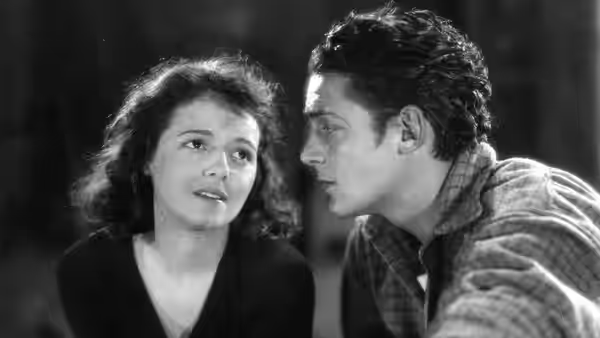
Chico (Charles Farrell) works in the sewers of Paris and believes he deserves better. He wants to be a street washer, above ground in the light, and he has told God so more than once, in the tone of a man complaining to a landlord. Diane (Janet Gaynor) lives a few streets away with her sister Nana (Gladys Brockwell), who drinks and beats her. Frank Borzage’s silent film, from a screenplay by Benjamin Glazer based on Austin Strong’s stage play, brings the two together by accident, keeps them together with a lie told to a policeman, and spends most of its 119 minutes finding out whether the lie can be made true.

It is as sentimental as anyone has warned you. We recommend it warmly anyway, because Borzage does not apologise for the feeling and does not fake it. The film believes two poor people in an attic can be happy, and it does the work to make us believe it too: a bed, a table, a skylight, a neighbour who lends a plate. Most critics rate it highly and on this occasion we are with them.

The idea everyone remembers is the staircase. Chico’s room is on the seventh floor, and the first time he takes Diane up, the camera goes with them, rising straight through the stairwell in one continuous movement while the pair come round each landing below it. Ernest Palmer and Joseph A. Valentine shot the film, and this is their best passage: it tells you what the title means before a title card has to. When the camera stops, the room is small and the rooftops fill the window.

Gaynor is what holds the rest together. She plays Diane at first as somebody trying not to be seen, shoulders in, eyes down, flinching before anyone has moved. The moment that got us comes early, when Chico, out of nothing more than irritation, tells the police she is his wife. Gaynor does not smile. She looks frightened, because kindness has not happened to her before and she does not know its rules. It moved us more than we expected from a scene we knew was coming. Kathleen Kay and Bert Offord dress her in rags for the first stretch and then in one plain dress, and the change in how she stands does most of the talking.

Farrell is the reservation. Chico announces, more than once, that he is a very remarkable fellow, and Farrell plays him to match: chest out, chin up, arms going. It took us a good half hour to accept this as a choice rather than a limit, and we are still not sure it is entirely one. He is better when he is quiet, and Borzage gives him more quiet as the film goes on. Around the pair, Albert Gran’s Boul, a taxi driver who loves his cab like a horse, and David Butler and Marie Mosquini as the Gobins next door give the building a life of its own. Émile Chautard’s Father Chevillon gets Chico his job with the sort of patience the film thinks God ought to show.

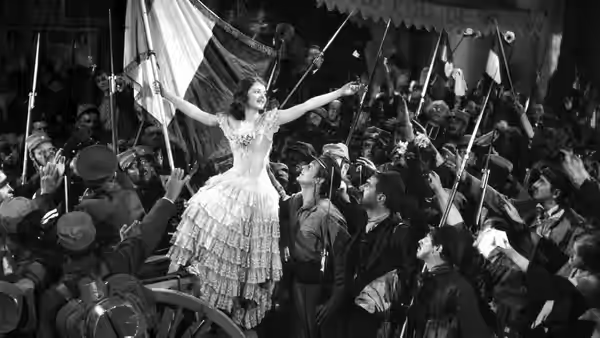
In its second half the story goes to war, and we will say little about how. Borzage stages the fighting on a bigger scale than the story strictly needs, and the taxis earn their place. The editors, Barney Wolf, Katherine Hilliker and H.H. Caldwell, cut between the front and the attic so that the two places seem to be at the same hour, which is the point. The title cards, on which Hilliker and Caldwell also share writing credit, are spare and mostly get out of the way. Ben Bard’s Colonel Brissac is a stock villain with a moustache, and the middle stretch sags a little while he circles.

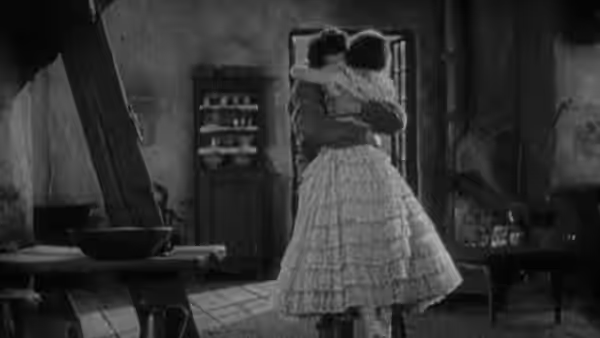
Borzage made more films with Gaynor and Farrell after this one. This is the one to start with, and it is the one where the attic feels most like a real place. Watch it with a live score if you can find a screening that has one, and do not be embarrassed by what it does to you. Borzage is not.

Critical consensus AI synthesised

84
Positive
7
Mixed
0
Negative
0

The reviews are unanimous. Every critic writing on 7th Heaven approves of it, and the praise gathers around Frank Borzage’s direction, which most describe as tender, imaginative and unashamedly sentimental. Janet Gaynor and Charles Farrell are credited with making the romance between a Paris street waif and a sewer worker feel real rather than mawkish, and several critics note that the war scenes are handled with more skill than the story strictly requires.

The spread is narrow, from approving to enthusiastic, and nobody dissents. What varies is emphasis. The contemporary reviews concentrate on the performances and the grip of the story; later critics are more interested in the pictures. Slant Magazine calls this Borzage’s most distinctive film, Eye for Film singles out the single-take elevator shot up to the lovers’ flat, and Collider picks out a cross-fade prayer sequence and Gaynor’s small facial movements. The word sentimental appears throughout, always as a description, never as a complaint.

Slant Magazine
20 July 2006 · Dan Callahan
90*

The critic praises this as Borzage’s most distinctive film, where mystical romance principles converge in an exquisite tale of redemptive love between a street waif and a sewage worker. Borzage ennobles their poverty and trials, including war, through tender details and transcendent imagery that make the couple’s bond feel spiritually blessed.

Read the full review →
Variety
31 December 1926 · Variety Staff
90*

Borzage has made a great picture and launched Janet Gaynor as a star overnight. The romance is gripping and red-blooded, with strong support from Farrell and others, plus effective war scenes including the taxi cab march.

Read the full review →
The New Yorker
28 May 1927 · Oliver Claxton
85*

The film maintains a rare consistent mood of tenderness thanks to Borzage's direction and the actors' performances. Gaynor and Farrell make the sentimental romance real and touching, with well-handled war scenes.

Read the full review →
Film Comment
80*

The critic highlights Seventh Heaven as a ravishing visual achievement that established Borzage's signature aesthetic of love transcending time and space. The film is singled out for its poetic use of actors and studio-bound atmosphere to convey emotional depth.

Read the full review →
The New York Times
5 June 1927
80*

Poetry and emotion shine through the sensitive adaptation, with high-order acting that makes the story gripping and moving. Borzage directs with imagination and deftness on themes of faith and self-sufficiency.

Read the full review →
Collider
27 February 2024 · Jacob Slankard
85*

The critic praises Frank Borzage's direction for elevating the melodrama through strong lead chemistry and innovative visual storytelling, including bold battle scenes and a memorable cross-fade prayer sequence. Janet Gaynor's subtle, micro-expression-driven performance as Diane is singled out as the emotional core, earning her the first Best Actress Oscar.

Read the full review →

Cast

Awards

Academy Awards, 1929

Won
Best Actress
Won
Best Director (Dramatic Picture)
Won
Best Writing, Adapted Screenplay

If you liked this, try…