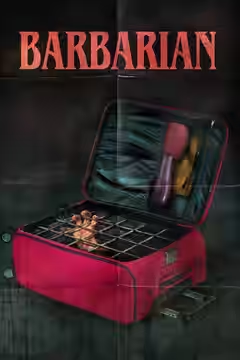
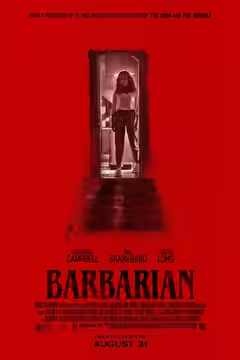
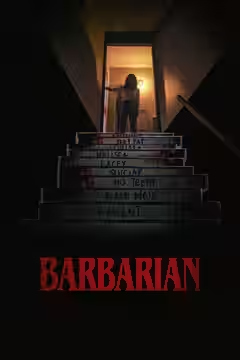
Zach Cregger’s horror debut gets an hour of fear out of a double-booked rental and a basement nobody should go into. Then it starts explaining, and the explanation is thinner than the dread. Worth your evening, if you can take the dark.
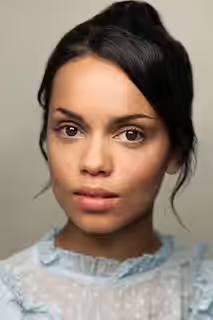
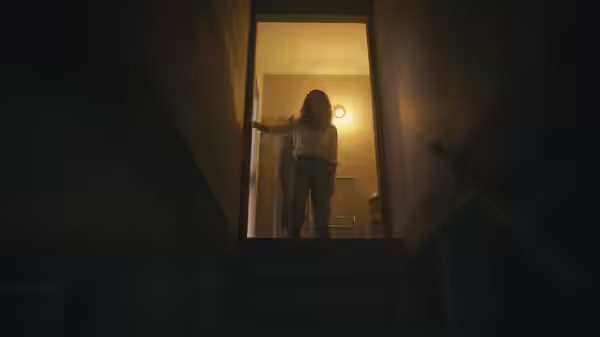
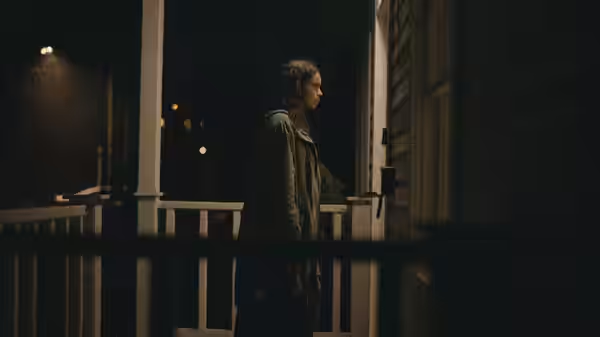
The nightmare in Barbarian starts with an app. Tess (Georgina Campbell) arrives after dark at a rental house and finds that Keith (Bill Skarsgård) has booked the same nights through a rival website. Zach Cregger, writing and directing, gets a full hour of fear out of nothing more than a woman deciding whether a polite stranger is safe, and that hour is superb. What follows is bolder, louder and less good. We recommend it, with the warning that the film you finish is not the film you started.
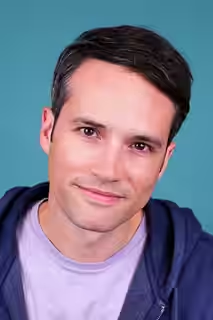
Cregger plays the opening straight and slow. Skarsgård, who was Pennywise in It, is cast so that we will not trust him, and then Keith does everything right: takes the sofa, opens a fresh bottle in front of her when she will not touch the glass he has already poured, apologises for existing. Campbell holds the film together. She plays Tess as a woman who has been polite to men she did not trust before and knows what it costs, and her eyes do the counting while her mouth says thank you. Zach Kuperstein lights the house in warm lamplight, tidy and beige inside its street of boarded windows, and Anna Drubich’s score sits under it as a low hum. When Tess finally drinks, we found we had been annoyed with her, and then annoyed with ourselves, because the film had quietly made us the suspicious one.
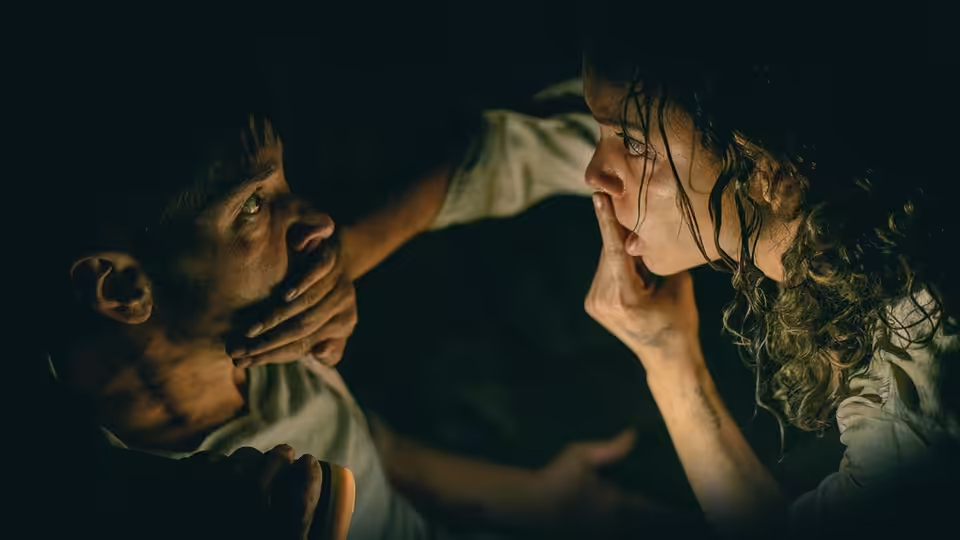
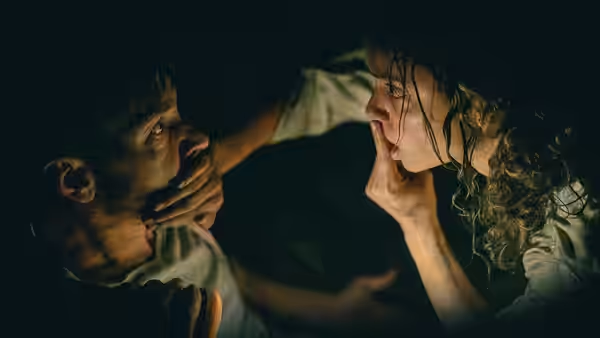
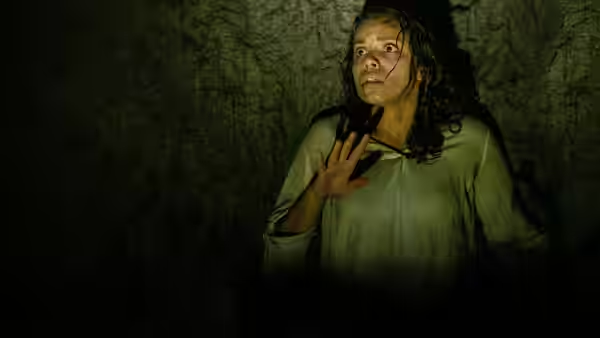
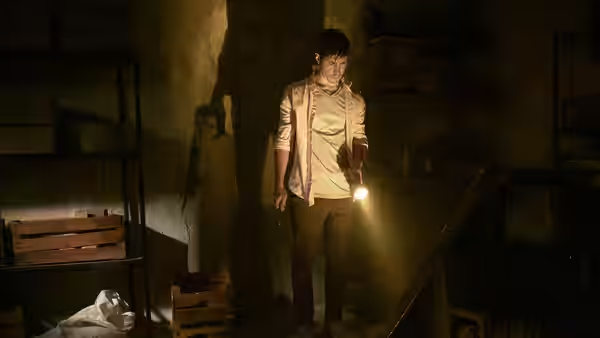
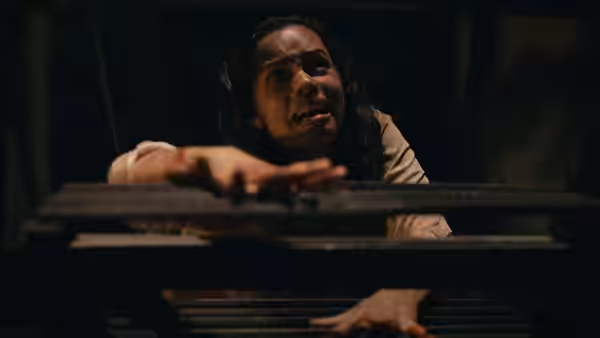
Then she goes down to the basement and the door shuts behind her. Rossitsa Bakeva’s production design gives the hidden room a bare mattress, a bucket, a video camera on a tripod and a handprint on the wall, and Kuperstein shoots the corridor towards it with one torch beam and nothing else in frame. Joe Murphy’s cutting lets every step run its full length. We were frightened, properly frightened, and what did it was not the mattress or the camera but the sound of the door, and then Tess’s decision to keep walking rather than beat on it. Cregger has grasped the thing most horror films get wrong: fear is worse when the character is not a fool.
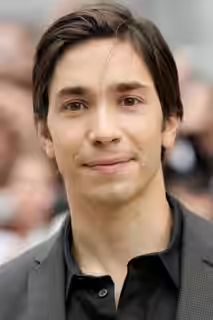
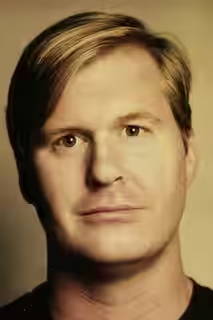
Roughly forty minutes in, Cregger cuts to a convertible on a coast road, sunshine, and AJ (Justin Long) singing along to the radio. We laughed at the cut, out of shock as much as anything. AJ is an actor whose career is about to be interrupted by an accusation he does not think is fair, and he happens to own the house. Long has made a career of being the likeable one and uses all of it here; AJ is genial, quick, sorry for himself and never once wonders whether he is the problem. Kiril Naumov dresses him in polo shirts and sunglasses to match. The joke of the film, and it is a good one, is that we spend much of the second half with a man we would not want to share a lift with.
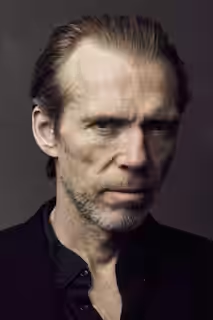
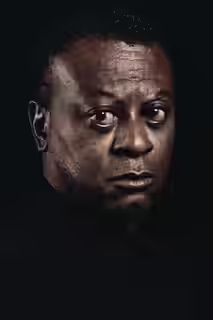
The trouble is what lives in the house. We will not say what, or who, except that the film eventually feels obliged to tell us, at length, with a flashback shot in flat, bright daylight, a different film for five minutes, and a supporting turn from Richard Brake, as Frank, that is the most unsettling acting on screen. Once the rules are laid out, the thing in the dark becomes a monster with a job description, and it can be run from, hit and outwitted like any other. The last twenty minutes are fast, gory and a little ordinary. We noticed our shoulders come down from our ears well before the credits, which is not what a horror film wants.
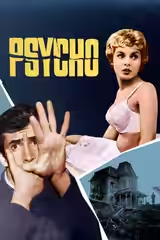
Cregger comes from sketch comedy, and it shows. He times a reveal like a punchline, and some of the later violence is close to slapstick; we could not tell whether that was on purpose. The debt to Psycho is open and honest: a woman alone in lodgings, a soft-spoken host, and a film that changes its mind about whose story it is telling. Hitchcock took that risk once. Cregger takes it more than once, and the seams show the second time.
At 103 minutes it does not outstay itself, and the 18 certificate is earned in the last act rather than the first. See it with the lights off and someone to grab. Then argue about the point at which you stopped being afraid, because there is one, and everyone’s is different.