Film review

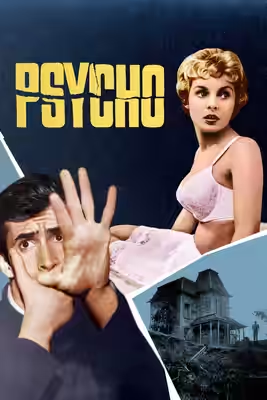
Psycho

1960 · Directed by Alfred Hitchcock · 1h 49m · 15

In a sentenceAnthony Perkins makes polite conversation a reasonable cause for alarm

HorrorThrillerMystery

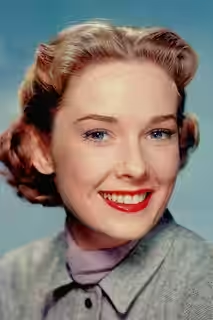
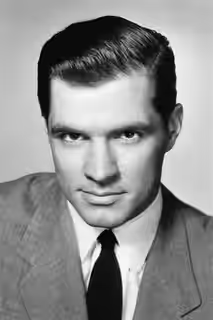
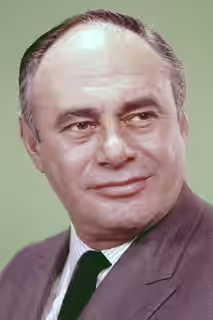
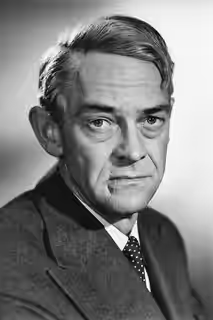
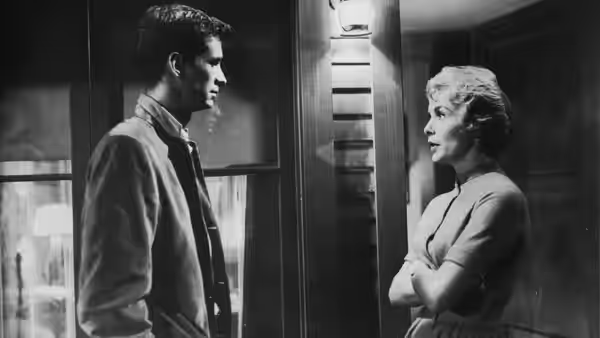
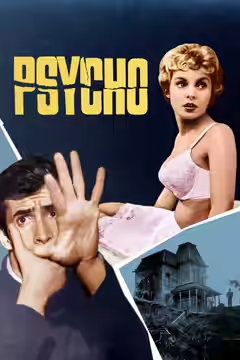
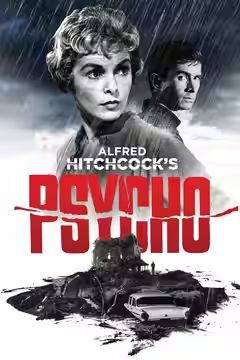
Janet Leigh plays Marion Crane, whose story brings her into contact with Norman Bates, played by Anthony Perkins. Their encounter draws attention to the fears and private troubles each brings to an apparently ordinary conversation. As the mystery develops around them, Alfred Hitchcock combines horror, suspense and black humour, keeping motives uncertain and encouraging us to question what we see. Vera Miles plays Lila Crane, John Gavin plays Sam Loomis and Martin Balsam plays Milton Arbogast. Joseph Stefano adapts Robert Bloch’s novel for a story concerned with desperation, observation and the difficulty of understanding another person.

Plays from YouTube when you press play; nothing loads from them until then.

Fi1m review

Alfred Hitchcock’s Psycho remains frightening, with Anthony Perkins making its quieter encounters especially uncomfortable. A few passages labour the mystery, but the performances and the precision of its shocks deserve their reputation.

Psycho is an exceptionally effective thriller, and its patience with people is a large part of what makes it frightening. We recommend it even to those who think they already know what it has to offer. Joseph Stefano’s screenplay, adapted from Robert Bloch’s novel, makes Marion Crane’s troubles worth our attention, then lets her encounter with Norman Bates complicate our sympathies. Hitchcock understands how readily curiosity about a stranger can turn into concern for one.

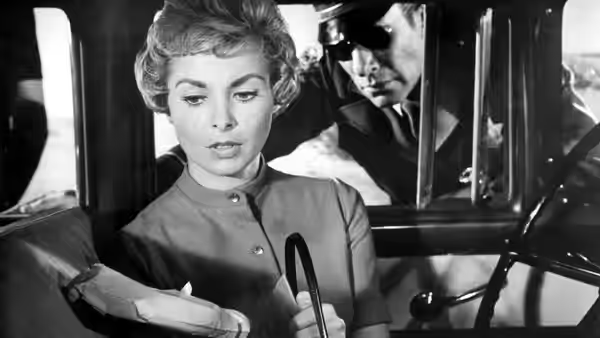
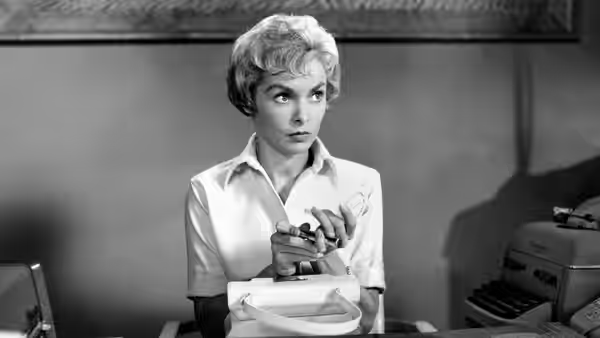
Janet Leigh makes Marion’s unease persuasive without making her remote. She gives us enough vulnerability to care about Marion, but never invites us to stop examining her. The result is uncomfortable, because our interest in her begins to feel intrusive. Hitchcock allows us to feel close to her while leaving room for doubt, and Leigh holds those uncertain feelings together without making the performance seem calculated.

Anthony Perkins is even better as Norman Bates, and the conversation between Norman and Marion in the parlour is the scene we would defend first. Perkins makes Norman’s politeness feel effortful, so that an ordinary exchange becomes difficult to relax into. We felt uneasy listening to him, and then sorry for him; the discomfort comes from seeing how badly he seems to need the conversation to go well. Leigh gives him someone alert enough to notice the strain, and their conversation holds our attention without needing to hurry towards a shock.

John L. Russell’s cinematography makes faces difficult to stop studying. In the parlour, the space around Norman feels restrictive, and the framing makes his company increasingly uncomfortable. We have time to examine him, but that extra time does little to settle our feelings about him. Hitchcock does not need constant movement to keep the image interesting: the tension survives while the two people in the frame simply talk.

George Tomasini’s editing is decisive without being uniformly hurried. The changes of pace make the stretches of conversation matter; Hitchcock can afford to let us listen because the film has other ways of interrupting our concentration. Bernard Herrmann’s string-heavy score is far less discreet, and that is part of its force: it gives fear a harsh, immediate sound that makes the shocks physically unpleasant. Some of the suspense would survive without it, but the music makes sitting comfortably through the film a more difficult proposition.

The mystery does drag in places. There are stretches when Hitchcock’s determination to keep us guessing becomes too apparent, and we start waiting for information instead of worrying about people. Stefano’s screenplay has made Marion and Norman interesting enough that this feels like a loss. These passages do not undo the tension, though they leave us conscious of the effort being made to sustain it.

For all its appetite for shocks, this is horror with an unusual interest in embarrassment, loneliness and the wish to be treated kindly. That interest prevents the humour from becoming an excuse to despise the people caught up in the mystery. At 109 minutes, it asks for no great commitment, though its reputation can make it seem like required homework. If its surprises are familiar, watch it for Perkins and Leigh, and for the trouble they can make out of a conversation.
Critical consensus AI synthesised

88
Positive
8
Mixed
0
Negative
0

Most critics are strongly enthusiastic about Psycho, with praise centred on Hitchcock’s control of audience expectations and his ability to make technical precision serve suspense. Anthony Perkins receives particular attention for a performance the reviews find both strong and nuanced, while Bernard Herrmann’s score and the editing are repeatedly singled out for their impact. Several critics also stress the bleak humour and psychological depth, finding more here than a succession of shocks.

The favourable reviews differ chiefly in emphasis: some value the mystery and entertainment, while others concentrate on voyeurism, desperation and the characters’ fears. Variety is more restrained, though it still admires the performances and technical work. The Guardian supplies the sharp dissent, finding the violence repellent, the characters difficult to care about and the mystery foolish. That objection separates it clearly from a consensus that regards Hitchcock’s manipulation as a principal strength.

Empire
1 January 2000 · David Parkinson
90*

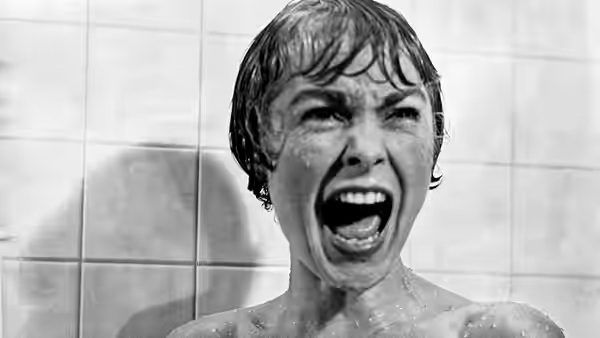
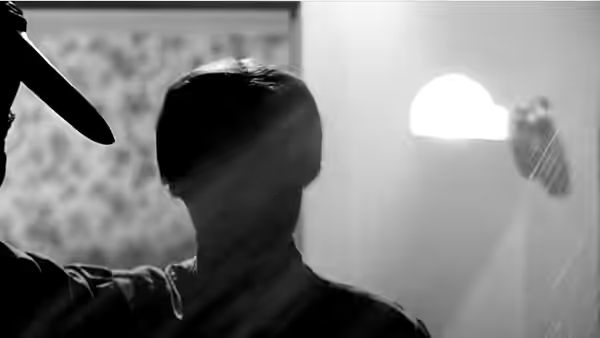
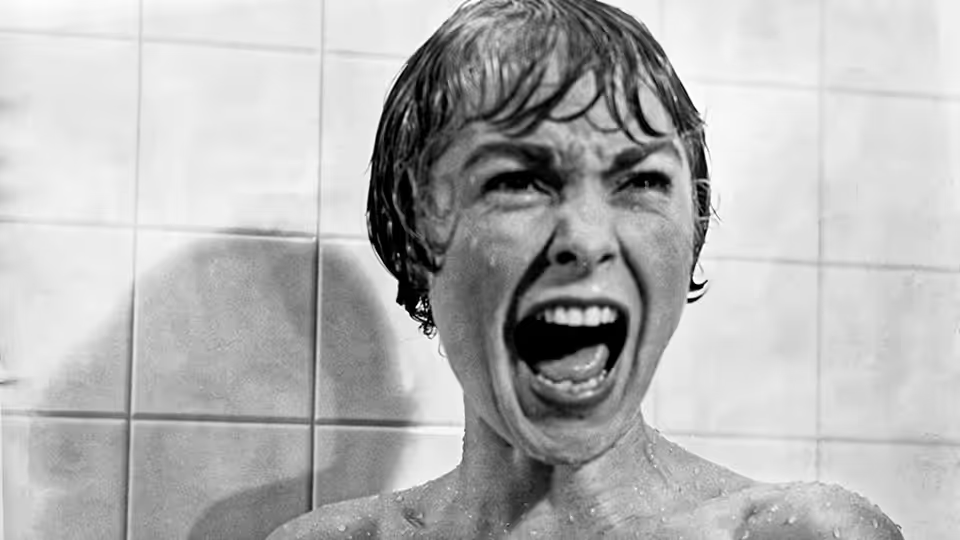
The critic hails Psycho as a timeless classic and Hitchcock's blackest, most cynical and manipulative film, which introduced the American Nightmare to the horror genre. They single out the legendary shower sequence for its masterful montage and Bernard Herrmann's score.

Read the full review →
RogerEbert.com
6 December 1998 · Roger Ebert
90*

Ebert highlights Hitchcock's skill in setting up audience expectations with the Marion story and the Norman-Marion relationship before subverting them, and singles out the shower scene's artistry along with Anthony Perkins' performance.

Read the full review →
The Hollywood Reporter
16 June 2017 · Jack Harrison
90*

The critic praises Hitchcock's artistry, technical mastery, and skill in crafting a first-rate mystery thriller full of visual shocks and surprises, justified by its macabre ending and strong performances, especially Anthony Perkins as Norman Bates.

Read the full review →
Slant Magazine
27 October 2010 · Bill Weber
85*

The critic sees Psycho as a bleak, tragic work of pure cinema whose power lies beyond mere scares, in its exploration of voyeurism, imprisonment, and psychosis, with standout praise for Anthony Perkins' nuanced performance and the pivotal parlor scene.

Read the full review →
Total Film
31 July 1998
85*

The review praises Psycho as a darkly amusing and manipulative film that remains compelling in its vision of human desperation, noting its departure from Hitchcock's usual style and the iconic shower scene's impact. It highlights the black comedy, audience manipulation, and psychological depth via Freudian symbolism and performances.

Read the full review →
Variety
22 June 1960 · Variety Staff
80*

The review finds the film an unusual but good entertainment that is indelibly Hitchcock, praising its whimsical tone mixed with graphic murders, strong performances especially from Anthony Perkins, and effective technical elements.

Read the full review →

Cast

Stills

Awards

Academy Awards, 1961

Nominated
Best Art Direction, Black and White
Nominated
Best Cinematography, Black-and-White
Nominated
Best Director
Nominated
Best Supporting Actress

Golden Globes, 1960

Won
Best Supporting Actress – Motion Picture

If you liked this, try…

Peeping Tom poster

Peeping Tom

1960 · Another unsettling study of looking, with compassion that makes the horror worse.

Les Diaboliques poster

Les Diaboliques

1955 · Patient suspicion and strained relationships make ordinary conversations difficult to trust.

The Vanishing poster

The Vanishing

1988 · A mystery that understands how curiosity can become an appalling need.

Cure poster

Cure

1997 · Quiet exchanges turn threatening in a thriller that refuses easy reassurance.

The Conversation poster

The Conversation

1974 · An uneasy thriller in which careful listening only makes certainty harder.