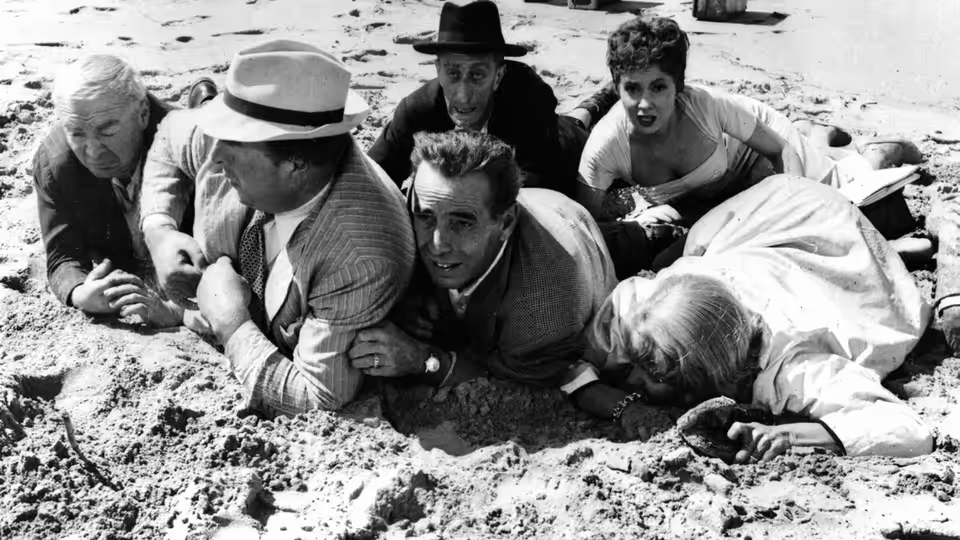
John Huston’s Beat the Devil is worth an evening for its cast’s comic assurance, particularly Jennifer Jones. The plotting is loose and some jokes fail, but the company mostly compensates.
Beat the Devil is an entertaining, uneven comedy whose cast makes its waywardness worth tolerating. John Huston approaches the crime adventure with enough irreverence to make the usual business of keeping track feel faintly beside the point. That can be liberating, particularly when the actors are allowed to enjoy an exchange without hurrying towards its consequence. It can also leave us waiting for a joke to justify the delay.
John Huston and Truman Capote give the dialogue a pleasing readiness to wander. A conversation can seem to have forgotten its original purpose, and the actors make that forgetfulness amusing through their competing degrees of assurance. The trouble comes when verbal cleverness is allowed to stand in for a comic finish. Some exchanges carry on after their usefulness is exhausted, and the film is too indulgent to move them along.
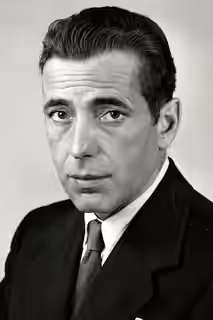
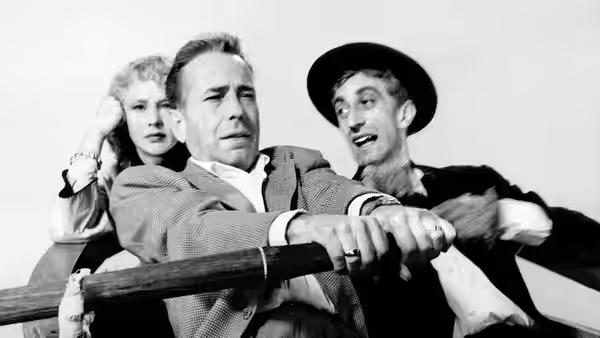
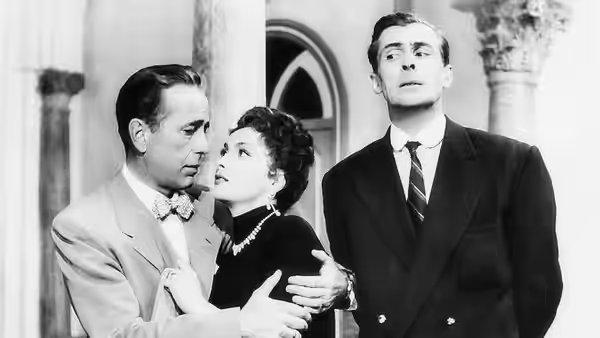
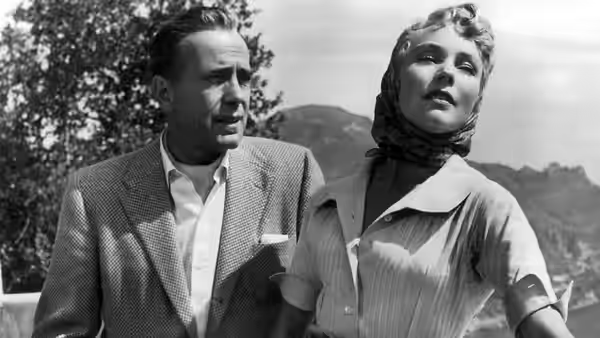
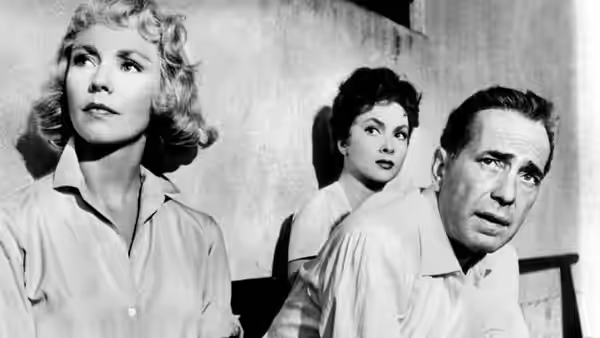
Humphrey Bogart gives Billy Dannreuther a welcome dryness, keeping the performance small enough for other people’s extravagance to register. His apparent reluctance to make a fuss is funny without needing an emphatic reaction at the end of every line. Gina Lollobrigida, as Maria Dannreuther, brings a more direct energy, and prevents his understatement from settling into mere inertia. Their performances are a good reason to accept a film that keeps finding excuses to take its time.
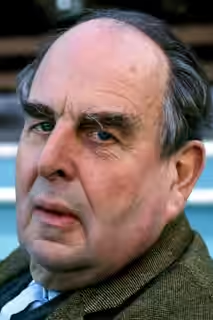
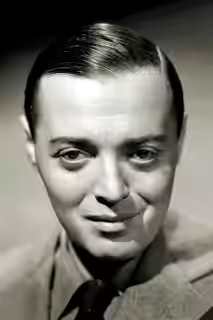
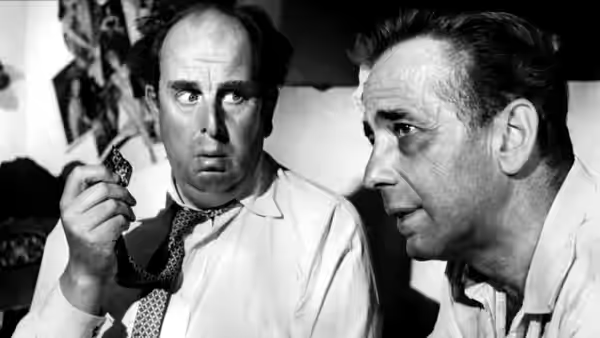
Jennifer Jones, as Gwendolen Chelm, is the chief reason to stay with it. We laughed at her certainty, which gives the nonsense she is saying the air of a correction that ought to have been obvious to everyone. Robert Morley and Peter Lorre provide their own pleasures, especially in the weight they give to material that scarcely needs such careful handling. The humour depends on the performers taking this silliness seriously, and they are usually better at that than the screenplay is at knowing when to stop.
Oswald Morris’s cinematography gives the comedy a visual composure that helps it resist becoming merely a succession of amusing voices. Ralph Kemplen’s editing is less consistently helpful: the space given to the performances is welcome, but the slack between laughs remains noticeable. Franco Mannino’s music helps maintain the lightness without becoming a memorable pleasure in its own right. None of this disguises the uneven writing, though the film remains agreeable to watch when the next laugh is taking its time.
A crime comedy can afford a loose plot, but it still needs some sense that its interruptions have been chosen carefully. Here, the distinction between an enjoyable diversion and an unnecessary one is not always clear enough. The film asks us to take pleasure in its unwillingness to hurry, then occasionally supplies too little to enjoy while we wait. That is a real limitation, even if a more tightly regulated version might have discouraged some of the performances we like.
At 95 minutes, the film is hardly a test of endurance, but it can feel longer when a stretch of dialogue produces neither surprise nor laughter. We would recommend it to anyone who enjoys actors being given room to be funny, with that qualification firmly attached. It is less suitable for an evening when the crime needs to matter and every detail needs to add up. Come for Jennifer Jones, and allow for some waiting between laughs.