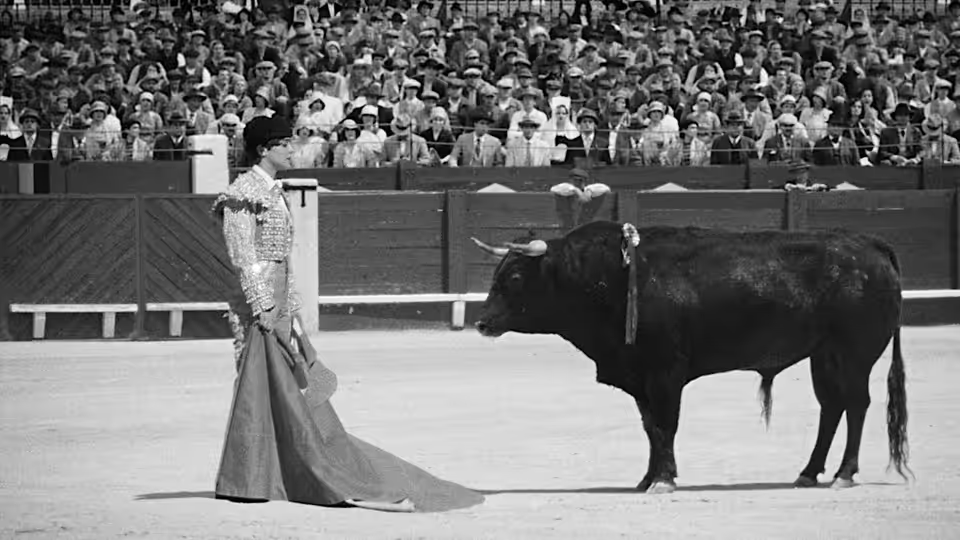
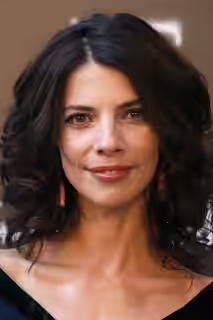
Pablo Berger’s silent, black-and-white Snow White, moved to the bullrings of 1920s Spain, is the most inventive version of the tale we have seen and, in its father-and-daughter scenes, a moving one. Maribel Verdú’s stepmother is drawn with a broad brush, and the middle hurries.
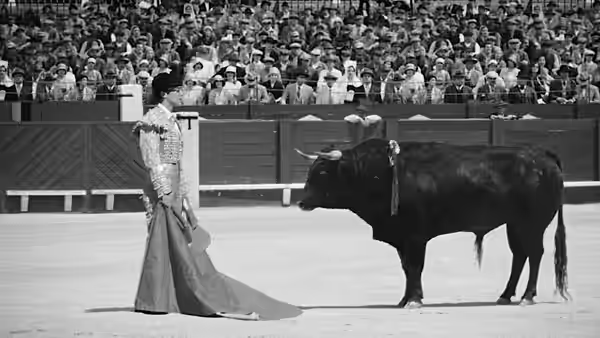
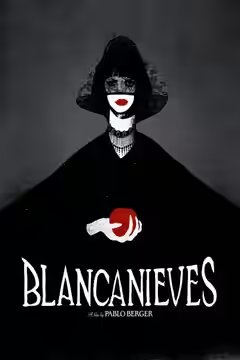
Pablo Berger’s idea is simple and slightly mad: tell Snow White as a silent film, in black and white, in Andalusia in the 1920s, with a matador for a father and a bullring where the fairy tale usually has a forest. It sounds like a stunt. It is not. Berger, who wrote and directed and is one of three credited producers, has plainly watched a great deal of silent cinema and understood that the close-up, the iris and the sparing intertitle are a way of telling a story, not a costume to dress one in. Blancanieves is the best Snow White we have seen, and we have sat through more of them than we wanted to.
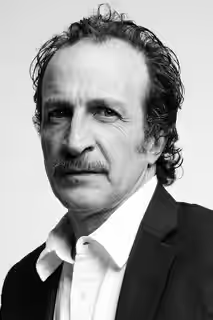
The opening sets out how it will work. Antonio Villalta (Daniel Giménez Cacho) is in the ring at Seville, his wife Carmen de Triana (Inma Cuesta) in the stands, and Fernando Franco cuts the afternoon as a rising rhythm: hands, hooves, a photographer’s flash, the singer’s face, the bull arriving as an edit rather than a picture. We flinched, and there is not a drop of blood on screen. Ten minutes later the fairy tale is in place, a dead mother, a broken father, and a nurse (Maribel Verdú) whose eyes go to the house before they go to the patient.
Kiko de la Rica shoots it in a black and white with real black in it. The coal cellar where the child is put to work is a hole with one lamp; Encarna’s rooms upstairs are white walls and hard shadow. Alain Bainée’s estate is all staircases and locked doors, which is what a stepmother’s house should be. Paco Delgado dresses Verdú in gowns that look as if they arrived from Paris that morning and the child in a smock the colour of the cellar. Alfonso Vilallonga’s score does the talking. Guitar, handclaps and orchestra carry the plot, and the score also supplies the noises the film refuses to make, so a cockerel or a slap is a note rather than a sound. It is the most useful score we have heard in a long while.
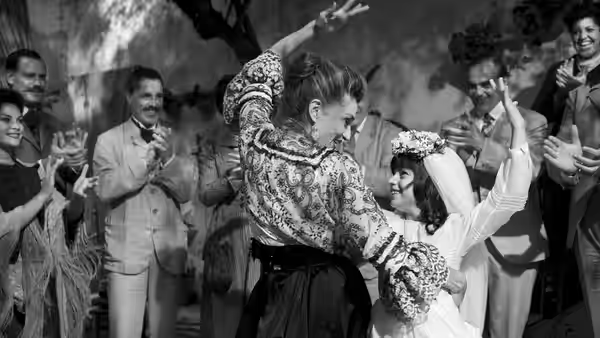
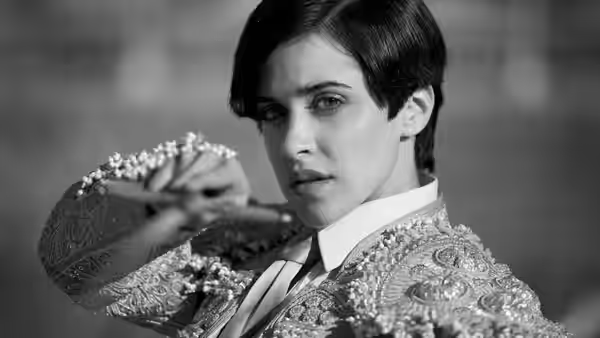
The film is at its best when it forgets the villain and stays with the father. Carmencita (Sofía Oria) creeps upstairs, finds the man in the wheelchair, and he teaches her the cape from his chair with a tablecloth. There is a scene in which she puts a record on and dances with him, swinging the chair in circles while the camera looks up at them, and it moved us far more than we expected a silent pastiche to manage. Oria is remarkable, stubborn and watchful, and when Macarena García takes over as the grown Carmen she keeps the same set of the chin. García does the bullring scenes herself, or appears to, and she carries them.
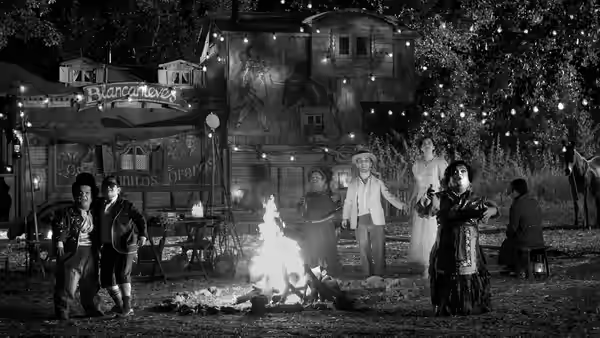
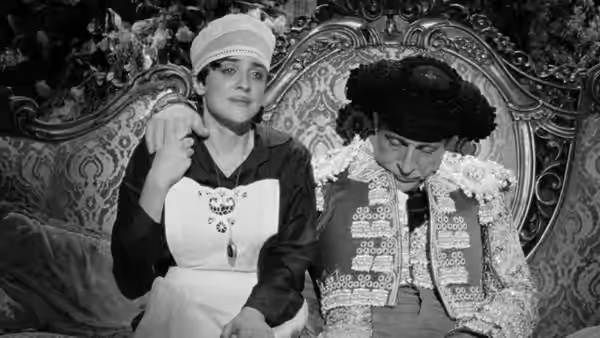
Verdú is having a wonderful time as Encarna, a woman who has got everything she schemed for and found it dull. She poses for magazine covers, keeps the chauffeur Genaro (Pere Ponce) on a lead, and treats the child as a problem in housekeeping. She is funny, and she is broad. Berger writes her as a series of set pieces rather than a person, and the fetish joke with the chauffeur is done once, then done again for anyone who missed it. The middle of the film, once Carmen leaves the house, goes by too quickly as well, as if Berger were impatient to get to the ring. We will not say how she gets there. We will say that the travelling troupe of bullfighting dwarfs she falls in with is the film’s warmest invention, and the stretch on the road with them is where it relaxes and lets its people be funny.
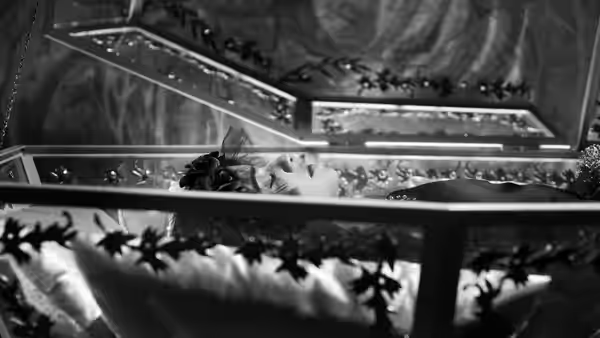
Comparisons with The Artist were inevitable and are not very useful. Berger is closer to Murnau and to Spanish gothic than to Hollywood, and his film is darker in every sense. The ending takes a turn we will not describe. It unsettled us, we are still not certain it is the right note, and we are glad Berger did not take the obvious one.
At 104 minutes it is over before the objection forms. If you have never sat through a silent film and suspect you could not, start here, with the sound up, because half of it is in the music.