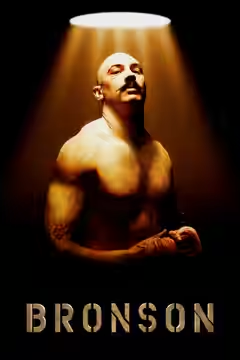
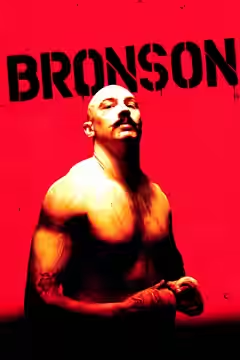
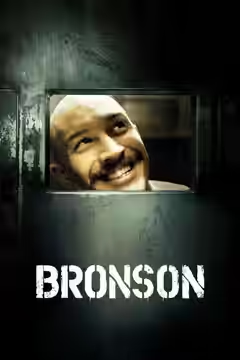
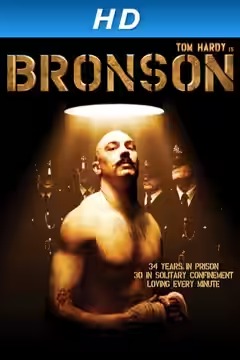
Tom Hardy makes Bronson funny, threatening and worth the discomfort. Nicolas Winding Refn’s crime portrait is held together by that performance, though its fascination with a violent man’s hunger for attention starts to wear thin across 92 minutes.
Nicolas Winding Refn’s Bronson is worth seeing for Tom Hardy, with a firm warning about the company we will be keeping. The film turns a violent man’s craving for attention into abrasive, uneasy entertainment. It allows us to enjoy his self-importance, then makes that enjoyment uncomfortable. This is a useful way into a crime biography that might otherwise settle for explaining bad behaviour. The trouble is that the film finds the idea so satisfying that it keeps repeating it.
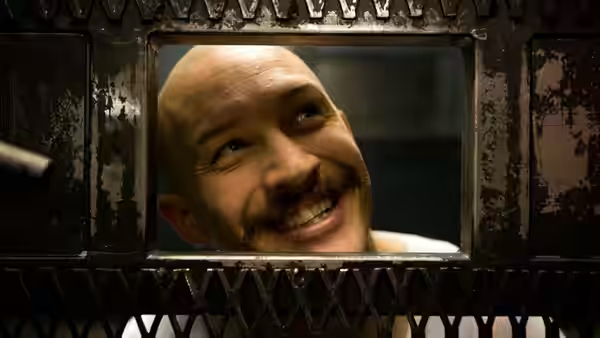
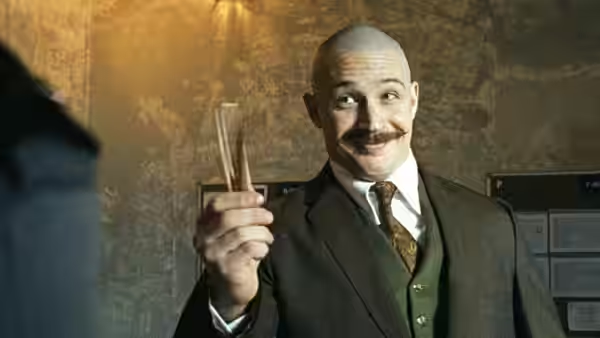
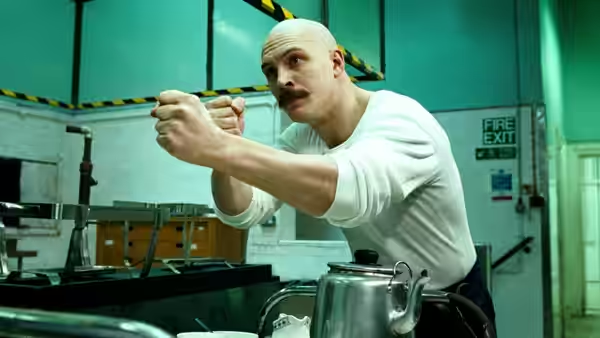
Tom Hardy plays Michael Peterson / Charles Bronson with enough humour to make the aggression unpredictable. The performance can be ridiculous without becoming reassuring, because the desire to impress never makes the threat disappear. We laughed, then felt uneasy about laughing: his exaggerated self-importance is funny, but the brutality gives that joke an unpleasant consequence. The comic and violent sides belong to the same person, and the actor does not tidy him up for our benefit.
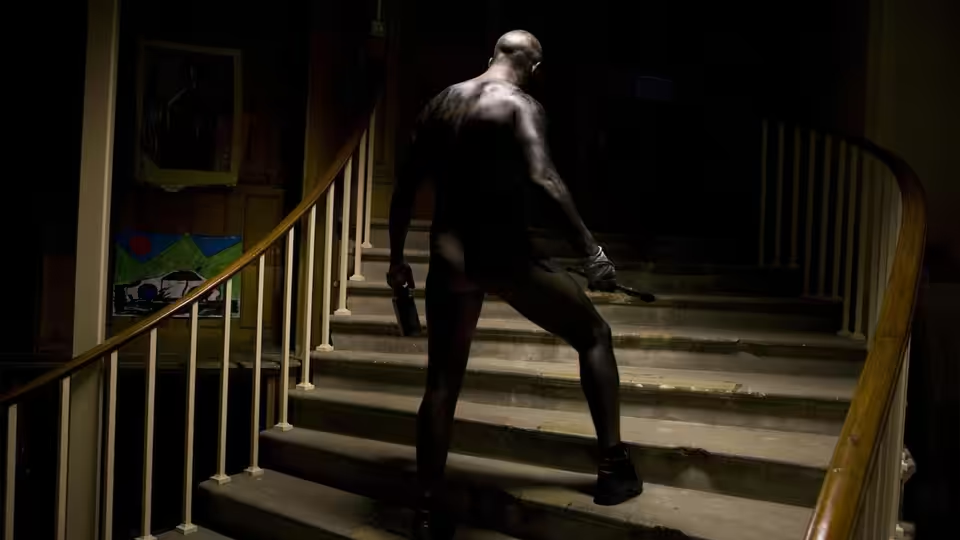
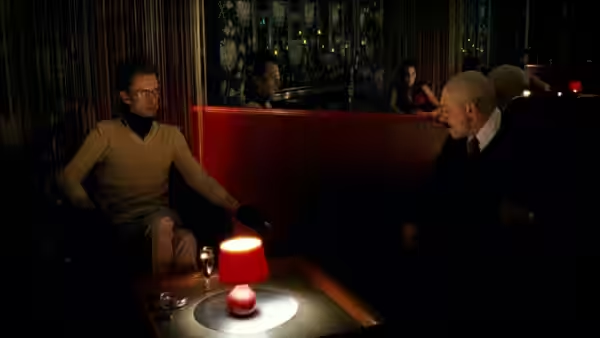
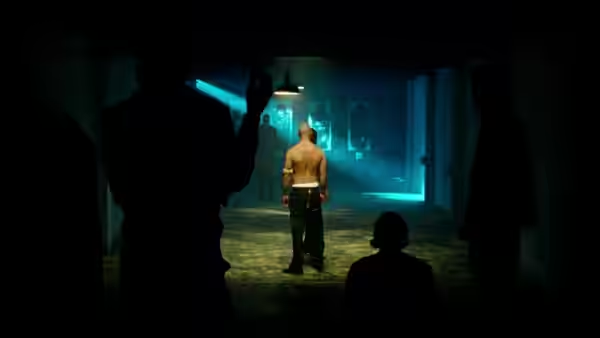
Larry Smith’s cinematography gives the film’s stillness a threatening weight. These pauses matter because the aggression would become monotonous if every image competed to be the most forceful. Adrian Smith’s production design suits the heightened performance, making its exaggerations feel at home rather than like an actor overwhelming his surroundings. The visual confidence helps keep us watching, although it also makes the director’s fascination with this man a little too easy to share.
Matthew Newman’s editing makes good use of the shifts between waiting and attack. The pace can be brisk without making the threat feel routine, and the more patient passages give us time to become anxious about what might happen next. Johnny Jewel’s music adds to the sense that somebody expects an occasion to be made of him. It is effective, though the combined insistence of music, images and performance sometimes makes the film feel unnecessarily emphatic.
The screenplay, by Brock Norman Brock and Nicolas Winding Refn, is less persuasive. Its interest in violence as self-promotion is clear early on, and revisiting it does not make it much richer. We do not need a neat explanation for every ugly impulse, but there should be more to discover after the central idea has been established. Too often another display of aggression has to do the work of developing the character. At 92 minutes, the film has little excuse for losing momentum.
Matt King, as Paul Daniels, offers a welcome change of company. His camp performance introduces a different comic manner, and suggests how much a supporting player can do when a film is so firmly organised around its lead. Against the familiar promises of a screen biography, this one is pleasingly unwilling to make its subject easy to understand. It is less willing to ask what we gain from spending so much time in his company.
The performance remains strong enough to justify the evening if abrasive crime drama is what we are after. There is wit here, and tension, and the central figure never becomes comfortably likeable. But the film runs short of fresh things to say about him. Go for Tom Hardy; do not expect the film to explain the man he plays.