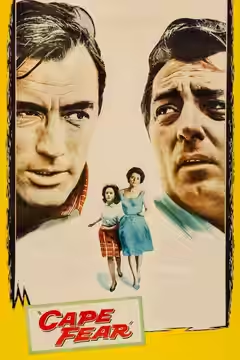
Robert Mitchum makes Cape Fear a deeply unsettling thriller, helped by J. Lee Thompson’s command of light and shadow. The writing gives its villain too little scrutiny, but the menace is difficult to shake.
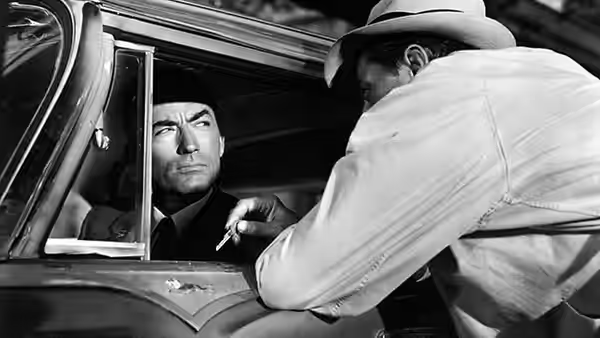
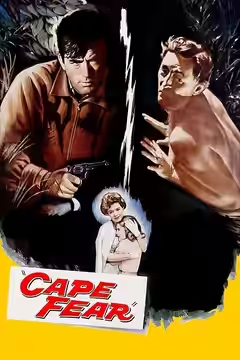
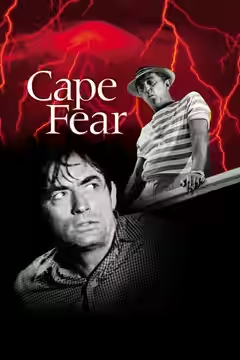
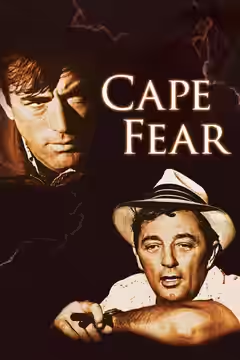
J. Lee Thompson’s Cape Fear is an effective, unsettling thriller, worth seeing chiefly for the ease with which Robert Mitchum makes another person’s attention feel intolerable. His Max Cady stalks Gregory Peck’s Sam Bowden, and the film understands that being watched can become frightening well before anything more happens. It gives that simple situation enough pressure to hold us, even when the writing offers little to consider beyond the immediate threat. The limitation matters, but it does not spoil the suspense.
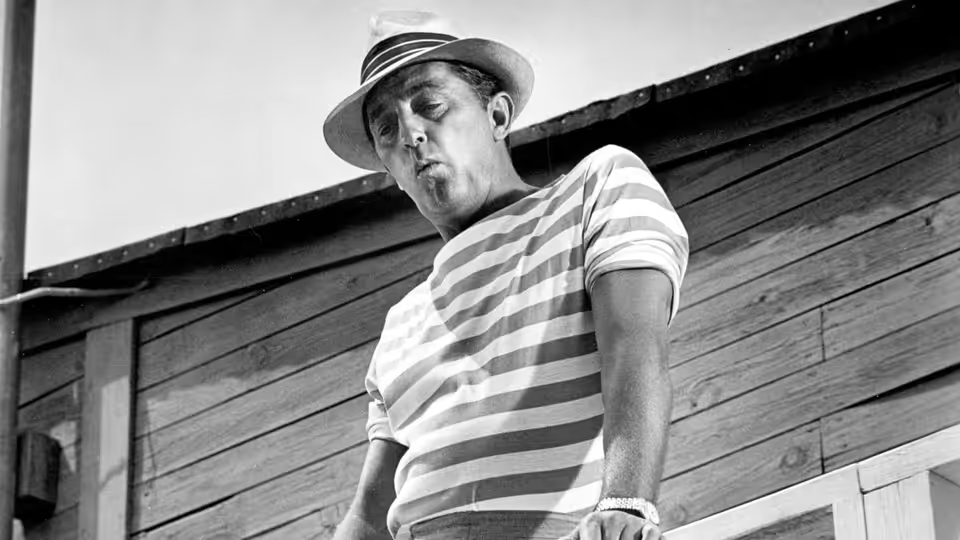
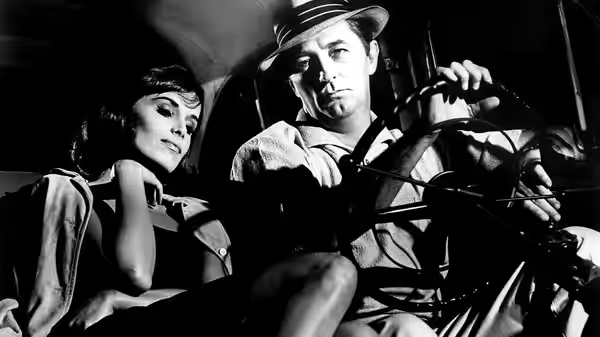
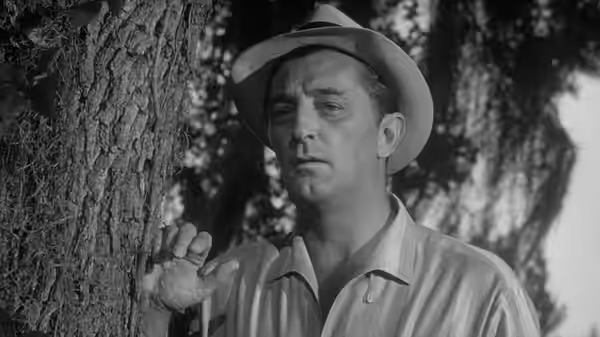
Robert Mitchum gives Max Cady a disturbing ease, never seeming to work hard for the fear he creates. There is something particularly nasty about his apparent enjoyment of the pursuit, which makes his interest in Sam Bowden feel personal without making him easy to understand. We were unnerved by that calm: he seems entirely comfortable making another man afraid. The performance is sly enough to keep us watching for changes, rather than simply waiting for a demonstration of cruelty.
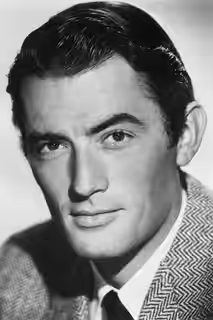
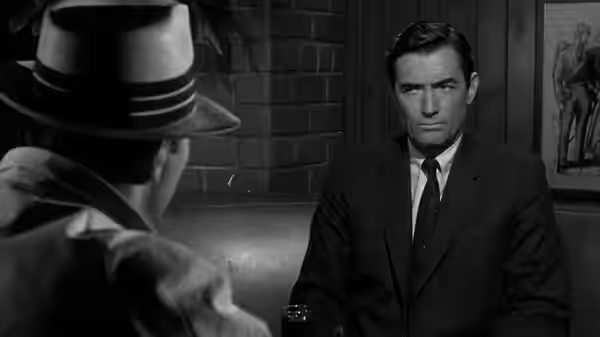
Gregory Peck provides a firm response, though his emphatic decency can make Sam Bowden a little too predictable. We know where we stand with him almost immediately, and the performance does not offer much reason to reconsider. Polly Bergen, as Peggy Bowden, brings a more vulnerable presence, making the distress feel less like a requirement of the thriller. She is sympathetic without making a display of it, and we wanted James R. Webb’s screenplay to give her more of its attention.
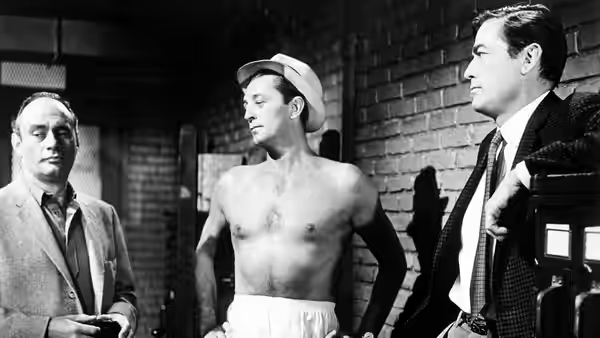
Cinematographer Sam Leavitt’s use of light and shadow gives the threat somewhere to linger even when Robert Mitchum is doing little. The darker areas of the image invite scrutiny, making us search the frame rather than merely admire its polish. J. Lee Thompson makes this useful to the suspense; the lighting does some of the work that a more impatient thriller would assign to an actor’s scowl. The images remain controlled enough that the menace rarely needs underlining.
George Tomasini’s editing allows the tension to accumulate, giving the performances time to make their pressure felt. The pace suits a story built around unwelcome attention, because hurrying would make that attention easier to dismiss. Bernard Herrmann’s music is more insistent, and its force sometimes seems unnecessary when Robert Mitchum has already made us uncomfortable. It sustains the unease, but we occasionally wished it would trust the actor to do the job alone.
The main weakness is the treatment of Max Cady’s viciousness, which James R. Webb’s screenplay largely accepts as sufficient explanation. A thriller need not diagnose its villain, and an elaborate account of his motives could easily have made this one less frightening. Still, the lack of curiosity limits what remains to think about once the immediate suspense has passed. Robert Mitchum supplies enough suggestion to make the character absorbing, but the writing does not reward the same close attention as his performance.
Within the stalking thriller, this is a persuasive case for keeping the central threat simple and letting an actor do the frightening. We would recommend it to anyone who enjoys suspense that develops through watchfulness rather than constant incident. Allow for the thin character writing, and give it an evening when feeling thoroughly uncomfortable sounds like a reasonable plan.