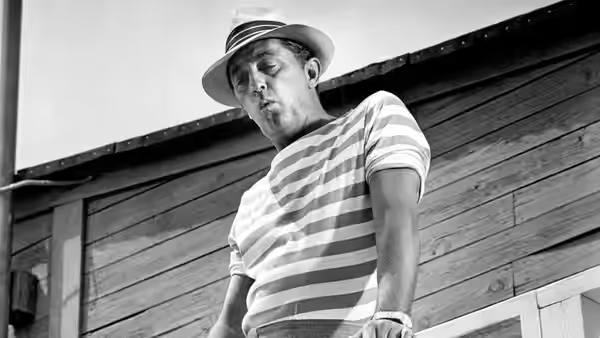
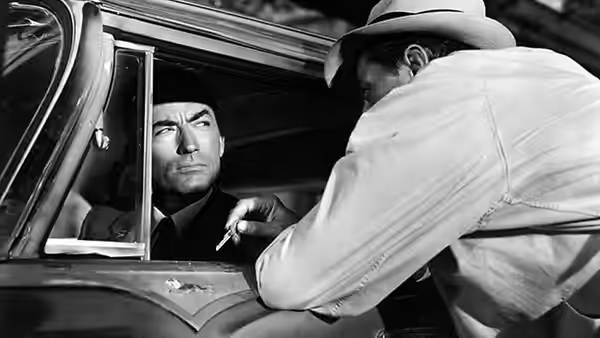
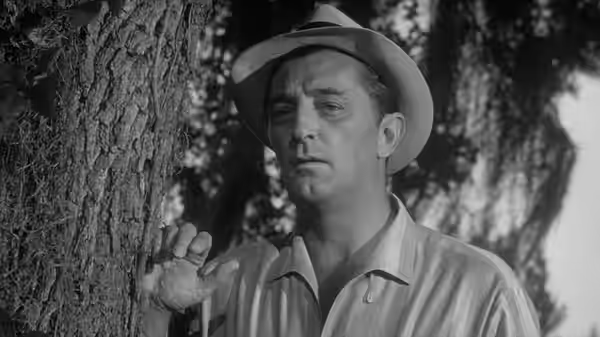
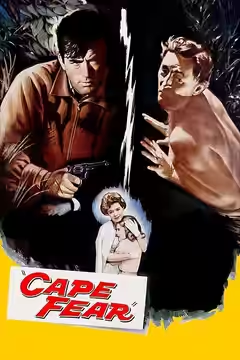
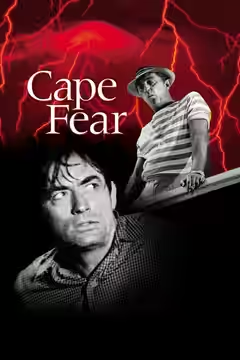
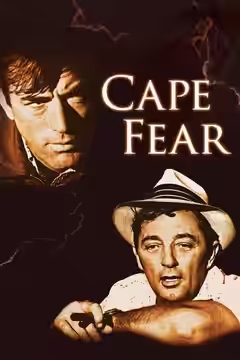
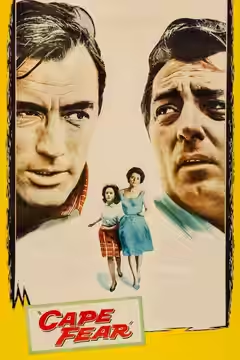
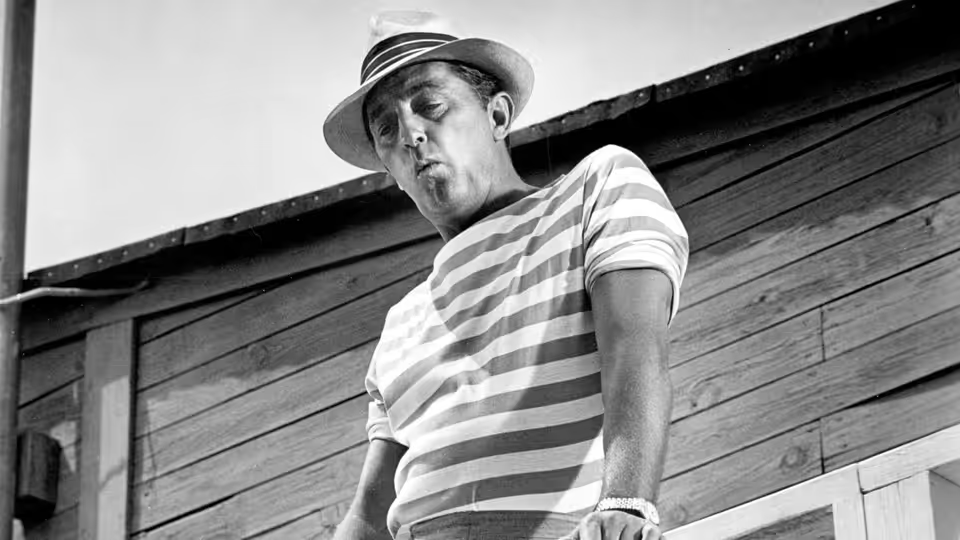
Max Cady (Robert Mitchum) looks down from beside a wooden waterfront building
Film review

Cape Fear

1962 · Directed by J. Lee Thompson · 1h 46m

In a sentenceRobert Mitchum makes moving house seem like a perfectly reasonable response to eye contact

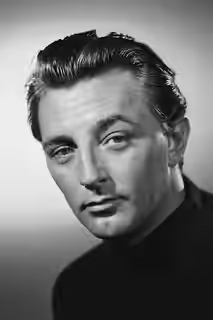
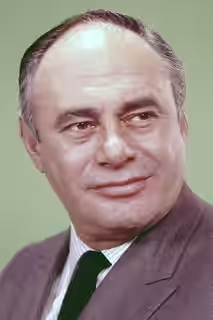
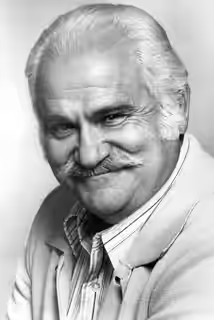
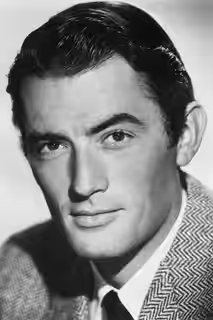
Sam Bowden (Gregory Peck) is being stalked by Max Cady (Robert Mitchum). Sam wants the unwanted attention to stop, but Cady’s persistence makes the threat difficult to escape. Around them are Peggy Bowden (Polly Bergen), Nancy Bowden (Lori Martin), Police Chief Mark Dutton (Martin Balsam), Attorney Dave Grafton (Jack Kruschen) and Private Detective Charles Sievers (Telly Savalas). The immediate problem is how to deal with a man who keeps watching, and whose interest in someone else’s life gives him no apparent reason to leave.

Fi1m review

Robert Mitchum makes Cape Fear a deeply unsettling thriller, helped by J. Lee Thompson’s command of light and shadow. The writing gives its villain too little scrutiny, but the menace is difficult to shake.

J. Lee Thompson’s Cape Fear is an effective, unsettling thriller, worth seeing chiefly for the ease with which Robert Mitchum makes another person’s attention feel intolerable. His Max Cady stalks Gregory Peck’s Sam Bowden, and the film understands that being watched can become frightening well before anything more happens. It gives that simple situation enough pressure to hold us, even when the writing offers little to consider beyond the immediate threat. The limitation matters, but it does not spoil the suspense.

Robert Mitchum gives Max Cady a disturbing ease, never seeming to work hard for the fear he creates. There is something particularly nasty about his apparent enjoyment of the pursuit, which makes his interest in Sam Bowden feel personal without making him easy to understand. We were unnerved by that calm: he seems entirely comfortable making another man afraid. The performance is sly enough to keep us watching for changes, rather than simply waiting for a demonstration of cruelty.

Gregory Peck provides a firm response, though his emphatic decency can make Sam Bowden a little too predictable. We know where we stand with him almost immediately, and the performance does not offer much reason to reconsider. Polly Bergen, as Peggy Bowden, brings a more vulnerable presence, making the distress feel less like a requirement of the thriller. She is sympathetic without making a display of it, and we wanted James R. Webb’s screenplay to give her more of its attention.

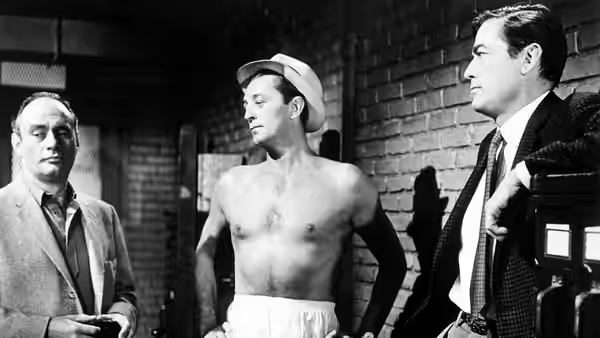
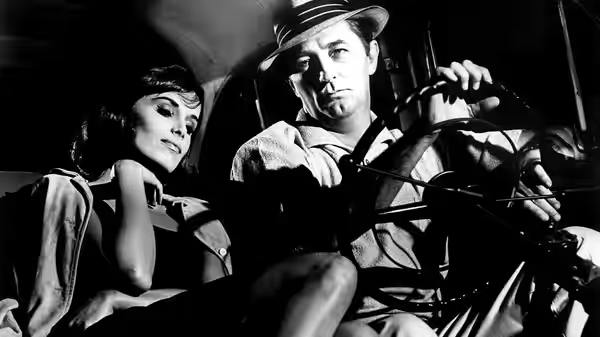
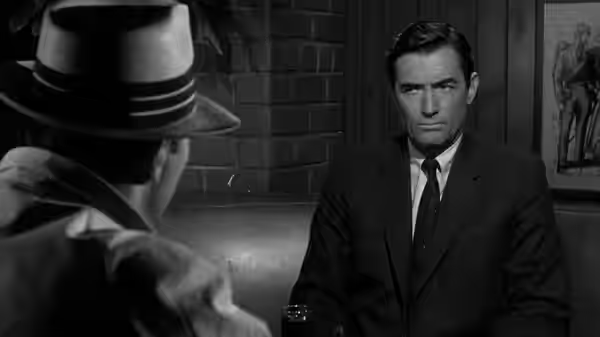
Cinematographer Sam Leavitt’s use of light and shadow gives the threat somewhere to linger even when Robert Mitchum is doing little. The darker areas of the image invite scrutiny, making us search the frame rather than merely admire its polish. J. Lee Thompson makes this useful to the suspense; the lighting does some of the work that a more impatient thriller would assign to an actor’s scowl. The images remain controlled enough that the menace rarely needs underlining.

George Tomasini’s editing allows the tension to accumulate, giving the performances time to make their pressure felt. The pace suits a story built around unwelcome attention, because hurrying would make that attention easier to dismiss. Bernard Herrmann’s music is more insistent, and its force sometimes seems unnecessary when Robert Mitchum has already made us uncomfortable. It sustains the unease, but we occasionally wished it would trust the actor to do the job alone.

The main weakness is the treatment of Max Cady’s viciousness, which James R. Webb’s screenplay largely accepts as sufficient explanation. A thriller need not diagnose its villain, and an elaborate account of his motives could easily have made this one less frightening. Still, the lack of curiosity limits what remains to think about once the immediate suspense has passed. Robert Mitchum supplies enough suggestion to make the character absorbing, but the writing does not reward the same close attention as his performance.

Within the stalking thriller, this is a persuasive case for keeping the central threat simple and letting an actor do the frightening. We would recommend it to anyone who enjoys suspense that develops through watchfulness rather than constant incident. Allow for the thin character writing, and give it an evening when feeling thoroughly uncomfortable sounds like a reasonable plan.
Critical consensus AI synthesised

71
Positive
2
Mixed
2
Negative
0
Empire
1 January 2000 · Kim Newman
80*

Newman regards the film as a classic thriller, elevated by its premise and performances. He especially praises Robert Mitchum’s sly, menacing portrayal of Max Cady.

Read the full review →
Radio Times
★★★★ · Alan Jones
80

The review praises the original as gripping and tension-laden. It singles out Robert Mitchum’s vicious performance and the director’s use of light and shadow.

Read the full review →
The New York Times
19 April 1962 · Bosley Crowther
64*

The page is inaccessible, so the critic’s verdict cannot be confirmed. Its headline indicates Mitchum stalks Peck, but the review’s specific praise or complaint is unavailable.

Read the full review →
Variety
1 January 1962 · Variety Staff
60*

The review calls the film competent and visually polished, but finds its treatment of the villain’s behavior shallow. It praises Robert Mitchum’s menacing presence and Polly Bergen’s sympathetic performance.

Read the full review →

Straight answers AI written, from our review

Is Cape Fear worth watching?
Cape Fear is worth watching for Robert Mitchum’s deeply unsettling performance and its patient suspense; we score it 82. We recommend it to anyone who enjoys tension built through watchfulness rather than constant incident, with a caveat: the thin character writing gives us less to consider than the performances do.
How long is Cape Fear, and what is it rated?
Cape Fear runs 1h 46m. It is a thriller and drama film.
Where can I watch Cape Fear in Greece?
Cape Fear is not on any streaming or rental service in Greece at the moment. It is available in 33 other countries; change your country at the top of the page to see where. Availability is checked daily.
How violent or frightening is Cape Fear, and is it suitable for children?
Cape Fear carries a UK 15 certificate, and its sustained stalking menace makes it unsuitable for children. We find Mitchum’s calm enjoyment of making another man afraid particularly unnerving; for older teenagers and adults, the warning is about persistent psychological discomfort rather than any specific level of graphic violence we can establish here.
How does Cape Fear compare to The Night of the Hunter?
Cape Fear is the more straightforward stalking thriller, while we recommend The Night of the Hunter as the stronger, stranger film, with more room for beauty. Both offer unsettling Robert Mitchum performances, but the choice is between patient, concentrated menace and a black-and-white fairy tale whose broad comedy does not spoil its disturbing effect.
Is Cape Fear based on a true story or a book?
Cape Fear is adapted from a novel by John D. MacDonald, rather than presented as a true story. No prior reading is needed to follow its central situation: a man faces a stalker whose persistent attention becomes increasingly difficult to escape.
What should I watch after Cape Fear?
After Cape Fear, try The Night of the Hunter (1955, Fi1m 91): Another unsettling Robert Mitchum performance, with more room for beauty and strangeness. Then The Vanishing (1988, Fi1m 88): An obsessive search handled with patience and an unnerving lack of reassurance.

Cast

If you liked this, try…

  1. The Night of the Hunter (1955, Fi1m 91)Another unsettling Robert Mitchum performance, with more room for beauty and strangeness.

  2. The Hitch-Hiker (1953) · not reviewed yetA spare, sour thriller that makes proximity to one man unbearable.

  3. Le Boucher (1970) · not reviewed yetFor the unease of suspecting someone whose company has become familiar.

  4. The Vanishing (1988, Fi1m 88)An obsessive search handled with patience and an unnerving lack of reassurance.

  5. The Gift (2015) · not reviewed yetUnwanted attention unsettles domestic comfort, with greater interest in the people threatened.