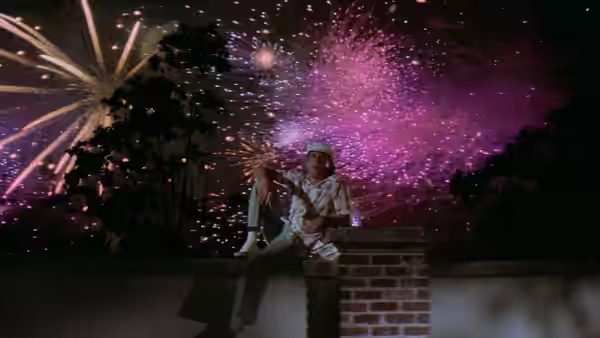
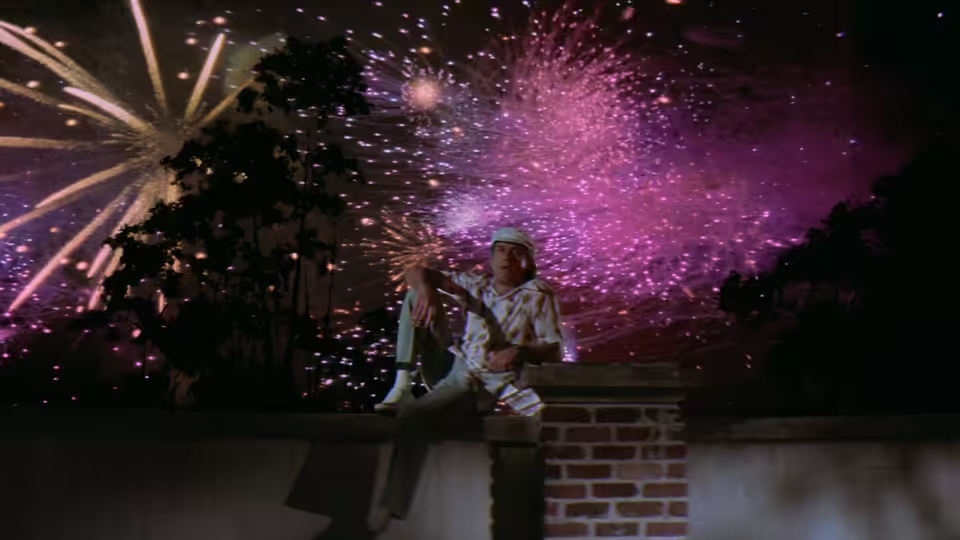
A woman sits on a brick wall as fireworks burst overhead
Film review

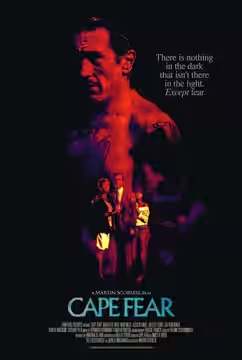
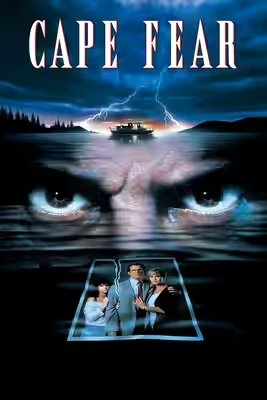
Cape Fear

1991 · Directed by Martin Scorsese · 2h 08m

In a sentenceRobert De Niro is quite enough to worry about without the music joining in

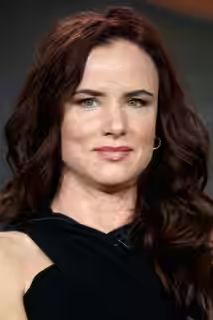
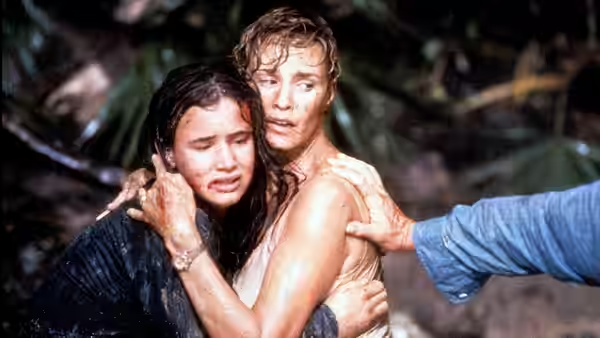
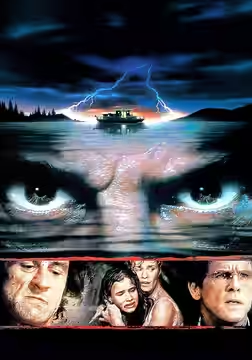
In the Bowden household, lawyer Sam Bowden (Nick Nolte) wants to preserve the security he has provided for his wife, Leigh Bowden (Jessica Lange), and their teenage daughter, Danielle Bowden (Juliette Lewis). Max Cady (Robert De Niro) threatens that future, bringing trouble connected to Sam’s past. The family already has difficulties of its own: Danielle is troubled, and Sam’s responsibilities at home extend beyond keeping danger away. Cady’s intimidation puts further pressure on the relationships between the three Bowdens. Sam must protect Leigh and Danielle while dealing with a household that is already struggling to hold together.

Plays from YouTube when you press play; nothing loads from them until then.

Fi1m review

Martin Scorsese’s Cape Fear is a gripping family thriller that becomes less frightening as it gets louder. Juliette Lewis gives it a vulnerability that Robert De Niro’s extravagant menace sometimes threatens to overwhelm.

Martin Scorsese makes Cape Fear an absorbing, unpleasant thriller, though he pushes it past the point where more noise means more fear. The family is the reason to stay with it: their difficulties make them vulnerable, and the acting gives us reason to worry about them. The early patience is especially effective, allowing anxiety about these people to build before the film starts pressing harder. Its appetite for excess eventually weakens some carefully established dread.

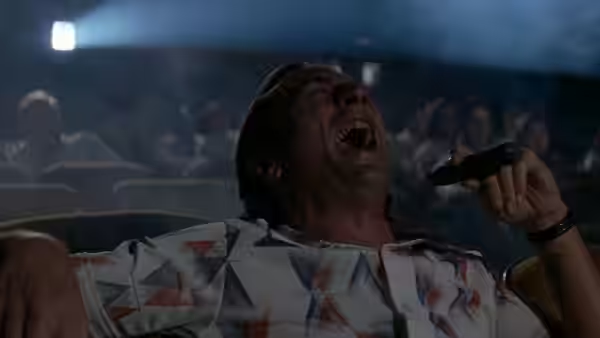
Robert De Niro plays Max Cady with an extravagance that can be frightening and exhausting within the same stretch. There is nasty humour in the performance, and an enjoyment of intimidation that makes him difficult to stop watching. The danger is clear quickly. Keeping the performance at such a pitch eventually makes some of its gestures repetitive, however much energy goes into them.

Nick Nolte’s Sam Bowden is more interesting because the family around him never settles into a reassuring picture of innocence. Jessica Lange gives Leigh Bowden enough presence to prevent Sam’s anxieties from becoming the only ones that count. But Juliette Lewis is the person we keep watching. We felt protective of Danielle Bowden, because her teenage unease seems painfully exposed beside Cady’s confidence.

Wesley Strick’s screenplay does its best work in allowing the family’s troubles to complicate the threat. That is a useful choice for this kind of thriller, where the people in danger can easily become interchangeable reasons to worry. The Bowdens have enough difficult feelings about one another to remain interesting even without Cady demanding our attention. The attempts to give the horror psychological weight become less persuasive when the film insists on making everything larger.

Freddie Francis’s photography makes the Bowdens’ surroundings feel oppressive, while Henry Bumstead’s production design keeps their domestic comfort believable. It matters that there is a recognisable family home beneath all the threatening style. The music, credited to Bernard Herrmann and Elmer Bernstein, adds pressure that the film is seldom short of already. We would welcome less assistance from the score when Robert De Niro is being this emphatic.

Thelma Schoonmaker’s editing is most effective in the earlier, more patient passages, when there is time to register the family’s unease. As the film grows more insistent, the rhythm leaves fewer opportunities for the threat to settle. By the later passages, that patience has largely gone. The effort to keep intensifying the danger becomes tiring, and the family tensions get less of the attention they deserve.

Cruelty is part of the bargain with a thriller like this, but there are stretches when Martin Scorsese seems more interested in prolonging discomfort than discovering anything further about these people. That is a fair reason to dislike it, and the film does little to soften the objection. We still think the family performances earn the anxiety they create, particularly Juliette Lewis’s. Choose it for them, provided an evening of being deliberately unsettled sounds appealing.

Critical consensus AI synthesised

57
Positive
5
Mixed
1
Negative
3

The reviews lean positive on Cape Fear, but the disagreements are substantial. Praise centres on Scorsese’s forceful direction and the performances, with De Niro’s menace and grotesque humour making the strongest impression on admirers. Several critics find an effective thriller beneath the excess: the early suspense, the lawyer’s troubled family and Juliette Lewis’s performance give them more to value than technical skill alone.

The divide concerns how far that excess serves the film. Even favourable reviews acknowledge overstatement, with Empire finding the first hour’s quiet suspense more persuasive than the extravagant finale. The harsher assessments question more than restraint: the Los Angeles Times finds Scorsese’s ability to make an audience squirm troublingly sadistic. The New Yorker dissents most sharply, arguing that the attempted psychological depth weakens the horror and finding De Niro’s Cady uninteresting. The consensus is therefore divided over both the film’s methods and its central performance.

Radio Times
★★★★ · John Ferguson
80

Ferguson considers the film highly effective despite its over-the-top performance from De Niro. He singles out Scorsese’s portrayal of the lawyer’s family as the film’s strength.

Read the full review →
Empire
21 November 2006 · Kim Newman
75*

Newman calls it a damn good horror picture, despite its shift from subtle suspense to an over-the-top finale. He praises the lead performances and the first hour’s quietly scary logic.

Read the full review →
Variety
31 December 1990 · Variety Staff
75*

Variety calls the remake smart, stylish, and sharply written, with Scorsese’s forceful direction driving its disturbing material. It especially praises Robert De Niro’s memorable performance and Juliette Lewis’s portrayal of the troubled teen.

Read the full review →
The New York Times
13 November 1991 · Janet Maslin
70*

The review is positive about Scorsese’s remake as an effective thriller. It singles out Robert De Niro’s menacing performance.

Read the full review →
RogerEbert.com
64*

The page content is unavailable, so the critic’s verdict and any specific praise or complaint cannot be determined. The accessible text contains only a browser-check message.

Read the full review →
Time Out
· GA
40*

The review is skeptical, suggesting the remake falls short of Scorsese’s talents. It acknowledges the film’s technical bravura but sees that craft as unable to overcome its limitations.

Read the full review →

Straight answers AI written, from our review

Is Cape Fear worth watching?
Cape Fear is worth watching if an unsettling family thriller appeals, and we score it 71 out of 100. We recommend it for the Bowdens’ complicated relationships and Juliette Lewis’s vulnerable performance, though the increasingly emphatic menace and music make it less frightening as it gets louder.
How long is Cape Fear, and what is it rated?
Cape Fear runs 2h 08m. It is a drama and crime film.
Where can I watch Cape Fear in Greece?
Cape Fear is not on any streaming or rental service in Greece at the moment. It is available in 36 other countries; change your country at the top of the page to see where. Availability is checked daily.
How violent or frightening is Cape Fear, and is it suitable for children?
Cape Fear carries a UK 18 certificate and is not suitable for children: its intimidation, cruelty and prolonged discomfort make it an adult thriller. We find the threat to an already troubled family disturbing, particularly where their teenage daughter is concerned; anyone sensitive to sustained menace should approach with caution.
How does Cape Fear compare to The Night of the Hunter?
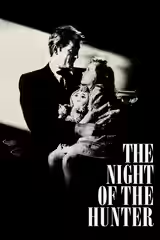
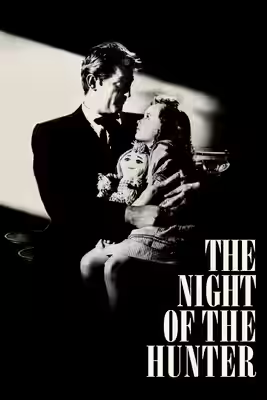
Cape Fear is the louder, more exhausting thriller; we recommend The Night of the Hunter more strongly for its frightening preacher and strange black-and-white fairy-tale atmosphere. Both place a threatening visitor at the centre, but Scorsese’s film offers a troubled family’s relationships where Laughton’s mixes terror with broad comedy.
Is Cape Fear based on a true story or a book?
Cape Fear is based on a novel by John D. MacDonald, rather than a true story. No familiarity with the book is needed to follow the Bowdens’ family troubles and Cady’s intimidation, though we make no claim about how faithfully the film follows its source.
What should I watch after Cape Fear?
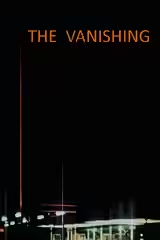
After Cape Fear, try The Night of the Hunter (1955, Fi1m 91): Another threatening visitor, with terror carried by charm and distorted righteousness. Then The Vanishing (1988, Fi1m 88): An obsessional thriller that makes ordinary conversation difficult to sit through; and A History of Violence (2005, Fi1m 88): Family security looks fragile again, with less theatricality and comparable unease.

Cast

Awards

Academy Awards, 1992

Nominated
Best Actor
Nominated
Best Supporting Actress

If you liked this, try…

  1. The Night of the Hunter (1955, Fi1m 91)Another threatening visitor, with terror carried by charm and distorted righteousness.

  2. The Vanishing (1988, Fi1m 88)An obsessional thriller that makes ordinary conversation difficult to sit through.

  3. The Gift (2015) · not reviewed yetDomestic mistrust builds slowly, giving its uncomfortable encounters time to sting.

  4. A History of Violence (2005, Fi1m 88)Family security looks fragile again, with less theatricality and comparable unease.

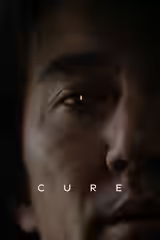
  5. Cure (1997) · not reviewed yetA colder, quieter thriller whose menace resists the comfort of explanation.

Free account

Know what to watch tonight

Two lists that know where things are streaming, collections you can share, your own score beside ours, and Discover that remembers what you have seen.

  • Want to see, sorted by what is streaming now
  • Seen, with your score out of ten
  • No adverts, ever