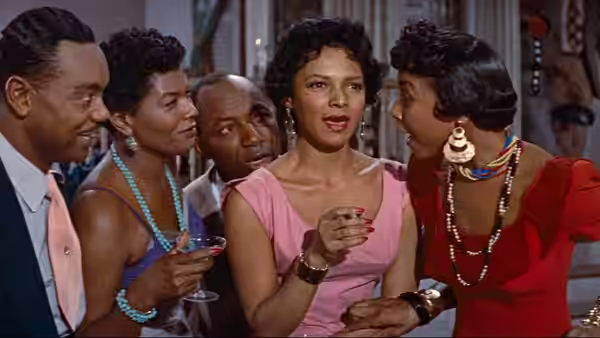
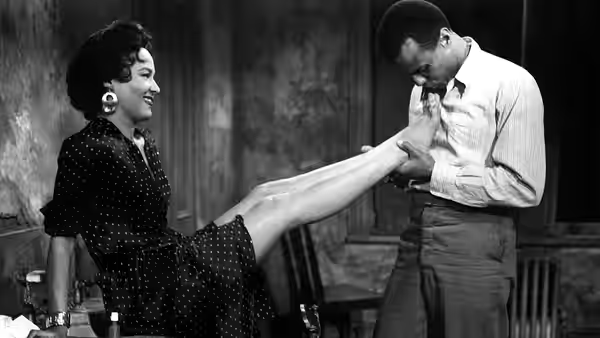
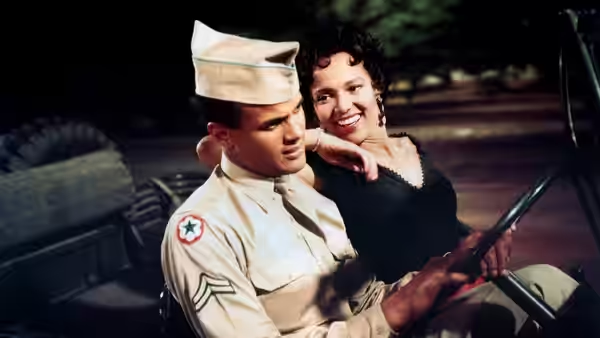
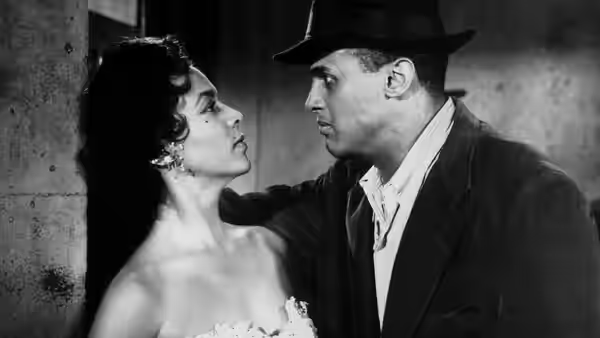
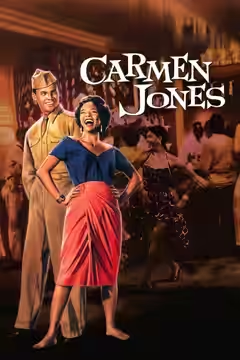
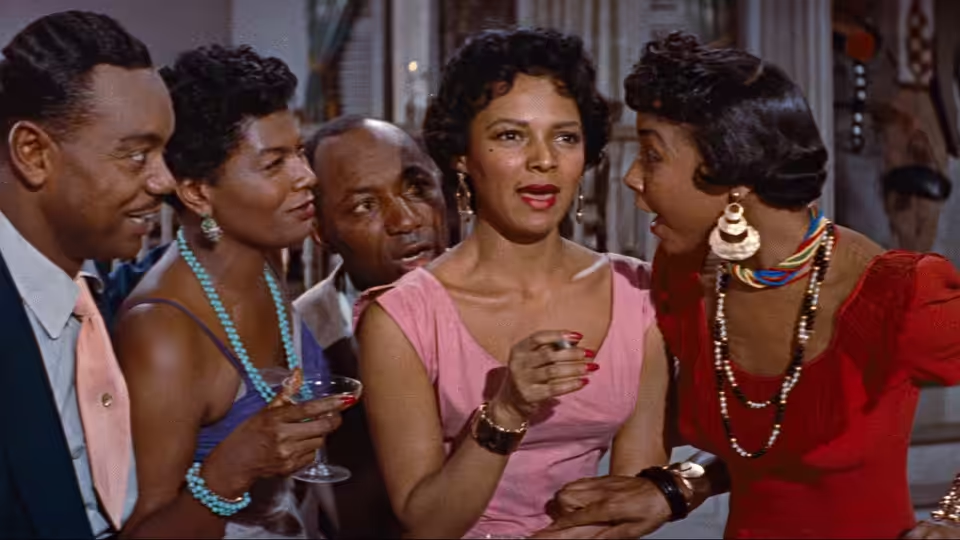
A woman in a red dress holds a drink among guests at a party
Film review

Carmen Jones

1954 · Directed by Otto Preminger · 1h 45m

In a sentenceDorothy Dandridge is persuasive enough without someone else doing the singing

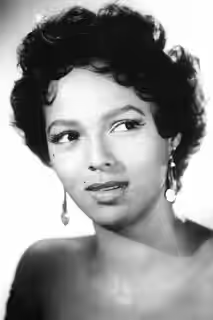
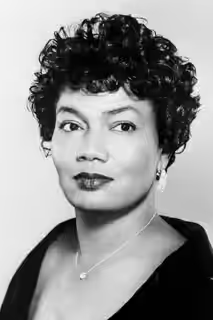
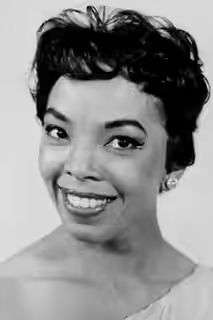
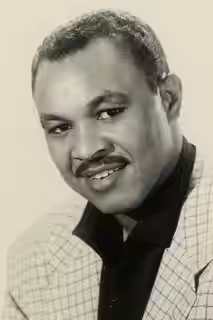
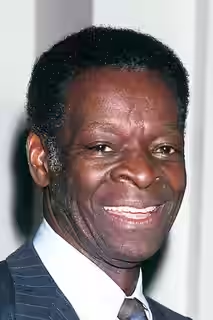
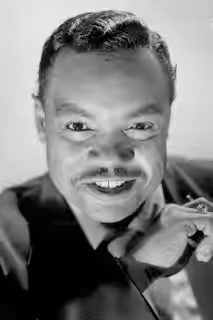
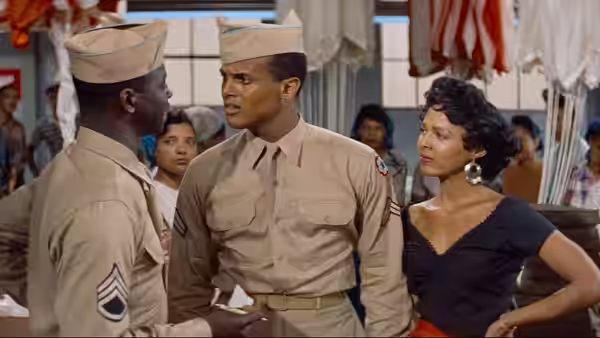
Carmen Jones (Dorothy Dandridge) and Joe (Harry Belafonte) are at the centre of a romantic drama told through spoken dialogue and the music of Georges Bizet. Frankie (Pearl Bailey), Cindy Lou (Olga James), Husky Miller (Joe Adams) and Sergeant Brown (Brock Peters) are among the other characters. The leads’ singing voices belong to other performers: Marilyn Horne sings Carmen Jones and Le Vern Hutcherson sings Joe, while Marvin Hayes sings Husky Miller. Otto Preminger directs a cast that also includes Diahann Carroll as Myrt.

Fi1m review

Dorothy Dandridge gives Carmen Jones a compelling centre, though the dubbed singing makes the romance harder to believe. Otto Preminger’s film offers enough musical pleasure to reward some patience with its awkwardness.

Otto Preminger’s Carmen Jones is worth trying for Dorothy Dandridge, though the dubbed singing can make the romance difficult to believe. It asks us to accept strong feelings expressed at full musical volume, and there is nothing unreasonable about that. Georges Bizet’s music supplies the necessary force. The trouble comes when a character starts singing and we become more interested in the change of voice than in what the song is saying.

Dandridge makes Carmen’s pursuit of pleasure feel natural, without pleading for approval or asking us to excuse her. She gives the character enough assurance to make selfishness interesting, and she does not need to advertise every impulse. Much of the pleasure comes from watching someone who seems comfortable being looked at. Her confidence carries some of the more formal passages, and the performance remains persuasive when the writing gives her little assistance.

Harry Belafonte, as Joe, is more constrained, and his seriousness can make the drama feel heavier than it needs to be. Le Vern Hutcherson provides Joe’s singing voice; Marilyn Horne provides Carmen’s. We were frustrated when the leads began to sing, because the distance between the acting and the voices pulled our attention away from their feelings. Dubbing need not damage a musical, but here the change is too difficult to forget.

Bizet’s music gives the film repeated chances to recover. There is energy in the musical passages, and enough pleasure in the tunes to make the stiffness seem less important for a while. Pearl Bailey, playing Frankie, brings a welcome directness to a film that sometimes labours to sound spontaneous. The lyrics are less consistently helpful: we can hear the effort of getting words to sit on the music, and it makes desire sound rehearsed.

Sam Leavitt’s cinematography serves Dandridge well, giving her presence enough weight that we understand the attraction without needing it explained. Mary Ann Nyberg’s costumes support the impression of a woman who expects to be noticed. These are useful contributions to a romance that depends so heavily on Carmen’s appeal. The presentation can be too decorous, however, and the care taken over appearances sometimes makes the passion feel supervised.

Louis R. Loeffler’s editing is patient with the performances, sometimes beyond what the dialogue can sustain. Harry Kleiner’s screenplay gives the actors too little room to sound casual with one another, so the spoken passages do not always ease the strain. The shifts between comedy and seriousness are handled more comfortably than the changes between speech and song. Preminger keeps the drama orderly, but the conversations could use some of the music’s energy.

A musical romance needs us to accept singing as something these people would naturally do when conversation becomes insufficient. Carmen Jones keeps making us conscious of the adjustment, and that limits how deeply it can move us. Anyone drawn to Dandridge has a good reason to give it an evening. Those hoping to lose themselves in the romance should be prepared to make an effort.

Critical consensus AI synthesised

63
Positive
2
Mixed
3
Negative
1

The reviews offer a qualified response to Carmen Jones, with Dorothy Dandridge’s screen presence drawing the clearest agreement across favourable and unfavourable notices. Praise also centres on the musical passages, though enthusiasm for the adaptation varies considerably. The warmer reviews find wit and energy in its Hollywood treatment of the opera; Variety particularly admires Preminger’s handling of comedy and tragedy and Dandridge’s sustained portrayal of Carmen’s hedonism.

The reservations concern casting, representation and the musical treatment itself. Empire questions the portrayal of African-Americans and finds the casting uneven, while allowing that Dandridge and the musical moments provide compensation. Eye for Film is more dismissive, finding the lyrics and dubbed singing damaging despite strong performances. The spread is wide rather than broadly approving, and two of the six reviews have too little accessible text to establish their reasoning or verdicts confidently.

Radio Times
★★★★ · Tony Sloman
80

Sloman finds the film an enjoyable, witty interpretation of the opera. He praises Dorothy Dandridge’s screen presence and the music’s Hollywood zest.

Read the full review →
Variety
31 December 1953 · Variety Staff
80*

The review praises Preminger’s tasteful, imaginative adaptation and says he balances comedy and tragedy with a deft touch. It singles out Dorothy Dandridge for maintaining Carmen’s hedonistic character throughout.

Read the full review →
The New York Times
31 October 1954
64*

The archived headline suggests a review of the specified film, but the article text is inaccessible. Its verdict and any specific praise or criticism cannot be confirmed.

Read the full review →
Time Out
· FL
64*

The page identifies Preminger’s film as a Hollywood-style reworking of Mérimée’s tale. The available text does not reveal the critic’s verdict or a specific point of praise or complaint.

Read the full review →
Empire
30 March 2006 · David Parkinson
50*

The review finds the film compromised by miscasting and a dubious portrayal of African-Americans, though its musical moments partly redeem it. It singles out Dorothy Dandridge’s performance as being on form.

Read the full review →
Eye for Film
25 March 2004 · The Hoodler
30*

The critic finds the adaptation disappointing despite its strong story and performances. Dorothy Dandridge’s screen presence is praised, while the lyrics and dubbed singing are singled out as problems.

Read the full review →

Straight answers AI written, from our review

Is Carmen Jones worth watching?
Carmen Jones is worth trying for Dorothy Dandridge’s compelling performance and Bizet’s music, though its awkwardness limits our score to 65. We recommend it chiefly to those drawn to Dandridge or musical romance: the dubbed singing distracts from the leads’ feelings, and the stiff dialogue requires some patience.
How long is Carmen Jones, and what is it rated?
Carmen Jones runs 1h 45m. It is a drama and romance film.
Where can I watch Carmen Jones in Hong Kong?
Carmen Jones is not on any streaming or rental service in Hong Kong at the moment. It is available in 6 other countries; change your country at the top of the page to see where. Availability is checked daily.
How does Carmen Jones compare to The Red Shoes?
Carmen Jones offers musical pleasure and a compelling Dorothy Dandridge performance, but we recommend The Red Shoes more strongly for its troubling account of desire, performance and artistic ambition. The dubbed singing makes the romance in Carmen Jones harder to believe; The Red Shoes makes its dancer’s ambition feel urgent and dangerous, despite occasionally over-serious dialogue.
What should I watch after Carmen Jones?
After Carmen Jones, try Black Orpheus (1959, Fi1m 78): Another musical romance where desire becomes difficult to separate from impending trouble. Then The Red Shoes (1948, Fi1m 92): For a more troubling account of desire, performance and the demands of art.

Cast

Awards

BAFTA Film Awards, 1956

Nominated
Best Film

Academy Awards, 1955

Nominated
Best Actress
Nominated
Best Original Musical Score

Golden Globes, 1954

Won
Best Motion Picture – Musical or Comedy
Won
New Star of the Year – Actor

If you liked this, try…

  1. Stormy Weather (1943) · not on Fi1m yetFor another chance to enjoy performers who can outshine the story.

  2. Black Orpheus (1959, Fi1m 78)Another musical romance where desire becomes difficult to separate from impending trouble.

  3. The Red Shoes (1948, Fi1m 92)For a more troubling account of desire, performance and the demands of art.

  4. The Umbrellas of Cherbourg (1964) · not on Fi1m yetTry this when singing needs to feel inseparable from the people.

  5. Devdas (2002) · not on Fi1m yetA grander musical romance, equally interested in the damage done by longing.