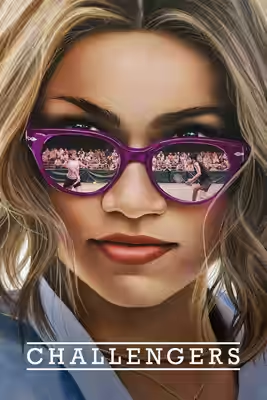
Luca Guadagnino’s tennis love triangle is quick, funny and sharply acted by Zendaya, Mike Faist and Josh O’Connor. The score never stops shouting and the last stretch is more style than tennis, but we enjoyed ourselves.
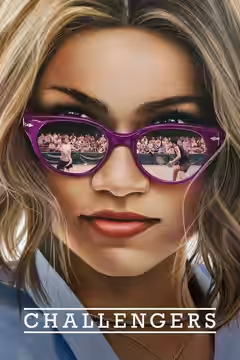
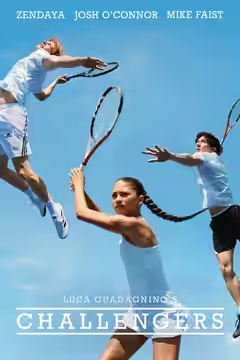
Luca Guadagnino’s Challengers is a love triangle told as a tennis match. Justin Kuritzkes’s script begins at the final of a small event in New Rochelle, with Art Donaldson (Mike Faist), a fading champion, on one side of the net and Patrick Zweig (Josh O’Connor), his former best friend, on the other. Art’s wife and coach Tashi (Zendaya) sits in the stands. Then the film goes back thirteen years to when all three were teenagers, and for the rest of its 132 minutes editor Marco Costa cuts between the match and the past, the years stamped on the screen. It is quick, funny and well acted, and we recommend it, with one complaint about volume that we will come to.
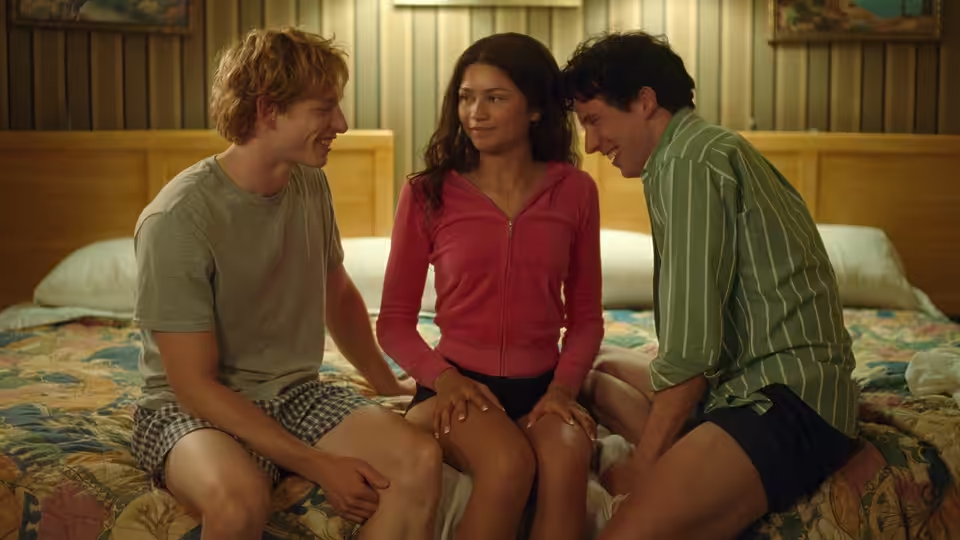
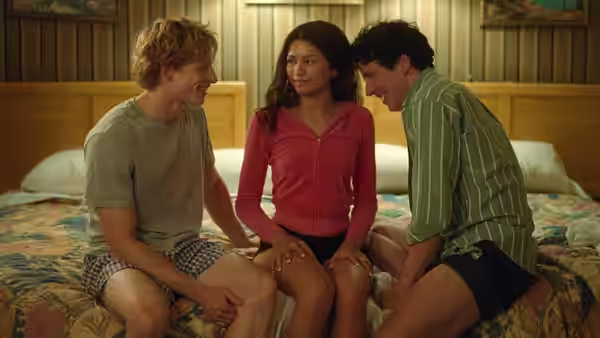
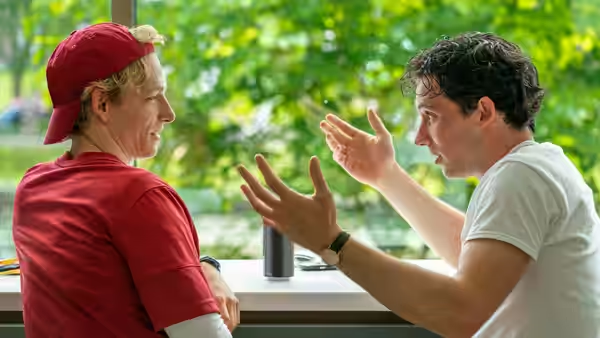
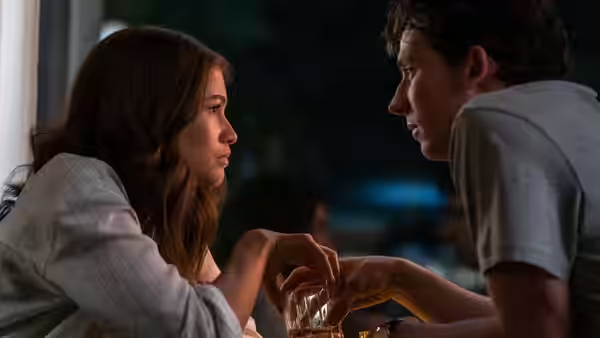
The three leads are doing different things and all of them work. Zendaya plays Tashi with her arms folded and her jaw set; she watches tennis the way other people watch money, and when she talks about it she is the only person in the film who is not flirting. Faist makes Art decent, anxious and always half a step behind, a man who has won a great deal and does not seem to have enjoyed any of it. O’Connor plays Patrick as someone who has never once been embarrassed, and the film gets most of its laughs from sitting him next to people who are embarrassed on his behalf. An early scene in a hotel room, two boys on a bed either side of a girl who is working out what to do with them, is the best-written thing here. We laughed, and then the scene went quiet, and so did we.
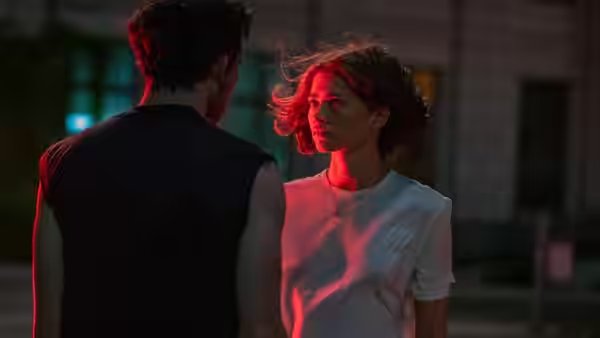
Sayombhu Mukdeeprom shoots the court in hard daylight so every serve throws off sweat, and Guadagnino puts the camera where a camera cannot go: under the court looking up through the surface, or travelling with the ball across the net. It is showing off and we knew it, and we still sat forward. We were exhilarated and a little embarrassed to be. Jonathan Anderson dresses the three in tennis whites and hoodies, plus one T-shirt with a slogan across the chest that the film treats as a plot point, which is a good joke and a fair one. Merissa Lombardo’s production design keeps the New Rochelle event looking as small as it is, so when the film jumps to a stadium in Atlanta in 2019, with Chris Fowler and Mary Joe Fernández on commentary, the drop in Art’s fortunes is plain without a line of dialogue.
Then there is the music. Trent Reznor and Atticus Ross have written a techno score that thumps at the pace of a rally, and in the matches it is exactly right. The trouble is it does not stop there. It plays over conversations in cars and hotel rooms, and there are conversations here we would have liked to hear. Some of the reviews so far have complained about this and they are right.
The last stretch of the match is where the film gets loudest and loses us. Slow motion, the score at full volume, bodies against the sky, and the tennis stops being tennis. By the third slow-motion serve we were counting the minutes we had left. The thirteen-year structure has a cost too: the same grudge gets explained more than once, from a slightly different angle, and one explanation would have done. Tashi’s life outside the two men is thin. Nada Despotovich, as her mother, has a scene or two, and A.J. Lister, as Lily, hardly registers.
Guadagnino has made sadder films than this and better ones. Call Me by Your Name had a summer and a long goodbye; this has a scoreboard. It is also the funniest thing he has made, and the most sure of what its actors can do. He has decided that the tennis is the sex and the sex is the tennis, and for most of two hours he makes that hold.
Watch it with someone who will argue afterwards about which of the three they would have picked. We changed our minds twice before the car park.