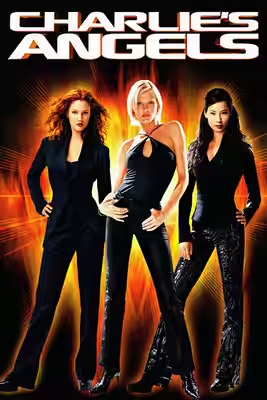
McG’s action-comedy gets by on the company of Cameron Diaz, Drew Barrymore and Lucy Liu. Their shared silliness is fun, but thin writing and impatient cutting keep interrupting it.
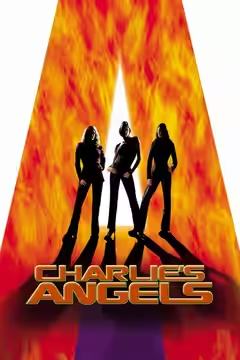
Charlie’s Angels is a likeable, untidy action-comedy that keeps getting in its own way. McG wants the fighting and the jokes to arrive with equal force, preferably before we have recovered from the last lot. At 98 minutes, the film ought to be a brisk evening’s entertainment, and stretches of it are. But the restless cutting and thin writing make it feel more effortful than its cheerful stars deserve.
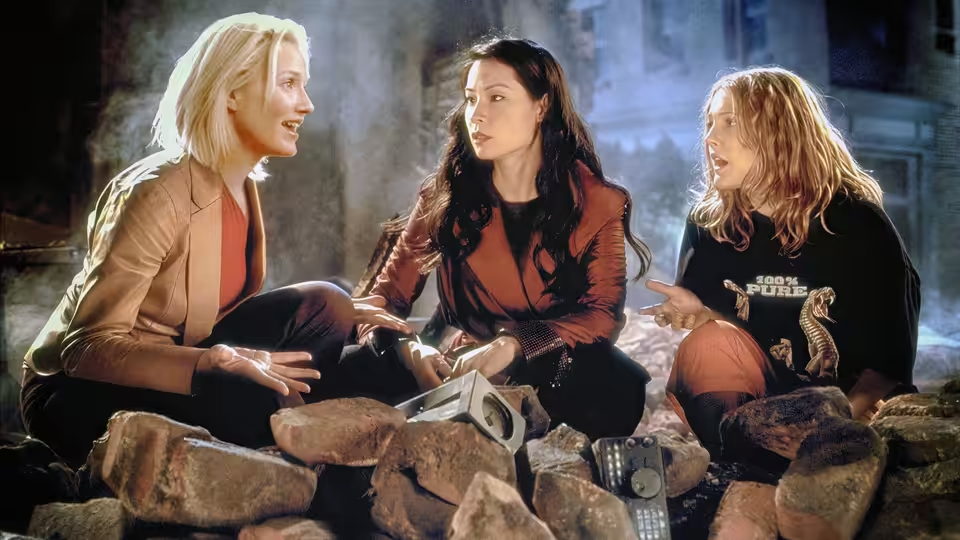
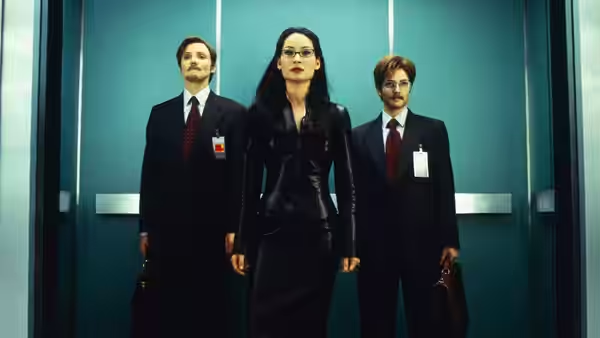
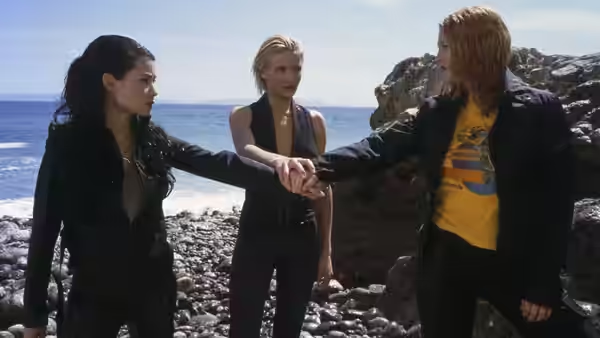
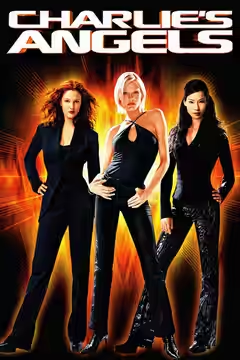
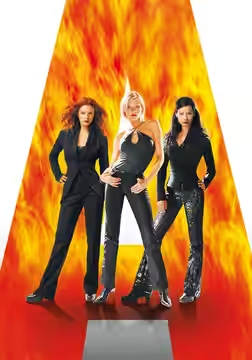
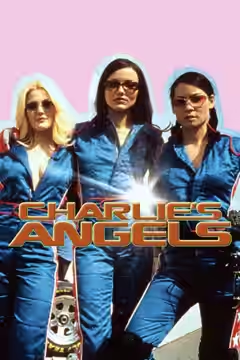
Cameron Diaz, Drew Barrymore and Lucy Liu give Natalie Cook, Dylan Sanders and Alex Munday enough shared comic confidence to make the flimsy story temporarily irrelevant. They can be ridiculous without seeming embarrassed, which matters in a film so dependent on our willingness to enjoy the silliness. We laughed more than the dialogue deserved because the three make that silliness feel like something they enjoy together. Their company is the strongest reason to stay, though the script too often relies on it instead of supplying a better joke.
Bill Murray, as John Bosley, helps by making less effort to advertise the comedy. His drollness is welcome when almost everything around him is insisting on how much fun it is. The contrast exposes the film’s chief miscalculation: energy alone cannot keep a comic scene alive. There is pleasure in the juvenile humour, but it needs a little more variation than McG seems prepared to allow.
The screenplay by Ed Solomon, John August and Ryan Rowe gives the cast plenty of activity and too little to make that activity matter. A light plot is perfectly adequate for this sort of adventure, provided the jokes and action carry us between its turns. Here, the dialogue is too uneven to do that reliably, and the frantic presentation makes a modest story seem unnecessarily cluttered. We need no solemn character histories, but clearer reasons to care about the next burst of action would help.
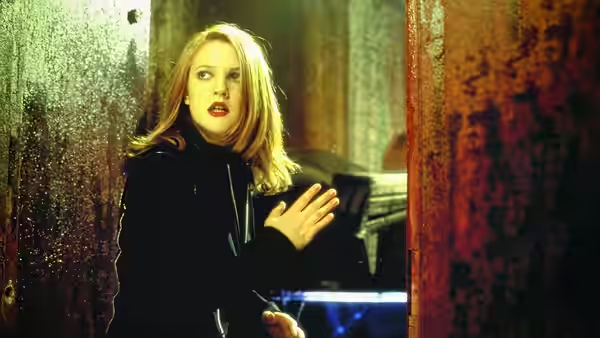
Russell Carpenter’s cinematography and J. Michael Riva’s production design serve McG’s appetite for spectacle, but the emphasis on the women’s sex appeal grows repetitive. The performers are already holding our attention through their comic assurance. The framing keeps insisting on another reason to watch them, and it becomes a distraction from what they do well. Edward Shearmur’s score adds to the forward push, though this is a film that could use more pauses, especially when somebody has a joke to deliver.
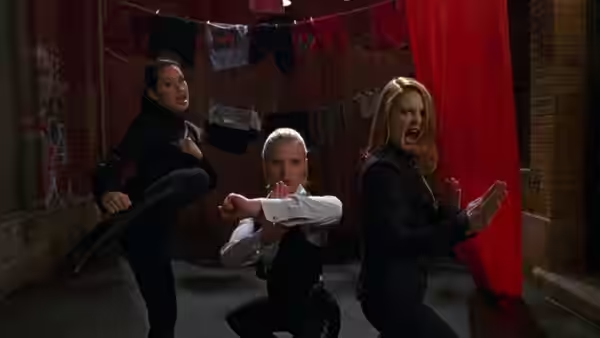
Wayne Wahrman and Peter Teschner’s editing is the more serious obstacle to the action. The martial-arts sequences promise the pleasure of watching bodies move with skill, then keep breaking that movement into pieces. We were frustrated by the interruptions, particularly because the physical performances offer something worth watching. Fast cutting can sharpen a fight, but here it too often asks the cuts to provide excitement that the movement could have supplied.
An action-comedy has good reason to keep its story simple when that leaves room for physical wit: we need to see the mistake, the recovery and the next attempt. McG is too impatient for that kind of pleasure, even with performers who could sustain it. Anyone hoping chiefly for an easy evening with this cast will have more luck. Go for their company, and expect the action to be harder work than it needs to be.