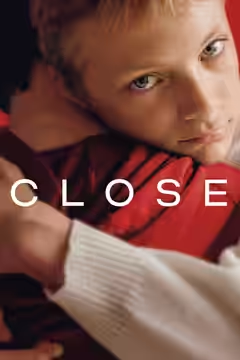
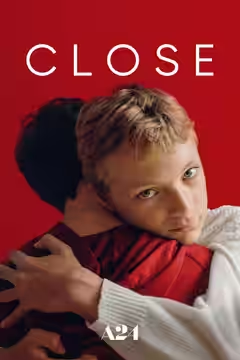
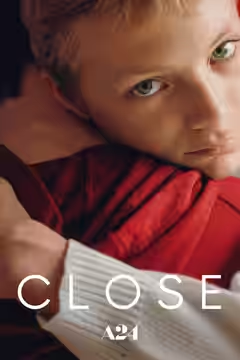
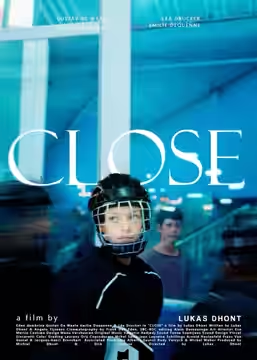
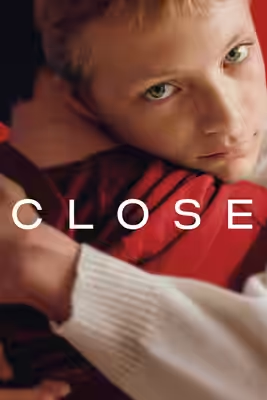
Close poster

Close

2022 · Directed by Lukas Dhont
1h 44mDrama12A
75
Fi1m score
80
Critics · 18
Audience · not yet

Where to watch in the UK

Checked 10 September at 22:29. Prices and availability change; the service’s page is the last word.

Plays from YouTube when you press play; nothing loads from them until then.

Synopsis

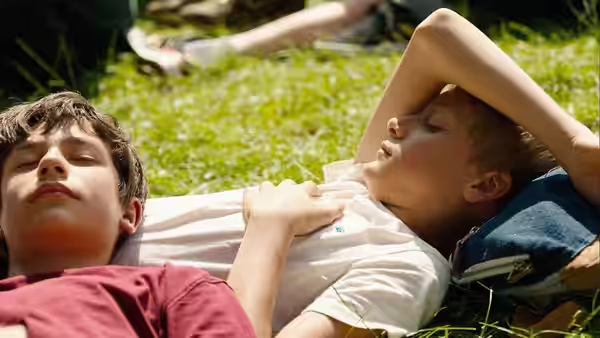
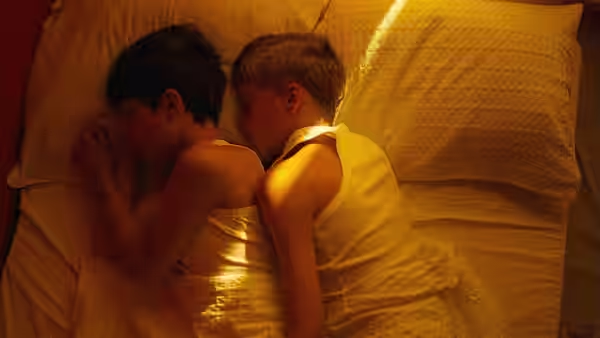
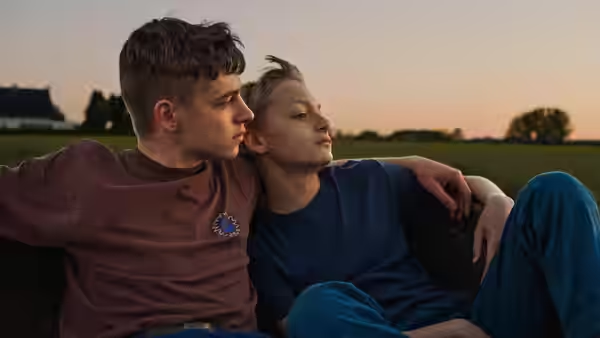
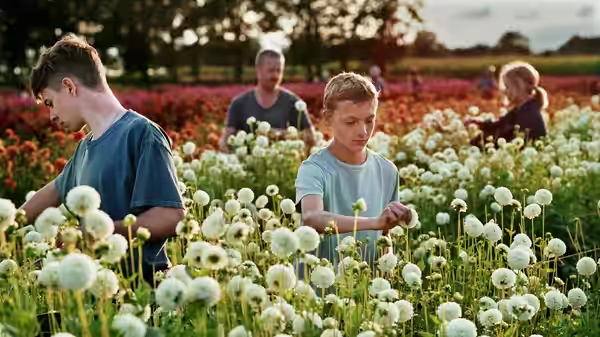
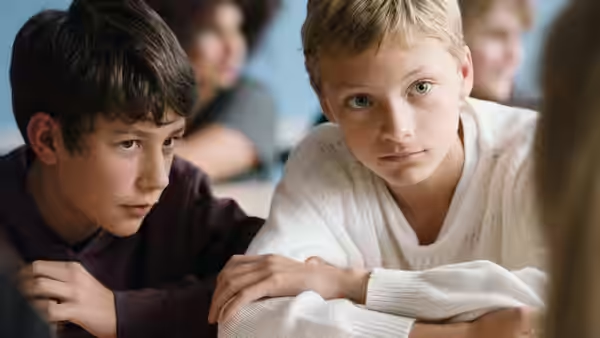
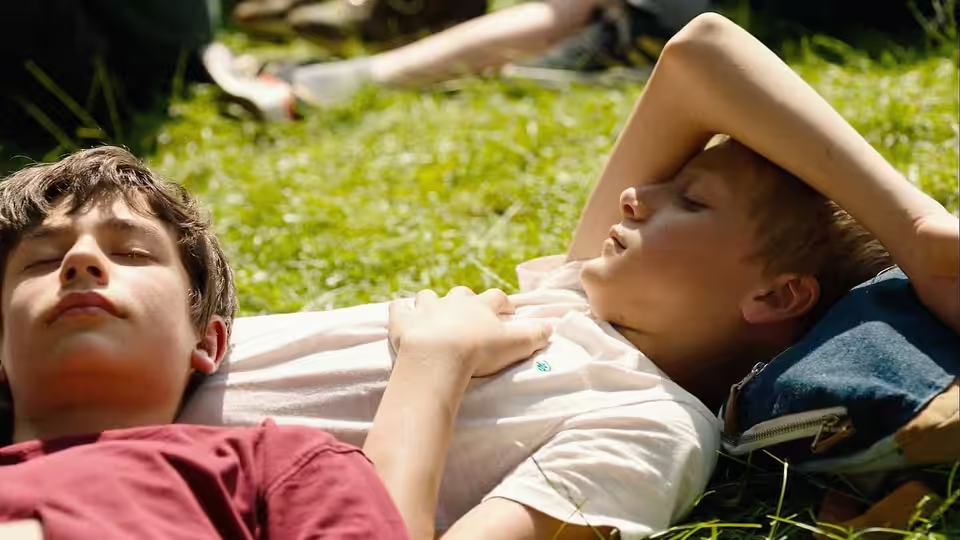
Léo (Eden Dambrine) and Rémi (Gustav De Waele) are thirteen and have not spent a day apart. They run through the flower fields Léo’s family farms, invent battles in the greenhouses, and sleep in one bed at Rémi’s house while Rémi’s mother Sophie (Émilie Dequenne) looks on. Then the new school year starts, and a girl at the lunch table asks whether the two of them are a couple. Léo laughs it off. He also begins, in small ways, to step back: a seat further along the bench, a new interest in ice hockey. Lukas Dhont’s second film, written with Angelo Tijssens, follows what that stepping back costs, in a Belgian town over the course of one growing season.

Fi1m review

In a sentenceThe flowers are grown, cut and arranged for the table, and so, a little too visibly, is the grief

For an hour, Dhont’s film is as exact a picture of a boy learning to be ashamed as we have seen, and Eden Dambrine, acting for the first time, carries it on his face. Then the second half arrives, and every petal falls on cue.

Léo (Eden Dambrine) and Rémi (Gustav De Waele) are thirteen and have never been apart. They run through the flower fields Léo’s family farms, sleep in one bed at Rémi’s house, and make up stories about armies hiding in the beds of dahlias. Then school starts, and a girl at the lunch table asks whether they are together. Léo laughs. Lukas Dhont’s second feature, written with Angelo Tijssens, is about what he does after laughing, and for its first hour it is as exact a picture of a boy learning to be ashamed as we have seen. Then something has to happen, and what happens is a little too well made.

We recommend it, chiefly for that first hour and for two performances. Dambrine had not acted before this, and it does not show, or rather it shows in the right way: nothing he does is pitched at us. Watch him in the playground after the question. He does not stop being Rémi’s friend. He stands a step further away, and Frank van den Eeden’s camera is close enough that we can see him decide to. The scene that got at us is smaller still. The two boys are in Rémi’s bed, as they always are, and Léo gets up without a word and lies down on the mattress on the floor. We felt something very like grief, and all that had happened was a boy moving four feet.

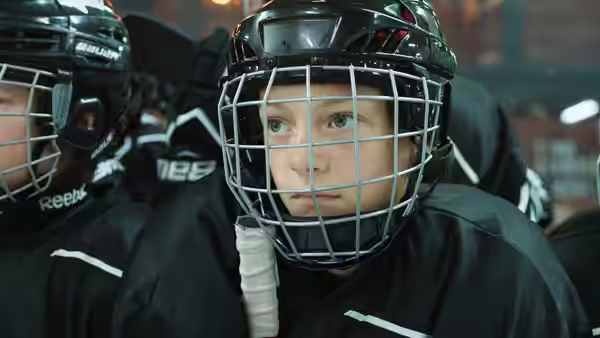
Van den Eeden shoots in warm daylight, mostly close, often at the boys’ eye level, so the adults tend to arrive as torsos and hands. The flower fields are photographed in flat oranges and pinks rather than as postcards, which is why they work. Manu Verschueren dresses the boys in the same bright colours as the crops, and when Léo takes up ice hockey and pulls a caged helmet over his face the change reads without anyone saying it. Alain Dessauvage cuts farm work, planting, picking, the tractor, in among the school scenes so the season passes in the flowers. Valentin Hadjadj’s score is strings, and for a long time it stays out of the way.

At around the halfway mark the film turns on an event we will not describe. What we can say is that from then on it is largely about Léo and Rémi’s mother, Sophie, and that Émilie Dequenne is the best thing in the second half. She plays a woman being kind to a boy because there is nobody else left to be kind to, and she does it with almost no dialogue. Léa Drucker, as Léo’s mother Nathalie, and Igor van Dessel, as his older brother Charlie, are given less and are good with it. Kevin Janssens, as the father Peter, is mostly a pair of shoulders in a doorway, which we think is deliberate.

The second half is also where the design shows. Every image answers an earlier image. The flowers are cut when the story needs them cut. The score that had been so patient comes in to make sure we have understood, and the scenes at the rink and in the kitchen start to feel like stations on a route rather than things that happened to people. We wept, and within the same ten minutes we were irritated at how precisely we had been steered towards weeping, which is a strange thing to report about a film we admire. Most critics have been warmer than us. The reviews so far treat the second half as the proof of the film. We think it is the weak half, and that the first half did not need proving.

Dhont’s first film, Girl (2018), drew complaints for how it handled its subject, and several critics have gone into this one wary. It is a more careful film, and a more honest one about how boys police each other: nobody here uses a slur, and nobody needs to. Among films about the end of childhood, the first hour stands with the best of them. The second is a well-made film about loss of a kind we have sat through before.

It is 104 minutes and a 12A. Take a thirteen-year-old if you have one. Do not expect them to want to talk about it in the car.
Critical consensus AI synthesised

80
Positive
15
Mixed
2
Negative
1

Most critics take Close warmly, and the praise clusters in one place: the two young leads, above all newcomer Eden Dambrine, whose largely wordless performance several reviews call the reason the film works. Dhont’s direction is credited with restraint and a care for small shifts of feeling, and the first half, in which the boys’ friendship is shown without labels or fuss, attracts almost no complaint. The reservations gather around what happens next. Variety calls the second-half turn manipulative and finds it breaks the spell; IndieWire thinks Dhont still chooses exploitation over depth; The Skinny, the lone outright dissenter, finds the handling of grief hollow. Sight and Sound is gentler but finds the whole thing too neat, the friendship’s collapse decided in advance rather than lived. The spread is narrow at the top and thin at the bottom: fifteen of eighteen are positive, the doubters are few, but they are all doubting the same thing.

The Telegraph
2 March 2023 · ★★★★★ · Robbie Collin
100

Dhont delivers a miraculously subtle and emotionally powerful Belgian drama about the tender, intense friendship between two 13-year-old boys and its heartbreaking severance as they enter adolescence. The performances of the young leads are singled out for praise, as is the film’s authentic emotional depth.

Read the full review →
The AV Club
25 January 2023 · A- · Manuel Betancourt
90

The review calls the film a gut punch and monumental achievement, centering on the fragile friendship between two boys that collapses under societal shame and leads to profound grief. It singles out newcomer Eden Dambrine's towering, wordless performance for conveying complex emotions of love, guilt, and loss.

Read the full review →
Screen Daily
27 May 2022 · festival review
85*

The critic describes it as an intimate, quietly devastating study of childhood friendship and grief, with knockout performances (especially from newcomer Eden Dambrine) and direction of uncommon sensitivity that packs a considerable emotional wallop.

Read the full review →
Slant Magazine
15 January 2023 · Diego Semerene
85*

The review describes the film as a devastating depiction of the queerness of childhood, where two boys' intense physical and emotional bond is punished by social forces, leading to tragedy and mourning. It praises Dhont's commitment to sincere pathos and the way the film immerses viewers in overwhelming emotion and the limits of freedom.

Read the full review →
Little White Lies
27 May 2022 · festival review · Hannah Strong
80*

The critic praises the clear-eyed tenderness in Dhont's portrayal of playground love, grief, and childhood friendship, despite prior reservations about the director. Highlights the authentic performances and emotional honesty in depicting loss and guilt.

Read the full review →
Time Out
12 October 2022 · ★★★★ · Phil de Semlyen
80

The critic hails it as a poignant hymn to friendship and lost innocence that belongs in the pantheon of great films about leaving childhood behind. Singles out the young actors' believable portrayals of inexpressible emotions and the film's quiet emotional power.

Read the full review →

Cast

Stills

Awards

Academy Awards, 2023

Nominated
Best International Feature Film

Amanda Award for Best Foreign Feature Film, 2023

Won
Amanda Award for Best Foreign Feature Film

César Award for Best Foreign Film, 2023

Nominated
César Award for Best Foreign Film

Golden Globes, 2023

Nominated
Best Non-English Language Film

International Submission to the Academy Awards, 2023

Nominated
International Submission to the Academy Awards

LUX European Audience Film Award, 2023

Nominated
LUX European Audience Film Award

Magritte Award for Best Flemish Film, 2023

Won
Magritte Award for Best Flemish Film

Magritte Award for Best Screenplay, 2023

Won
Magritte Award for Best Screenplay

Cannes Film Festival, 2022

Nominated
Palme d'Or

European Film Award for Best Actor, 2022

Nominated
European Film Award for Best Actor

European Film Award for Best Director, 2022

Nominated
European Film Award for Best Director

European Film Award for Best Film, 2022

Nominated
European Film Award for Best Film

European Film Award for Best Screenwriter, 2022

Nominated
European Film Award for Best Screenwriter

European University Film Award, 2022

Nominated
European University Film Award

If you liked this, try…

Tomboy poster

Tomboy

2011 · Sciamma’s ten-year-old spends a summer as a boy; the same quiet, the same watching.

Ratcatcher poster

Ratcatcher

1999 · Glasgow, a canal, a boy who cannot say what he has seen; Ramsay’s first film.

Ma vie en rose poster

Ma vie en rose

1997 · Another Belgian child at odds with the neighbours, and much funnier about it.

Moonlight poster

Moonlight

2016 · Three ages of one boy, and a beach scene that does what Dhont’s bedroom does.

Aftersun poster

Aftersun

2022 · A holiday remembered by the child who did not understand it at the time.