Drew Hancock’s first film as director is quick, nasty and well acted, and Sophie Thatcher is reason enough to see it. It also says everything it has to say about men like Josh in the first half hour, then keeps saying it with knives.
A companion robot is a machine built to love one person and to have no wants of its own. Drew Hancock’s film puts one at a lake house for a weekend with the boyfriend who bought her and his friends, and asks what happens when she finds out what she is. It is a good idea, briskly handled, and for about forty minutes it is as sharp as anything the genre has managed lately. Then it becomes a chase, and the chase is the less interesting half.
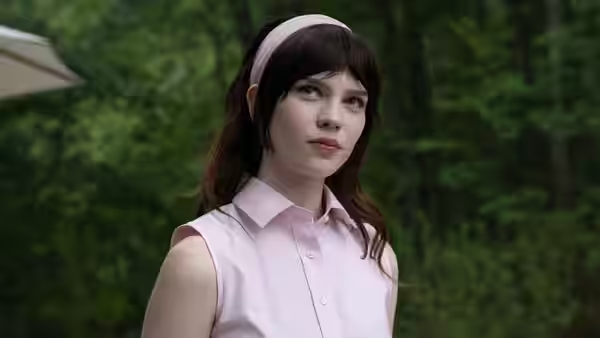
Thatcher is the film. She plays Iris first as a woman trying too hard to please, laughing a beat late at jokes and checking Josh’s face before she settles on her own expression, and it reads as nerves until it reads as programming. When Iris learns the truth, Thatcher does not go blank and she does not go metallic; she goes hurt, and then she goes practical. We felt for her a good deal more than we expected to feel for a machine in a horror comedy, and the scene that did it was Iris being told, at a kitchen table, what she is, and watching the people around her treat the news as a joke at her expense. Thatcher plays it with almost nothing, and it is the best thing in the film.
Jack Quaid plays Josh as the sort of man who describes himself as a nice guy and believes the description. He is good at it, whining and reasonable and wounded in the same breath, and the funniest lines in the film are his complaints about how hard all this is for him. We laughed at him a great deal. We also noticed, somewhere past the hour, that the film had made the same point about him four or five times, and that each time it made it with a little more blood and a little less wit.
The rest of the house is well cast. Lukas Gage’s Patrick is sweet and slightly absent, and Harvey Guillén gives Eli the warmth of a man who has never had to be brave and suspects he is about to. Megan Suri’s Kat is bored and contemptuous of Iris in a way the script lets her be right and wrong about at once. Rupert Friend’s Sergey owns the house and behaves as if he owns the guests, and he sets the whole thing going.
Eli Born shoots the house in warm, clean daylight, glass and pale timber and the lake beyond, so that when things go wrong they go wrong in the prettiest possible light. Scott Kuzio’s house is the kind of place a rich man builds to prove he has taste. Vanessa Porter puts Iris in the dresses of a woman assembled from an idea of a wife rather than from any wife who ever lived, and the joke is quiet enough that it keeps working. Hrishikesh Hirway’s score stays small for the most part and lets the silences in the house do the work. Josh Ethier and Brett W. Bachman cut the first act with patience and the rest at speed, and the film does not feel a minute longer than its 97, which is a compliment and also a hint about how much it has to think about.
What the film does not do is push past its premise. Everyone has seen The Stepford Wives (1975) and Ex Machina (2014), and Hancock knows we have; his script assumes the argument about men who want women without wills has already been won, and spends its second half handing out punishments. That is fine as far as it goes. But the film keeps promising a further thought, about what Iris wants once she has stopped wanting Josh, and it never gets there, because there is always another body to deal with. A couple of turns in the middle we will not describe are neat, and they do not change what the film is about.
See it with someone whose taste in partners you have doubts about, and watch which of you laughs. At home it is a little less loud, and the jokes about Josh land more quietly, which suits them. It carries a 15 for the blood, which is stagey and plentiful.