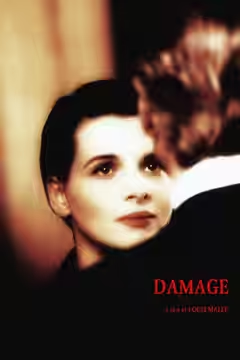
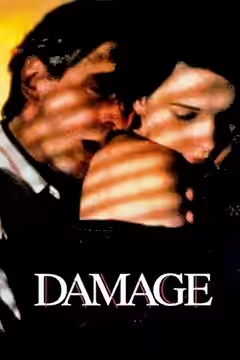
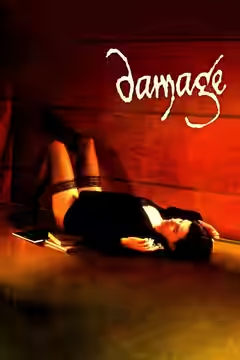
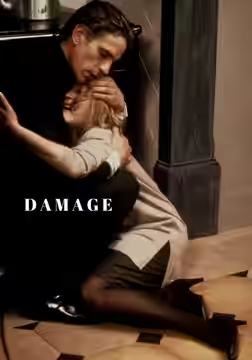
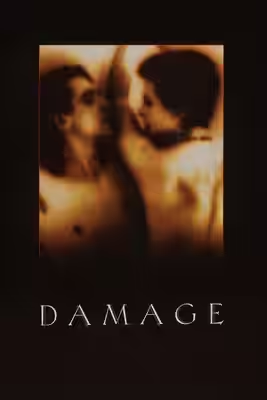
Louis Malle directs Josephine Hart’s novel as a cold, handsome tragedy, and Irons and Richardson give it two performances worth the ticket. The affair at its centre is another matter: we are told it is a compulsion and shown two people standing still.
Louis Malle’s film of Josephine Hart’s novel runs 111 minutes and concerns a man who wrecks his family for a woman he hardly speaks to. Stephen Fleming (Jeremy Irons), a doctor turned government minister, has a tall London house, a capable wife and a son he is fond of, and he puts all of it at risk for the son’s girlfriend almost as soon as he meets her. David Hare’s screenplay treats this as fate rather than scandal, and the tagline, which ends on the word “Destiny”, is not joking. It is handsomely made, and we did not believe a minute of the affair.
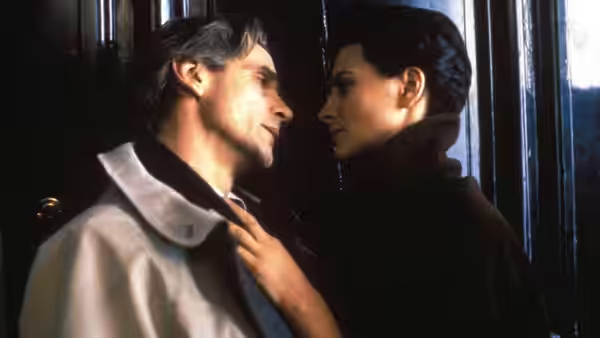
The surface is the best of it. Peter Biziou shoots London in a cold grey that never warms up, and Brian Morris gives the Flemings a house of pale walls, polished floors and tall windows that looks like somewhere nobody has ever raised their voice. Milena Canonero puts Anna Barton (Juliette Binoche) in black and deep blue and Ingrid Fleming (Miranda Richardson) in cream and camel, so that you can read the two women’s positions at a glance. Zbigniew Preisner’s score is mostly strings, slow and low, and it tells us from the first minute that this will end badly. John Bloom cuts the lovers’ meetings with hardly a line of dialogue between them.
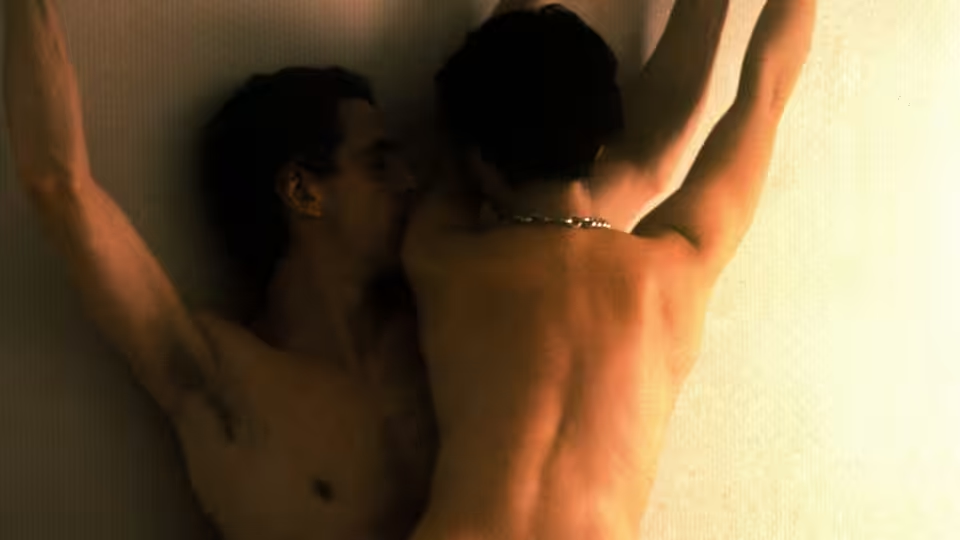
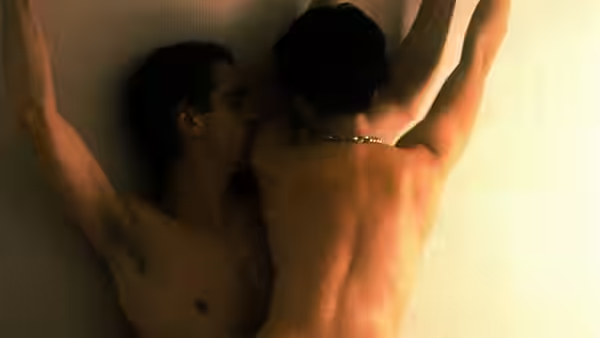
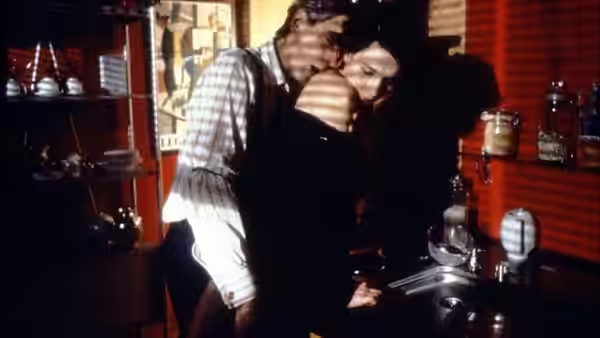
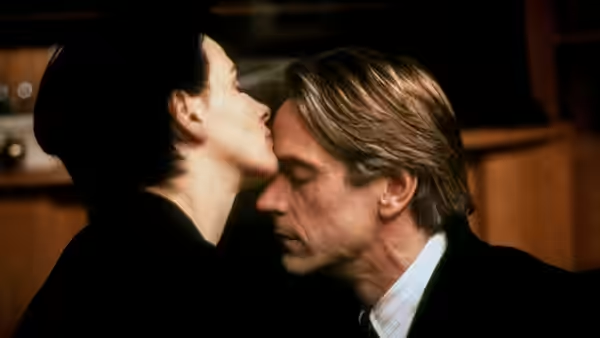
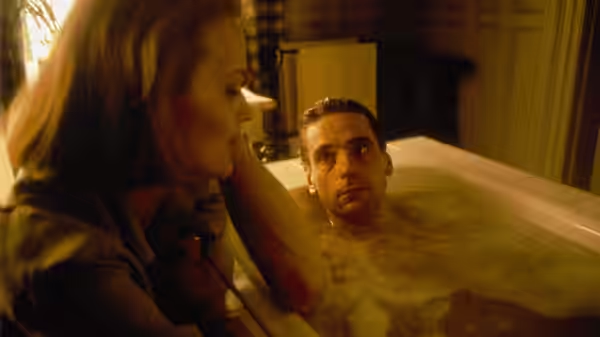
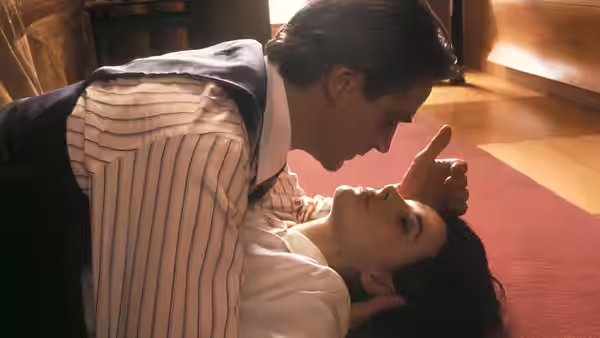
That silence is Malle’s choice, and it is where the film goes wrong. Stephen and Anna meet at a reception, exchange a few sentences, and the next time they are alone they are on the floor. Malle wants the compulsion left unexplained: Stephen does not understand it, so neither should we. But a compulsion still has to be felt, and we sat through the middle hour waiting to feel it and never did. Irons plays Stephen as a man watching himself from a distance, and his face barely moves even when the rest of him is in trouble. Binoche delivers Anna’s lines as flat statements of fact, which is a fair way to play a woman who has decided not to be hurt again, but it leaves two people on screen who refuse to react, and that leaves us nothing to react to. The sex, which earns the 18 certificate, is staged against doorframes and furniture with a seriousness that tips more than once into the absurd.
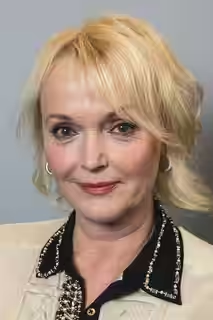
Richardson is the best thing in it. Her Ingrid runs the house, the diary and the Sunday lunch with a brisk pleasantness, and for most of the film she is the only person who seems to be living in the present. Then, late on, in a scene we will not describe, she behaves as if something has actually happened, and we were shaken by it, more than anything before had prepared us for, because it is the first time in the film that anyone does. Rupert Graves plays Martyn as eager and trusting, which makes every family dinner harder to sit through than any of the bedroom scenes. Ian Bannen is dry and watchful as Ingrid’s father, and Leslie Caron arrives for one scene as Anna’s mother and takes in more in five minutes than Stephen manages in the whole picture.
Malle had filmed desire before. In Les Amants, from 1958, he kept the camera on Jeanne Moreau’s face and let the face do the work. Here the faces are locked, and Hare’s dialogue has to carry what they will not. Some of it is good; Anna’s line about damaged people being dangerous because they know they can survive is the one everybody remembers. Much of it is people announcing their states of mind to each other in complete sentences, which is how Hare’s characters talk on a stage and sounds odd in a kitchen.
If you do sit through it, Richardson, the house and Preisner’s strings are what you will remember. At home the silences are longer and the furniture less impressive, and neither helps.