Bill Morrison builds a history of a gold-rush town, and of early cinema, from reels nobody wanted back. The pictures are remarkable and the rot eating at them is the point; the score is not, and two hours is too many.
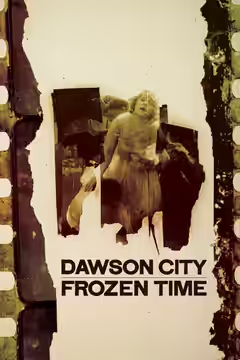
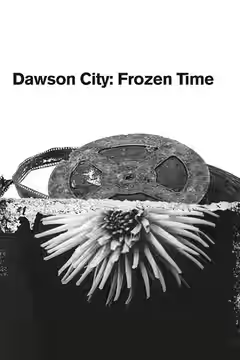
In 1978 a construction crew in Dawson City, in Canada’s Yukon, dug into the ground and hit film: hundreds of reels of nitrate stock, tipped into a disused swimming pool in 1929 as landfill and frozen there ever since. Bill Morrison has built two hours of documentary from what came up. He tells it almost without speech, in captions laid over the pictures, and lets the reels carry the story. It is a history of a gold-rush town and of cinema’s first decades, and a reminder that most of the past survives by accident. It is good, it is too long, and the music is the trouble.
He begins with the dig and then goes back. Gold is found on a creek off the Klondike River in 1896, and within two years tens of thousands have walked over the mountains to a town of tents where the Klondike meets the Yukon. Dawson fills, burns, is rebuilt and starts to empty as soon as the gold thins. Films reach it years late, at the far end of the distribution line, and the studios do not want them back; the postage is not worth it. So they pile up, until in 1929 someone uses them to fill a pool about to become a hockey rink. Morrison, who edits as well as directs, tells this in stills, newsreel and the salvaged features.
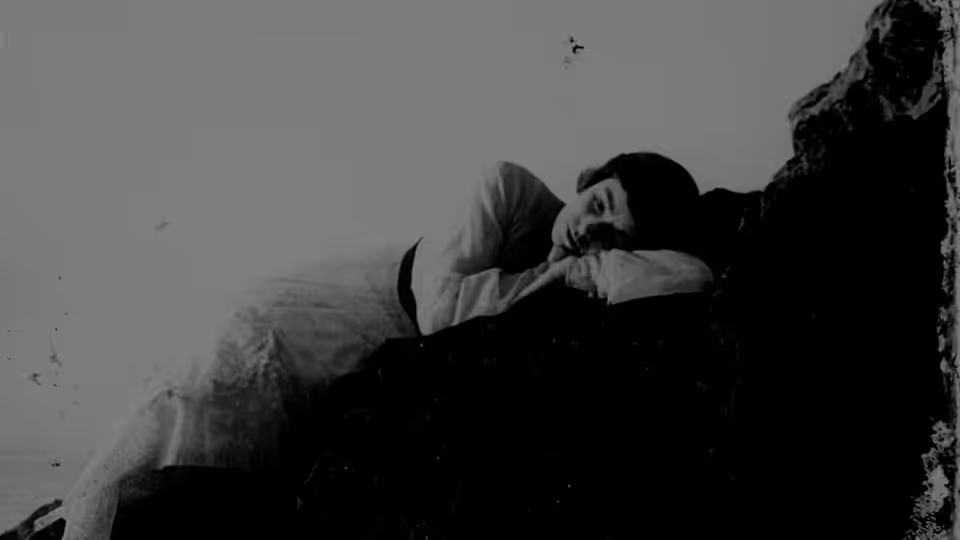
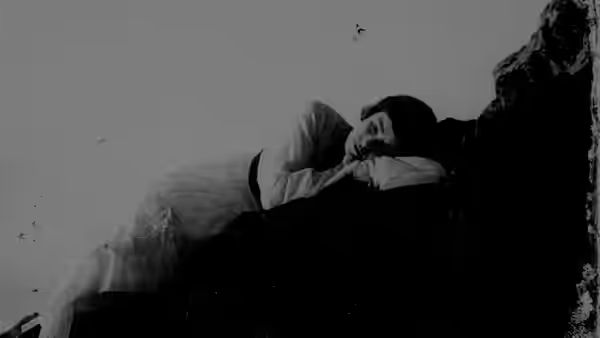
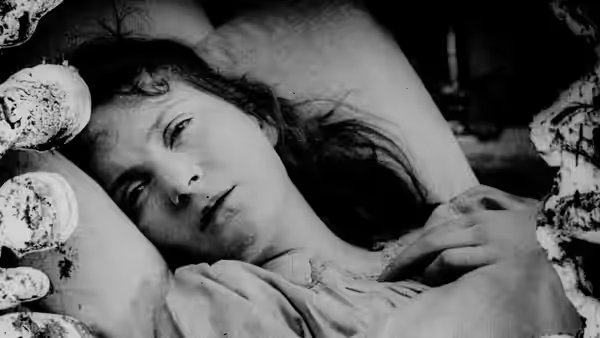
The reels are the reason to see it. Water got into the cans over fifty winters, and it went for the edges first, so that in frame after frame a face or a room survives in the centre while the borders boil. A line of dancers kicks in step while the wall behind them blisters white. We had read about the Dawson footage and thought we knew what to expect, and we were still caught out: we sat there more moved than we could quite account for, watching those dancers finish their number as the frame melted round them. Nobody planned that image. The damage made it, and Morrison had the sense to leave it alone.
Not everything in the cache is a lost melodrama. There are newsreels too, among them footage of the 1919 World Series, the one the Chicago White Sox were paid to lose, of which almost no moving pictures were thought to survive. Morrison brings in Chris ‘Mad Dog’ Russo to talk about it, and the passage is lively, and it belongs in another film. It is the one stretch where a talking head does the work instead of the pictures.
The witnesses are used sparingly and well. Kathy Jones-Gates and Michael Gates, who were in Dawson when the reels came out of the ground, tell the story of the find like people who have told it many times and still do not quite believe it. Sam Kula and Bill O’Farrell, from the archive in Ottawa that took the cans, describe handling stock that could catch fire in your hands. Morrison puts himself on camera too, briefly.
Then there is Alex Somers’s score. It is a long held chord with a piano note dropped into it now and then, and it does not change whether we are looking at a hotel fire, a riverboat or a line of men hauling sledges up a pass. For the first hour it is a mood. Somewhere in the second we realised we had stopped hearing it, then that we were irritated, then that the irritation was most of what we were feeling. At 120 minutes Morrison keeps finding one more strand, the fires that took other archives, the town after the rush, the reels after Ottawa, and each is worth a caption and none is worth ten. The last half hour is where we looked at our watch.
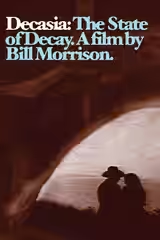
Morrison has worked with rotting nitrate before. Decasia (2002) was an hour of decayed film cut to music with no story at all, and it was beautiful and a little airless. Here he has given the decay a town, a date and a reason, and the pictures gain from having somewhere to belong. It is the more generous film. It is also the one where you can feel him not wanting to stop.
Watch it at night, on the biggest screen in the house, with the sound down a notch; the captions need attention and the pictures need dark. If you have ever wondered what happened to the films you have read about and never seen, here is one answer, and it is more literal than you might like. They were under the ice rink, and then they were under the water.