Simon Abkarian and Simon Russell Beale give this sturdy wartime drama a welcome sense of humour. The fighting carries weight, but 160 minutes of history leave too much room for explanation and too little for private life.
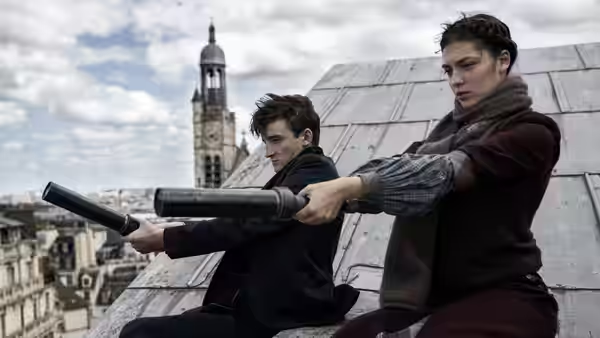
Antonin Baudry’s De Gaulle: Résistance is a good historical drama with an excessive appetite for explanation. It wants to make the case for continued French resistance and show the difficulty of keeping that cause alive among powerful, quarrelsome men. The scale is large, the sympathies are clear, and the storytelling is mostly easy to follow. At 160 minutes, though, it gives us rather more instruction than the story needs.
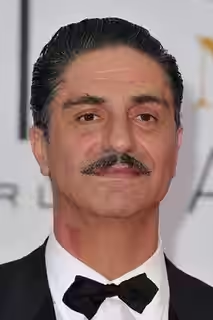
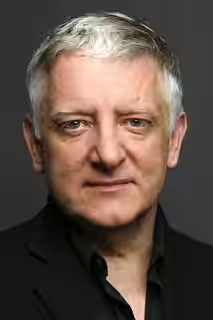
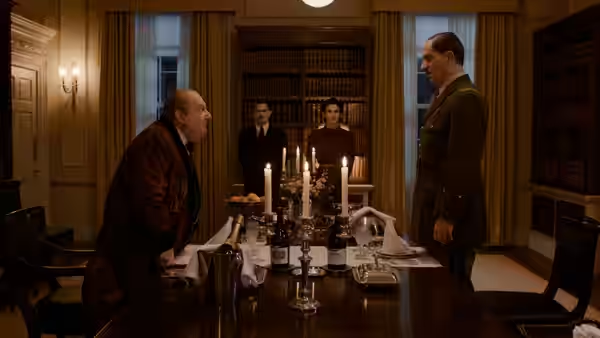
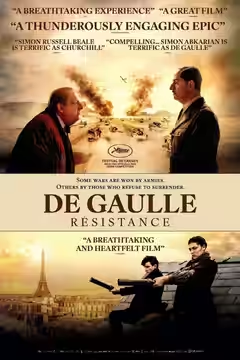
Simon Abkarian gives Charles de Gaulle enough conviction to sustain that approach, without making every encounter feel like an occasion for reverence. The most enjoyable passages put him in conflict with Winston Churchill, played by Simon Russell Beale, whose presence gives de Gaulle someone worth arguing with. We warmed to their sparring because the humour allows these political figures to become tolerable company. Their disagreements bring some welcome friction to a film whose admiration for its central figure is seldom in doubt.
The screenplay, credited to Bérénice Vila and Antonin Baudry, is less confident about leaving us to make connections. Explanatory passages keep events accessible, which matters in a story involving this many military and political figures. But the accumulation becomes tiring, and the film sometimes seems reluctant to move on until every point has been underlined. A little less instruction would have given the performances more space and reduced the sense of a long historical account being carefully worked through.
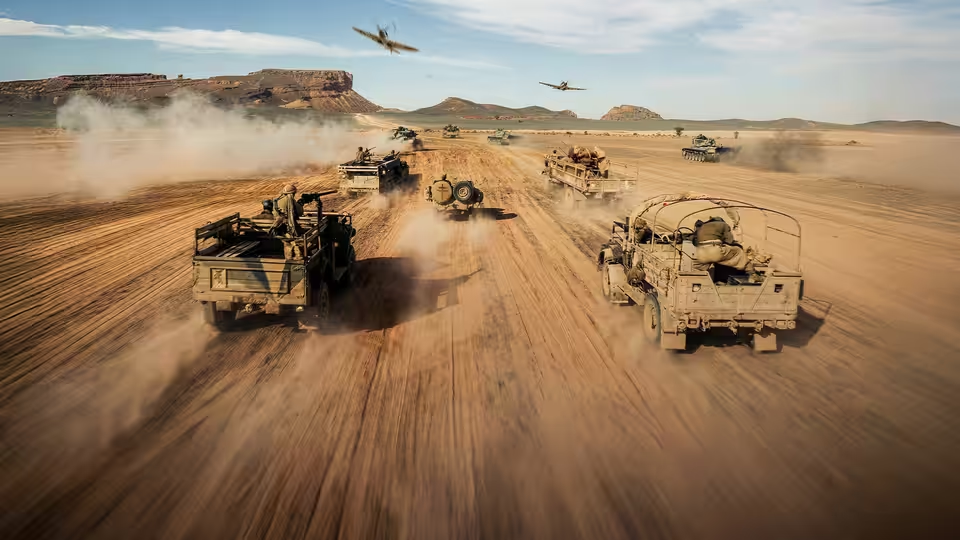
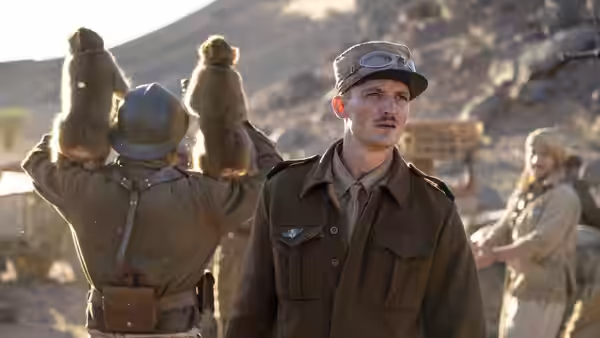
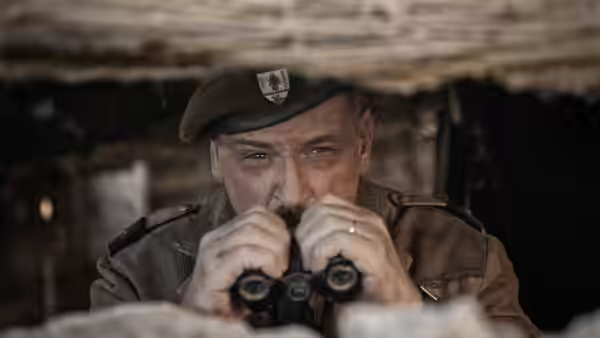
The fighting at Bir Hakeim gives the film a more compelling way of showing what resistance demands of the Free French. Pierre Cottereau’s cinematography lends these sequences a physical force that justifies the attention paid to them. The scale matters because the people caught in the fighting remain important; the human cost receives attention alongside the military struggle. These passages make the cause easier to understand than another explanation of why it matters, and they give the film some necessary urgency.
Benoît Barouh’s production design contributes to the imposing scale of the Parisian crowd scenes. There is pleasure in a historical film that gives its public events this much space, although the weight of the spectacle can become overbearing. Hauschka’s music makes less of an impression than the battle and crowd sequences. The production is accomplished, but its determination to treat history with proper seriousness occasionally makes the whole thing feel cumbersome.
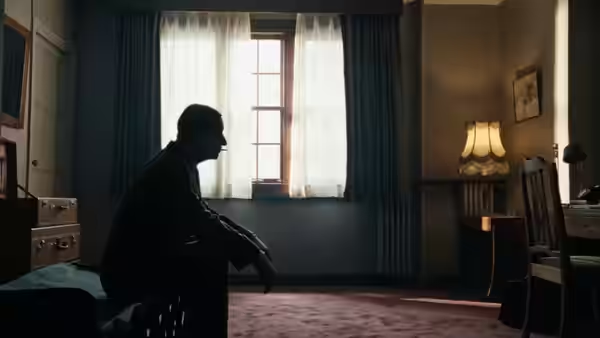
The limited attention to de Gaulle’s family life also narrows the portrait. We get little sense of what his commitments require from the people closest to him. That choice keeps the political and military story prominent, at the expense of a fuller understanding of the man. Simon Abkarian makes the public encounters convincing enough to leave us wishing the screenplay allowed more time away from them.
By the standards of the traditional wartime biopic, this is sturdy, engaging work, with enough humour to ease some of its solemnity. Its straightforward patriotism is most persuasive when the film stays close to the strain of resistance. The heavier explanatory stretches make it harder to recommend to anyone without an existing interest in the subject. Come for the political quarrels and the fighting, with patience for the briefings.