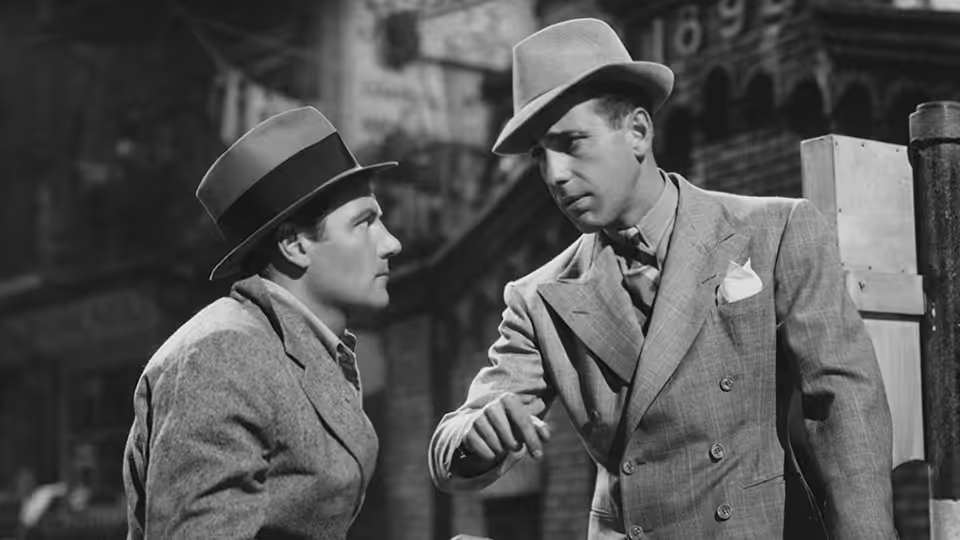
Wyler’s film of the Kingsley play stays on one street and one set, and it is stagebound in the way that word usually means. It is also sharply acted, cleanly photographed by Gregg Toland, and Bogart, in a supporting part, walks off with it.
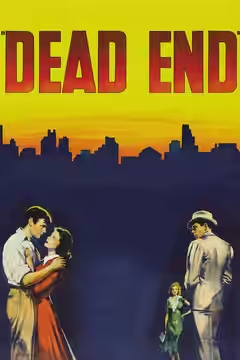
Samuel Goldwyn bought Sidney Kingsley’s play about a New York slum and handed it to William Wyler and Lillian Hellman, and between them they have left it a play. The whole of Dead End happens on one street where a row of tenements backs onto a new block of luxury flats, in 93 minutes. Its argument, stated early and often in speeches, is that these streets make criminals and the people upstairs would rather not know. The speeches are the weakest thing in it.
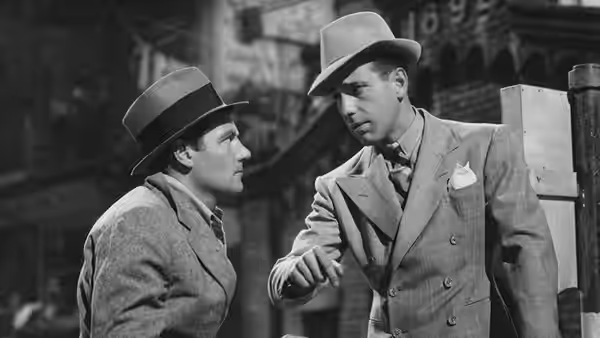
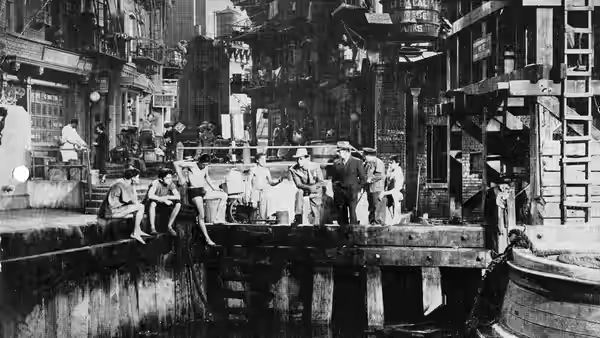
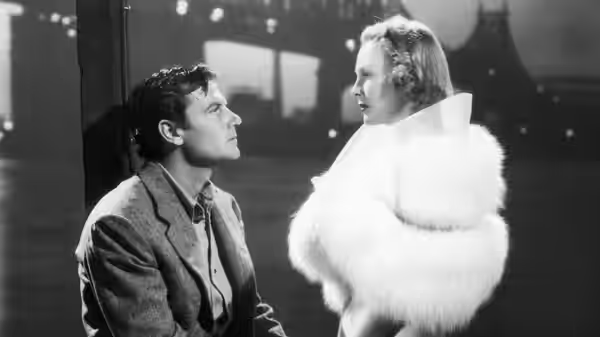
The set is the strongest. The street has been built whole on a stage, with a dock over the river at one end and the terrace of the rich block above, and Gregg Toland photographs it from every level it has. He looks down from the terrace at the boys in the water and up from the pavement at the doorman, and he keeps the flats and the tenements in the same frame, so the two halves are always looking at each other. Daniel Mandell’s cutting moves the eye up and down the street rather than away from it.
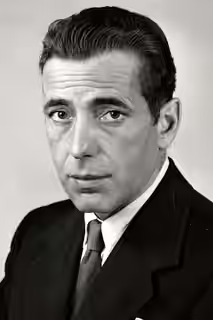
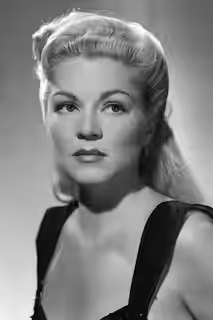
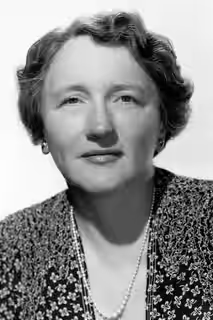
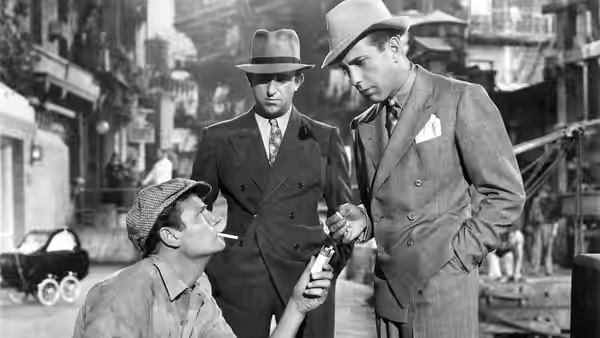
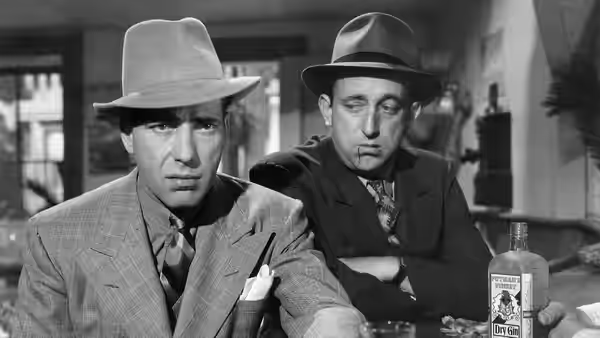
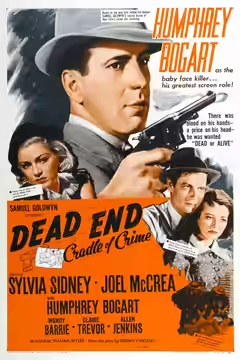
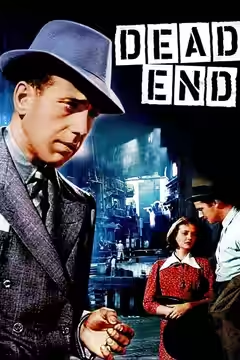
Humphrey Bogart is billed third and takes the film. “Baby Face” Martin is a wanted killer, back on the block with Hunk (Allen Jenkins) to see his mother and the girl he left behind. Bogart does not swagger. He plays Martin quiet and pleased with himself, a man who has come home to be admired, and lets the pleasure drain out of his face as the street declines to admire him. Marjorie Main has one scene as Mrs. Martin. We will not describe it. We will say she plays it flat and tired and never raises her voice, and that it winded us; we had settled in for a gangster picture and had not expected to feel sorry for the gangster. Claire Trevor, as Francey, has a single scene too and does something similar.
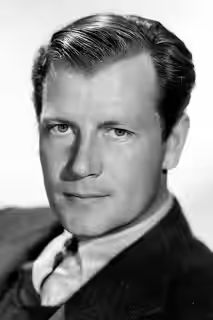
Sylvia Sidney is top billed as Drina, a shop girl on strike trying to keep her kid brother Tommy (Billy Halop) away from the gang. Her face was made for this kind of part, worn and decent and quick to anger, and she gets more into a look than Hellman gives her to say. Joel McCrea has the harder job. Dave is an out-of-work architect who paints signs, and as the film’s conscience he has to say the argument out loud. He is torn between Drina and Kay (Wendy Barrie), the kept woman from the rich block, and the Kay strand is the thinnest in the film; Omar Kiam dresses Barrie in the smoothest clothes on the street, and she is there mostly to show what money buys.
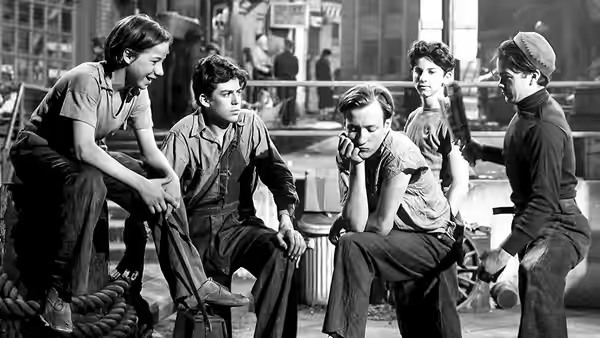
Halop, Huntz Hall, Bobby Jordan, Leo Gorcey and Gabriel Dell came from the New York stage production, and they play Tommy, Dippy, Angel, Spit and T. B. as one noisy organism, all elbows and slang. They are funny and quick, and they are why the film still has an audience. What they are not is frightening. The story needs us to look at them and see Martin twenty years earlier; we saw five talented kids showing off for a camera. The menace comes from Bogart, and he cannot be in every scene.
Alfred Newman’s music is at its best when it stays out; the street has its own noise, river and traffic and boys, and Wyler trusts it. What he does not trust is us. Every point the pictures make, the dialogue makes again, and Hellman’s script keeps stopping to make sure we know that a slum is a bad place to grow up. We knew. The second half takes a turn we will not describe, and the film is better for it: for a while it stops arguing and lets things happen.
It is better made than most of the gangster pictures before it and most of the social-problem films after. Watch it for the set, for Main’s one scene and for Bogart working out in real time that coming home was a mistake. Forgive it the speeches. The people making them meant every word, and it shows.