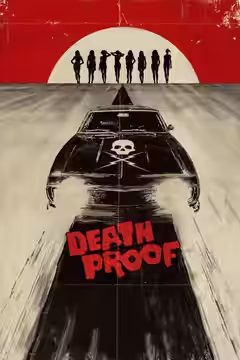
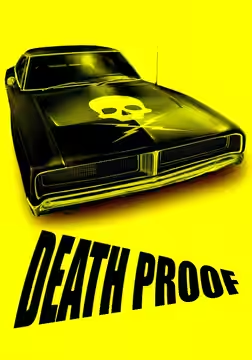
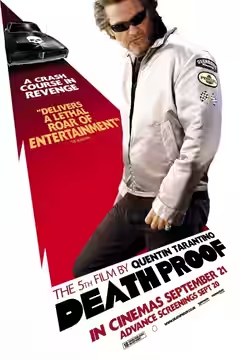
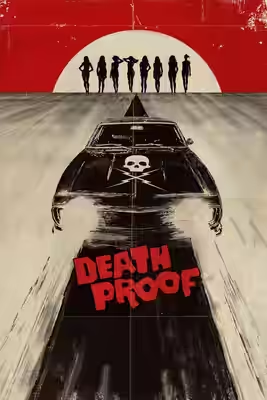
Death Proof poster

Death Proof

2007 · Directed by Quentin Tarantino
1h 53mActionThriller18
64
Fi1m score
Critics · 5 so far
Audience · not yet

Where to watch in the UK

Checked 10 September at 22:29. Prices and availability change; the service’s page is the last word.

Synopsis

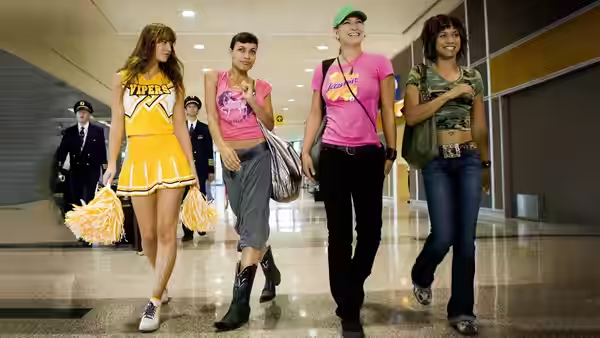
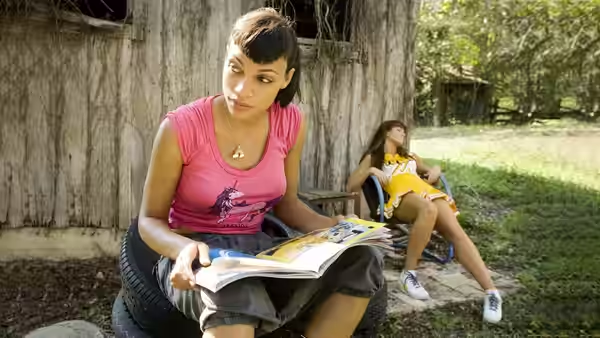
Stuntman Mike (Kurt Russell) is a former film stunt driver with a scar down his face and a black car reinforced so that whoever sits in the driver’s seat survives anything. In Austin, Texas, a radio DJ called Jungle Julia (Sydney Tamiia Poitier) spends a night out with her friends Arlene (Vanessa Ferlito) and Shanna (Jordan Ladd), moving between a bar and its car park, while Mike drinks at the counter and watches. Rose McGowan is Pam, a woman who needs a lift home. Later the film picks up a second group: Abernathy (Rosario Dawson), Kim (Tracie Thoms), Lee (Mary Elizabeth Winstead) and a stuntwoman called Zoë Bell, playing herself, who has come to town with an idea about a particular car.

Fi1m review

In a sentenceAn hour of women discussing text messages, then Zoë Bell on a bonnet at ninety miles an hour and most is forgiven

Tarantino’s half of the Grindhouse double bill is two films stuck together: an hour of bar talk that goes nowhere much, and twenty minutes of car chase that go everywhere at once. Kurt Russell and Zoë Bell make the wait worth it, just.

Death Proof began life as one half of Grindhouse, the double bill Quentin Tarantino made with Robert Rodriguez, and arrived in British cinemas on its own and at a longer length, running 113 minutes. Kurt Russell plays Stuntman Mike, a man with a scar, a grin and a black car built so that only the driver walks away from a crash. He follows women. That is the whole plot, and the film knows it. What Tarantino wants to do with it is spend a long time in a bar, then a long time in a diner, and then put two real cars on a real road and see what happens. The last part is worth your evening. The first two are the price.

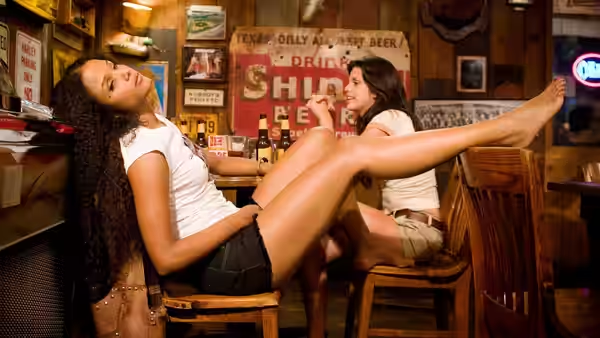
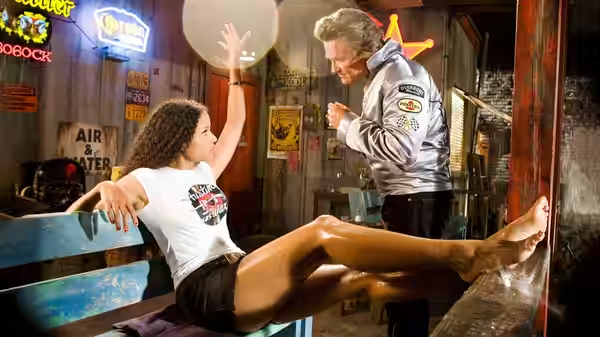
The opening hour is set in Austin, Texas, over one night out. Sydney Tamiia Poitier’s Jungle Julia is a radio DJ who has promised her listeners something on air that Vanessa Ferlito’s Arlene did not agree to, and the two of them and Jordan Ladd’s Shanna drink, smoke and argue about it while the jukebox plays. Tarantino shot the film himself and has damaged the print on purpose: scratches, missing frames, colour that lurches from warm to green, a reel that seems to jump. Steve Joyner dresses the bar in neon and wood and cheap paper, and Nina Proctor puts the women in the shortest possible clothes and Mike in a satin jacket with his own name on it. Russell sits at the counter eating nachos and listening, and every time the film cuts to him the bar gets a little colder.

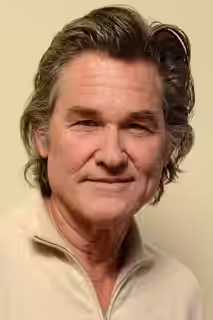
Russell is the reason the first hour holds at all. Mike lists the television shows he did stunts on to a girl who has heard of none of them, and the look on his face when she hasn’t is the film’s best joke. He is courteous, patient, faintly pathetic and plainly dangerous, and Russell keeps all four going at once. Later in the film he is asked to be something rather less than frightening, and he does it without any vanity, which we did not expect from an actor whose whole appeal is his cool.

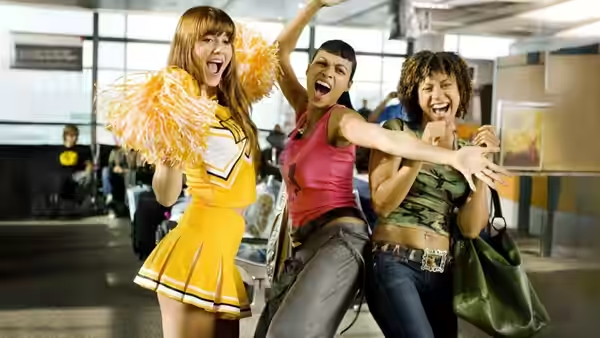
The trouble is everyone else’s talking. In Pulp Fiction the talk was the action; here it is filler with a rhythm. The second group’s diner scene runs on about text messages, boyfriends and a cheerleader outfit for a length that would embarrass a stage play, and Tarantino gives himself a part as Warren the barman so that he can join in. We were bored, and then we found ourselves checking how much of the film was left, which is not a thing we like to admit about a director who once made two hours in a warehouse feel short. The dialogue has his cadence but not his purpose. Nobody in it wants anything except another drink.

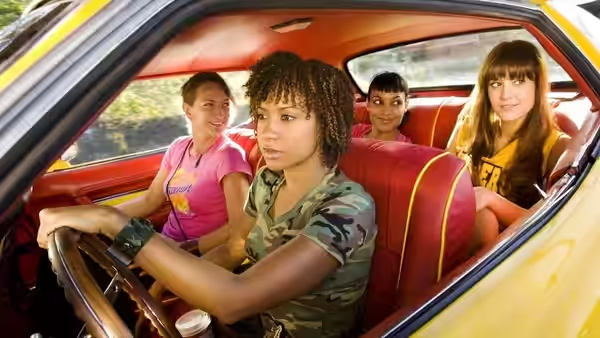
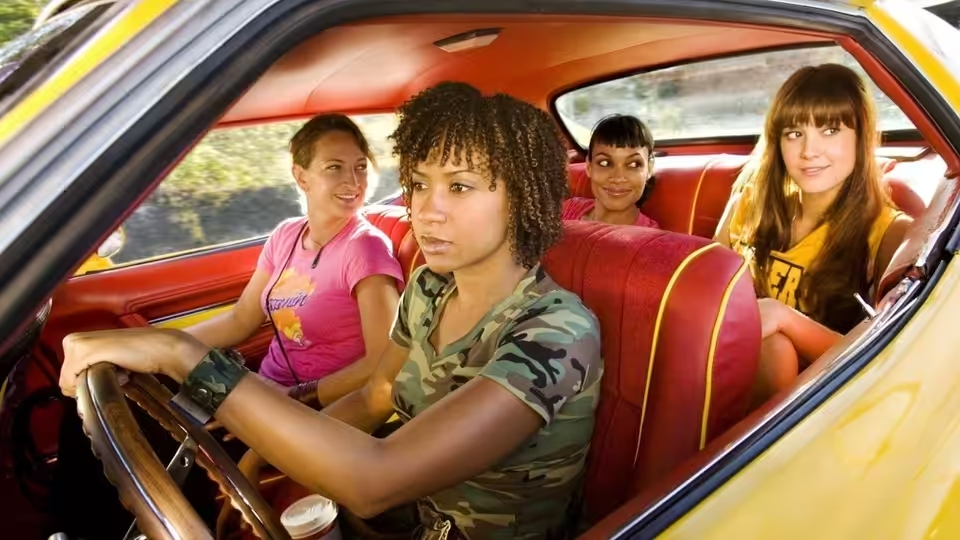
Then the film changes. Zoë Bell is a stuntwoman playing herself, and the last stretch of the film is built around her doing her own work on the outside of a moving car, shot for real, with Rosario Dawson and Tracie Thoms inside it. Sally Menke cuts the chase in long takes so that we can see it is Bell and not a double, the road is a real road and the speeds are real speeds. We sat forward. We had not sat forward for an hour. Thoms drives and swears and is wonderful; Dawson screams with what looks like sincere alarm. There is no music over most of it, only engines and metal, and it is the one section of the film where the grindhouse styling stops being a costume and becomes a method.

Against Tarantino’s own record it is a minor film and it does not pretend otherwise. Jackie Brown (1997) was patient and earned every minute; Kill Bill had a shape. This has a gimmick and a set piece and forty minutes of padding in between. Mary Elizabeth Winstead, as Lee, is given almost nothing and disappears from the film in a way we shall not describe but did not much like.

Watch it with someone who will forgive the first hour and who likes cars. Have the remote to hand for the diner. The last twenty minutes are as good as any chase Tarantino has put on screen, and Russell’s Mike deserves a better film wrapped round him. It carries an 18 and earns it in the second half.
Critical consensus AI synthesised

5 of 6
Positive
1
Mixed
2
Negative
2
The New York Times
6 April 2007 · A.O. Scott
75*

The critic views Death Proof as a decidedly modest picture whose scaled-down ambition is part of its appeal, consisting of long stretches of talk interrupted by kinetic bouts of automotive mayhem. He praises its sincere tribute to Monte Hellman and the way it strips away quotation marks to find a route back to the basics of character, action and story.

Read the full review →
The New Yorker
9 April 2007 · David Denby
65*

The critic notes that Death Proof isn’t as flagrantly imitative as its companion film and praises the intimate, detailed, funny talk among the characters as well as the exciting real-space car chase in the second half. He finds Tarantino caught in contradictions between humanism and nihilism in the service of schlock homage.
Read the full review →
Time Out
17 September 2007 · ★★★ · Ben Walters
60

The review sees the film as a fan-boy indulgence with a double structure that stretches thin material, full of Tarantino-speak and quotation marks. It singles out the climactic car chase as a bona fide old-school tour de force and notes smart attention to tensions between old and new technologies.

Read the full review →
The Guardian
21 September 2007 · Peter Bradshaw
40*

Tarantino's standalone cut of his Grindhouse segment is a bit of a failure, padded with long stretches of inconsequential dialogue that fail to match his earlier work. The extravagant head-on collision scene offers a lethal roar of entertainment, but the studied 70s stylings and offensive tone are ultimately tedious.

Read the full review →
Empire
31 August 2007 · Damon Wise

The review praises Death Proof as a smart, entertaining grindhouse homage that plays with slasher and car-chase conventions while delivering a subversive twist and a thrilling finale. It highlights Kurt Russell's performance and the standout car chase as key strengths in an authentic, old-school Tarantino effort.

Read the full review →
Evening Standard
10 April 2012

The review dismisses the film as a depressing waste of talent, with clunky dialogue, lack of flair, and pointless grindhouse affectations that fail to capture the spirit of the originals. It grudgingly notes the car chases are competent but concludes the film has nothing new or worthwhile to say.

Read the full review →

Cast

Stills

If you liked this, try…

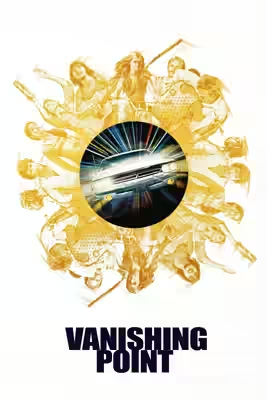
Vanishing Point poster

Vanishing Point

1971 · The white Dodge Challenger this film keeps talking about, and the road film it wishes it were.

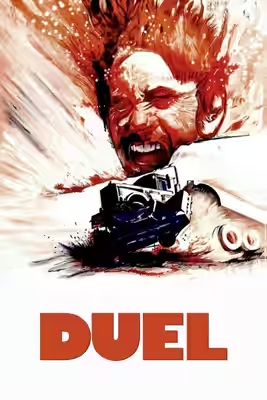
Duel poster

Duel

1971 · Spielberg’s television film: one man, one lorry, ninety minutes, and no dialogue to pad it.

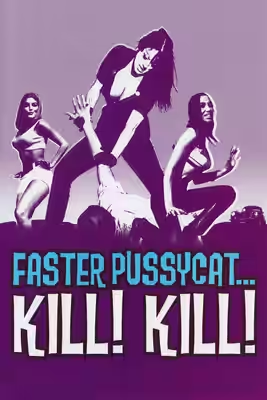
Faster, Pussycat! Kill! Kill! poster

Faster, Pussycat! Kill! Kill!

1965 · Russ Meyer’s desert women and fast cars, the cheap original that Tarantino is imitating.

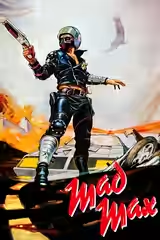
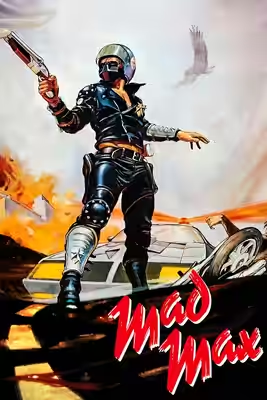
Mad Max poster

Mad Max

1979 · George Miller’s first, made for nothing in Australia, with real cars hitting real things.

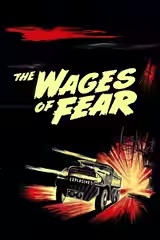
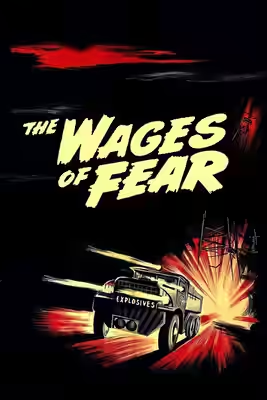
The Wages of Fear poster

The Wages of Fear

1953 · Two lorries, a bad road, a cargo of explosive; dread by the mile, no stunt doubles required.