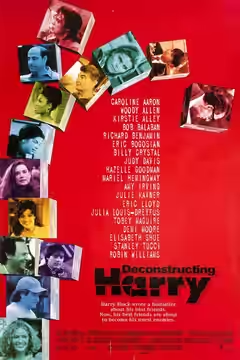
Woody Allen’s sour comedy is funny enough to make its difficult company worthwhile. The shifts between a writer’s life and his fiction are sharply handled, but the women are too often left arguing with him.
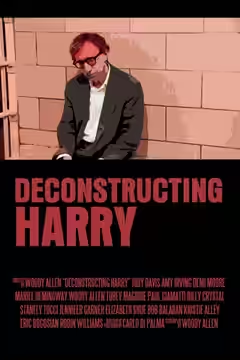
Deconstructing Harry is a funny, sour comedy worth seeing if we can tolerate a film that gives its most objectionable man so much room to talk. Woody Allen, who writes, directs and plays Harry Block, makes a novelist’s use of his friends the starting point for a dispute about who gets to tell their stories. A bestseller is a considerable consolation when those friends turn against him. The script lets their complaints register. It is less generous about giving the complainants lives beyond their complaints.
Harry’s lived and invented experiences keep interrupting one another, so the film asks us to keep checking whose version we are watching. Susan E. Morse’s editing makes those changes brisk and readable without removing their capacity to unsettle. The interruptions often improve a joke by denying Harry the comfortable pause in which an excuse might start to sound reasonable. At 96 minutes, the film has enough pace to stop this fractured storytelling becoming a lecture about the difficulty of being a writer.
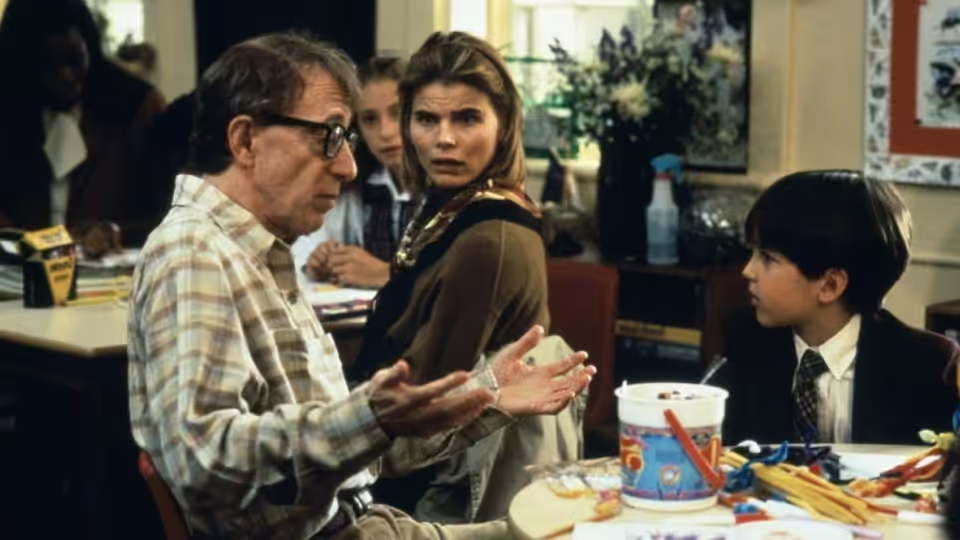
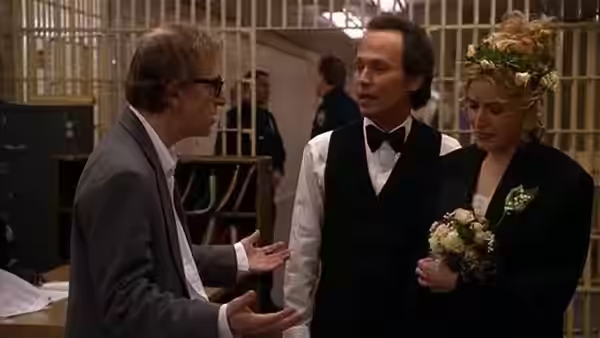
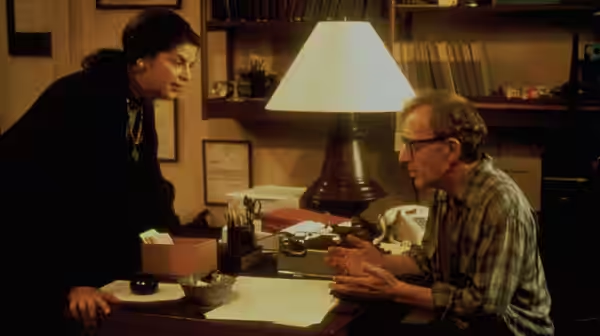
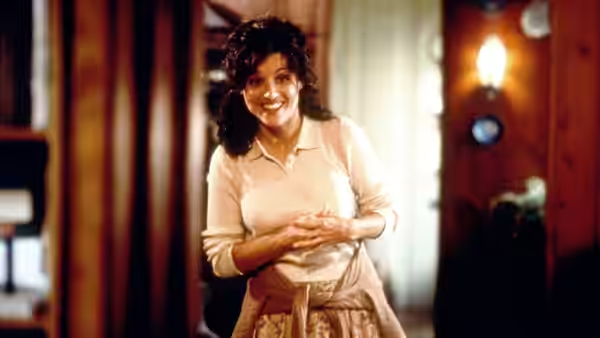
We laughed, then felt slightly ashamed of ourselves, because Harry’s conversion of friendship into saleable material is funny even when the people he uses object. The ensemble scenes allow irritation to build instead of merely providing him with appreciative listeners. Judy Davis as Lucy and Kirstie Alley as Joan give the comedy a useful resistance to Harry’s self-importance. Harry is most interesting when the exchanges allow us to hear how inadequate his excuses are.
Carlo Di Palma’s cinematography and Santo Loquasto’s production design help the shifts between experience and invention remain easy to follow. Neither contribution turns the fictional passages into a separate attraction that delays the comedy. The images leave us free to attend to the performers and to the collision between what Harry writes and what his friends resent. That restraint works, although the cutting supplies more of the film’s character than the individual settings do.
The weakness is the writing of women. The film is willing to expose Harry’s selfishness, but too often a woman’s anger matters chiefly because it supplies another problem for him. The performances make that anger audible; the script does less to make the women interesting when they are not reacting to Harry. We do not need him to become decent. The repeated emphasis on his difficulties simply makes several of the arguments feel alike.
As a comedy about a writer, it is stronger whenever Harry’s predicament produces a scene instead of another excuse. The chaotic car journey gives the film welcome movement and lets the jokes develop through disorder. We would happily have had more of that and less repetition in the personal disputes. Woody Allen remains good at finding comic possibilities in Harry’s confusion, even when we have heard enough of Harry himself.
Those reservations need not make the evening a punishment. There is enough comic invention, and enough pleasure in the abrupt turns between life and fiction, to justify spending time with this difficult company. The cast’s timing keeps the arguments funny after their substance has begun to repeat. Choose it for the sour jokes and the brisk editing; leave it alone if another self-absorbed writer is more than the evening can bear.