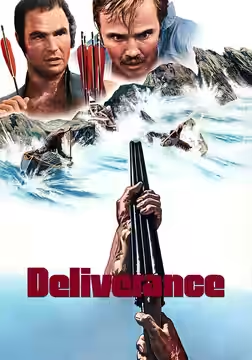
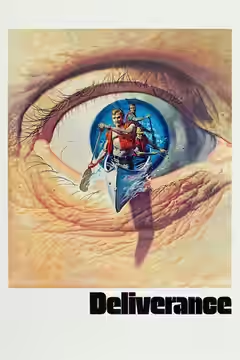
John Boorman’s river thriller is still frightening and still hard to look away from, shot by Vilmos Zsigmond in drained greens and tea-brown water, with Jon Voight doing the best work of the four. James Dickey’s dialogue keeps explaining what the pictures have already said.
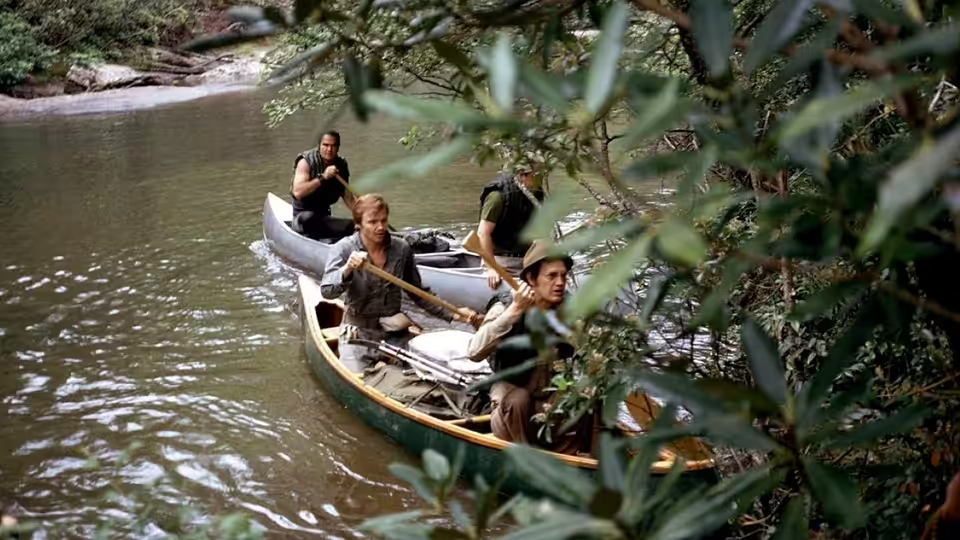
Lewis Medlock has decided that the Cahulawassee is the last wild river in the South and that it will be under a lake within the year, so he and three friends are going to canoe it while it is still there. That is the whole plan, and John Boorman, directing and producing from James Dickey’s own adaptation of his novel, spends the first half hour making it look like a reasonable one. Deliverance is a fine film and a frightening one, and its flaw is that Dickey’s script keeps telling us what Vilmos Zsigmond’s camera has already shown.
The men arrive at a hill town of junked cars and tin roofs, and Boorman lets us look at the locals for exactly as long as the four Atlanta men do, which is too long and not long enough. Drew Ballinger (Ronny Cox) gets his guitar out and finds himself in a duet with a boy on a porch, Lonnie (Billy Redden), on banjo. It is a lovely scene: an old man (Ed Ramey) dances in the dust, the tune speeds up, everyone grins. Then Drew reaches out a hand and the boy turns his face away, and we felt the afternoon go cold. Nothing has happened. Boorman has simply shown us that the men think they are being welcomed and they are being watched.
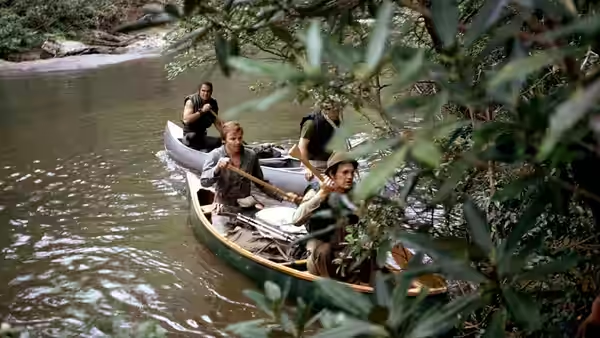
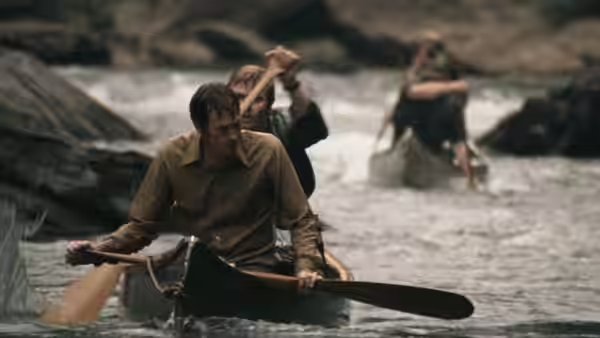
Zsigmond drains the colour out of everything. The trees are grey with some green left in them, the water is the brown of strong tea, and the men’s life jackets are the loudest things on screen, which is the point: they do not belong here and the river can see them coming. He shoots the gorge from high up, the two canoes tiny in it, and then from water level with spray on the lens. Tom Priestley cuts the rapids so that we always know which boat is ahead, who has the paddle and where the rock is. The actors are plainly in the water. There is almost no music apart from what the men and the boy play, and the quiet on the river does more than a score would have.
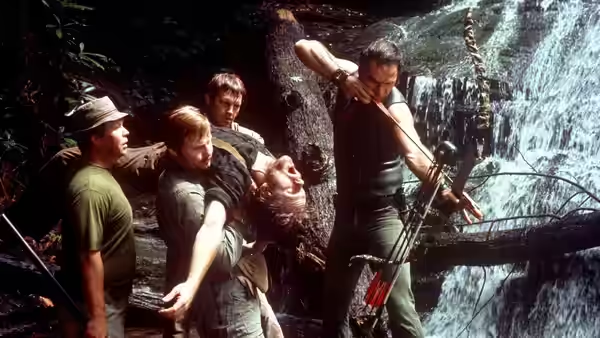
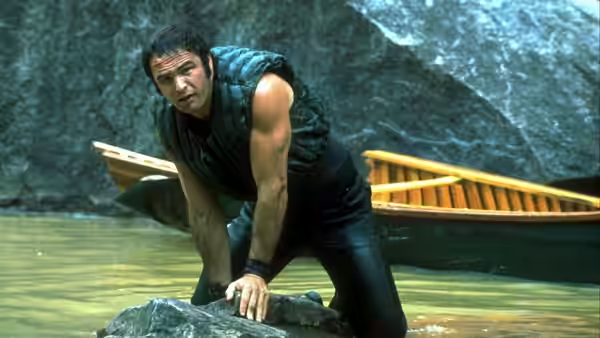
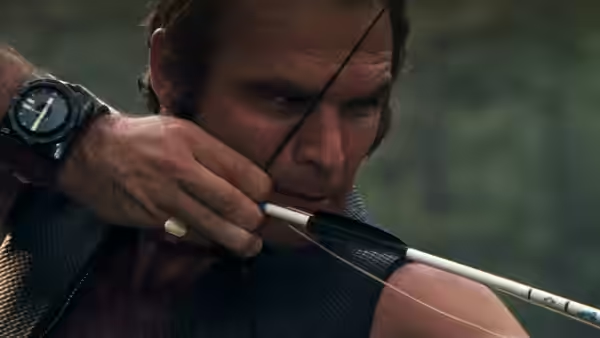
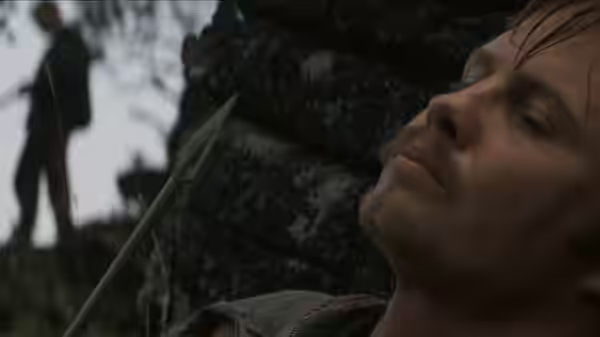
Burt Reynolds plays Lewis as a man who has read the survival books and looks at his own arms a good deal, and he is funnier than the film gets credit for; he knows Lewis is slightly ridiculous and lets him be. Jon Voight’s Ed is the one the film belongs to. He does almost nothing for the first hour except watch Lewis and fail to shoot a deer, and then the film asks him to do everything, and the fear on his face is not the sort actors usually bother with. Ned Beatty’s Bobby, soft and chatty, is the bravest performance in it. On the second day two mountain men, Bill McKinney and Herbert ‘Cowboy’ Coward, come out of the trees, and what follows is the reason for the 18 certificate. We were horrified, and we had seen it before. Boorman shoots it in flat daylight, without music and without cutting away to anything that would let us off, and that is why it has lasted where the gorier films that copied it have not.
The trouble is the script. Lewis explains the film in the car on the way up, about machines failing and who will survive when they do, and explains it again by the fire, and the pictures had already said it. The haggling with the Griner brothers (Seamon Glass, Randall Deal) over who drives the cars is staged like a scene from a play about hill people, every line a warning. Some critics at the time thought the film exploited its violence rather than examined it. We think they are wrong. The last third is mostly men whispering on a riverbank about what they can live with, which is not how a film that enjoys violence spends its time, and by the end we were more afraid of the men we had come with than of anyone in the woods.
Boorman had made Point Blank five years earlier, about a man walking through a city that has stopped seeing him, and this is the same idea turned inside out: men walking into a place that sees nothing else. We think it is his best film. It runs 109 minutes, which is as long as it needs to be.
Watch it with the lights off and the phone in another room. Do not, whatever Lewis tells you, watch it the night before a canoeing holiday.