John Hughes’s version of Hank Ketcham’s comic strip is gentle, sunlit and thin, and it has one real asset: Walter Matthau, who turns a cartoon grouch into an actual man. Christopher Lloyd’s tramp belongs in a different and nastier film.
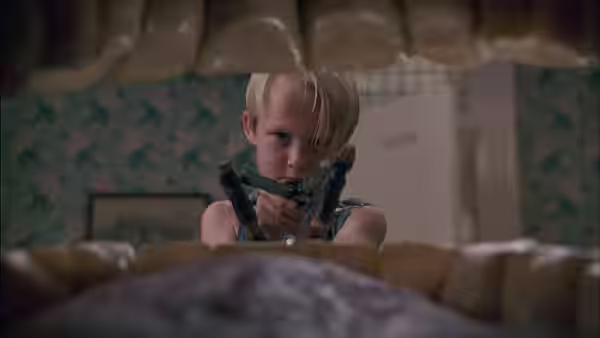
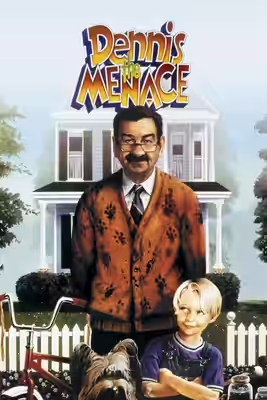
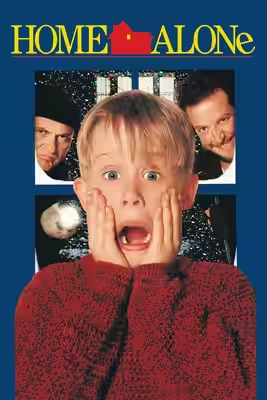
Hank Ketcham drew Dennis the Menace as a newspaper strip for decades: a small boy, a slingshot, a neighbour who wanted to be left alone. John Hughes, who wrote and produced this, has made the obvious film from it and then bolted on a villain, because three years earlier Home Alone taught him that a small boy and a burglar sell tickets. The result is gentle, sunny and thin, and it has one real asset. Walter Matthau is on screen for most of its 96 minutes, and whenever he is, the film is fine.
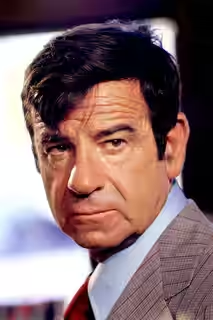
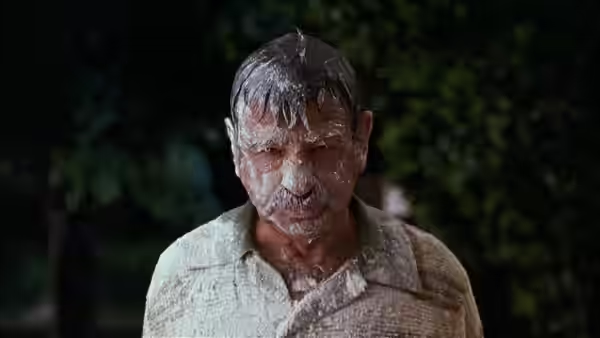
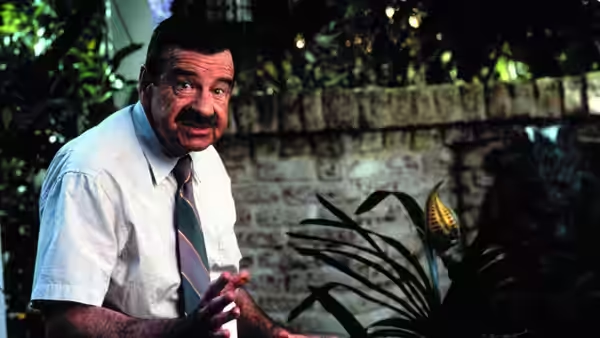
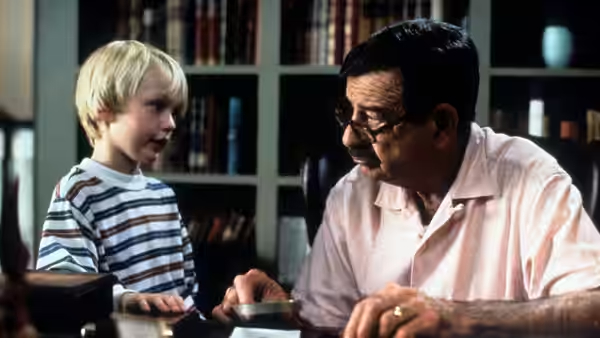
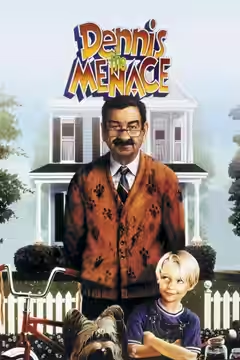
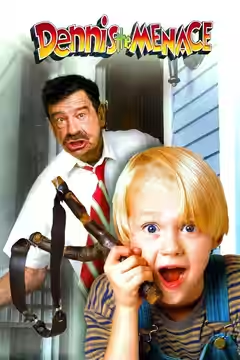
Matthau plays Mr Wilson not as the strip’s cartoon but as a man. He has his garden and his wife, and he regards the boy next door as weather: something that arrives, does damage and cannot be reasoned with. His face is the film. Whenever one of Dennis’s pranks lands, Matthau takes a full three seconds to work out what has happened, and that delay is where the laughs are; we laughed out loud, properly, in a way the rest of the film rarely manages. He is also allowed to be unkind to the child, and the film is braver for it.
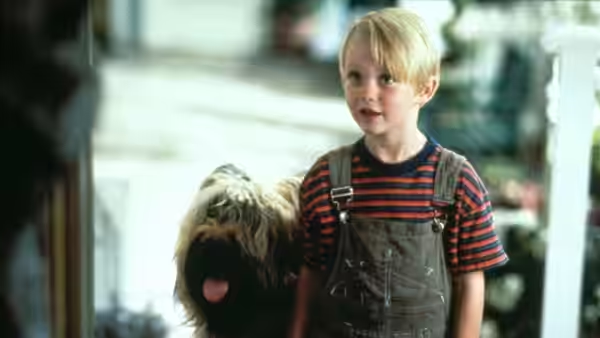
Joan Plowright gives Martha the warmth that makes Wilson’s grumbling bearable, and the two of them have the timing of people who have been married for decades and know which arguments are worth having. Mason Gamble, as Dennis, is a sweet, round-faced five-year-old who says his lines clearly and looks where he is told. At that age that is not a small achievement, and it is also not quite a performance; the strip’s Dennis was a force of nature and this one is mostly a nice boy. Lea Thompson and Robert Stanton, as his parents, have little to do except need a babysitter.
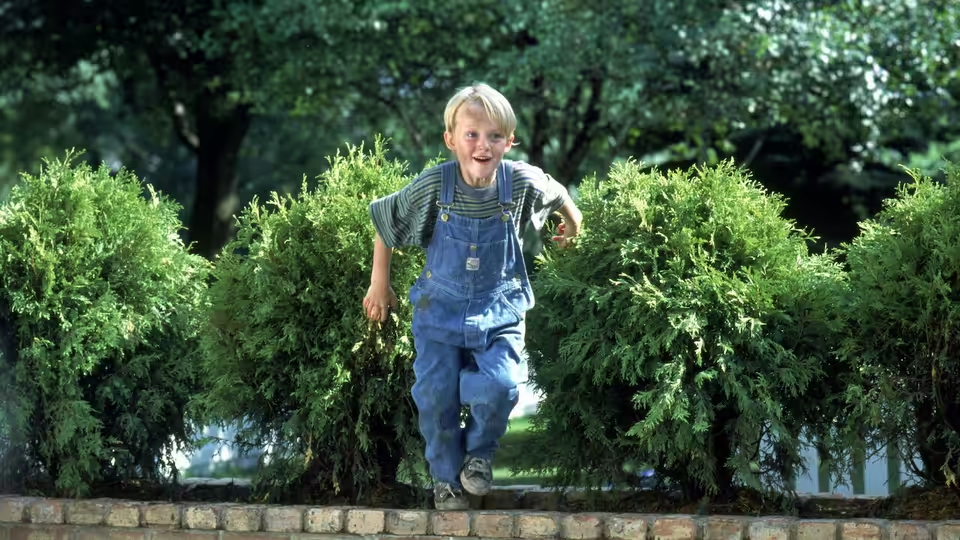
Nick Castle directs it like a Saturday afternoon. Thomas E. Ackerman shoots the neighbourhood in soft, even sunshine, with lawns the green of a seed packet and not a cloud anywhere. James D. Bissell fills Wilson’s house with china, doilies and polished wood, so that every surface is something Dennis can break, and makes the garden a small fussy kingdom with the greenhouse at its heart. Ann Roth and Bridget Kelly put Dennis in the strip’s striped shirt and dungarees and Wilson in cardigans buttoned to the neck. Jerry Goldsmith’s score is light and chattering, woodwind and pizzicato, and it does the job of telling us a prank is coming; it is pleasant and a little busy. Alan Heim keeps the gags short, which is a mercy.
Then there is Christopher Lloyd. Switchblade Sam walks into town along the railway line in a long black coat, with a face the colour of old newspaper and teeth to match, lifting things from washing lines and children’s pockets. Lloyd plays him with no wink at all. We found him properly unpleasant, and we were some minutes in before we realised the film thought he was funny. He is a figure from a grimmer picture dropped into this one. The second half takes his story where you would expect, into Home Alone territory, and we will leave it there, except to say that the slapstick is heavier than anything the film has earned, and the mildness that made the first hour pleasant starts to look like a shortage of ideas.
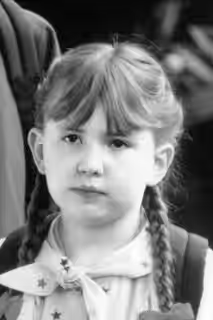
Hughes’s script has a handful of good jokes, most of them given to Matthau, and a great many scenes that are simply a boy doing something and an adult reacting. Margaret Wade (Amy Sakasitz), the bossy girl who wants Dennis to play husband, is the one child in it with any edge, and the film uses her twice and forgets her. Compared with the strip, which had one panel and a last line that landed, the film sprawls; compared with Home Alone, it is kinder and far less funny.
It runs 96 minutes and carries a PG, and for a child under eight it will do nicely; the pranks are harmless and the garden is a lovely place to spend an afternoon. Adults will spend the time watching Matthau and wishing the film had trusted him to be enough. He nearly was.