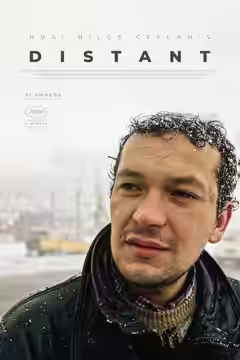
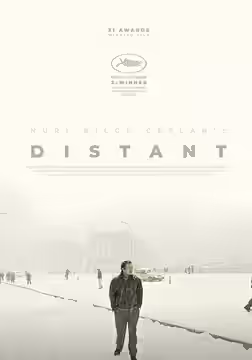
Nuri Bilge Ceylan’s Distant makes two lonely men absorbing company through subtle acting, dry humour and carefully composed images. Its patience occasionally becomes a drag, and some symbolism is blunt, but the feeling holds.
Distant is a quietly moving drama with a stubbornly slow pace, and we recommend it with that qualification. Nuri Bilge Ceylan wants us to pay attention to two lonely men without expecting them to become eloquent about their condition. The interest lies in their relationship, the small details around it and the flashes of comedy that stop their unhappiness becoming oppressive. That is enough to sustain the film, though not every pause earns its length.
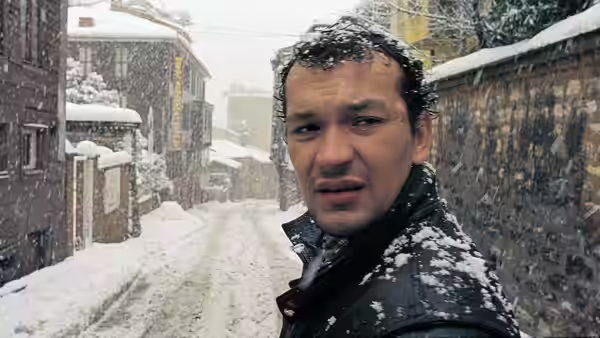
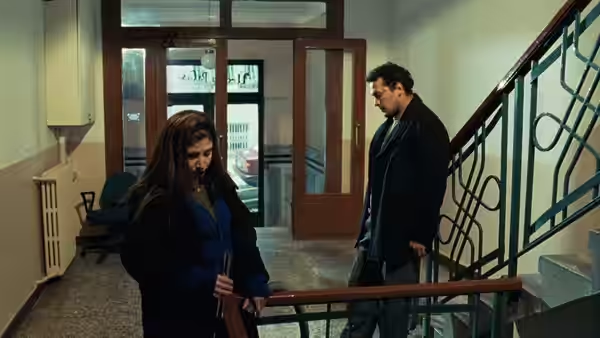
Muzaffer Özdemir’s Mahmut and Mehmet Emin Toprak’s Yusuf are compelling because the performances leave us some work to do. Neither actor presses a feeling upon us, and their restraint makes a small alteration in behaviour worth noticing. This is acting that benefits from being watched patiently: we have time to reconsider an impression rather than accept the first expression as the whole person. The humour helps, allowing the men to be recognisably fallible without inviting us to feel superior to them.
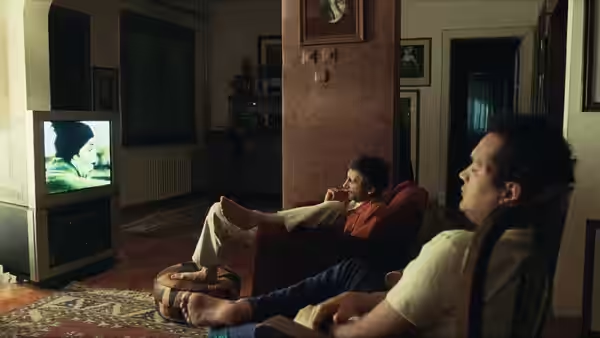
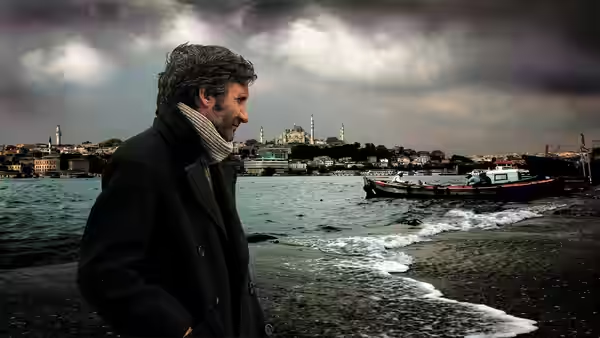
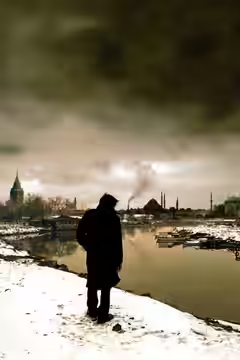
Working as his own cinematographer, the director uses expansive framing to make us examine the space around the characters as well as their faces. The compositions are exact, but they rarely feel like an excuse to stop attending to the people inside them. Our eye can wander to a detail and back again, and that freedom matters in a film whose pace could otherwise become coercive. The images ask for concentration without continually advertising what we should think.
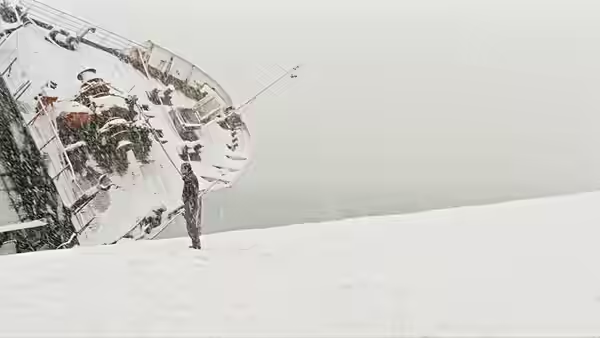
The rusted, half-sunken ship is harder to defend as a subtle choice. We felt unexpectedly sad looking at it, because something so large and plainly useless makes its decay difficult to dismiss. Yet it also shows the risk in this approach: an image can suggest so much that it begins to do the characters’ thinking for them. The film is more persuasive when an ordinary detail needs us to notice it than when a metaphor all but announces its meaning.
The editing, shared by Nuri Bilge Ceylan and Ayhan Ergürsel, makes room for this kind of looking, sometimes more room than the scene needs. At 106 minutes, the film is not an ordeal of duration, but there are pauses in which observation gives way to waiting. We do not need a dramatic confrontation every few minutes; we do need the stillness to keep changing what we understand. Some stretches repeat a feeling that the performances have already made clear.
Viewers accustomed to drama that moves from one decisive conversation to the next may find this frustrating. Among films that give priority to observation, it earns its place through the actors’ ability to hold our attention without appearing to ask for it. The humour matters too, keeping the solemnity from becoming a duty and making the men company worth having. Watch it when there is no need to hurry.