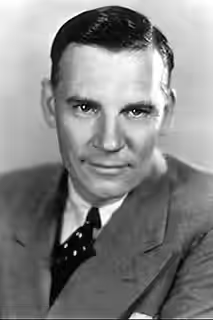
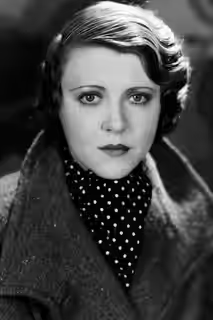
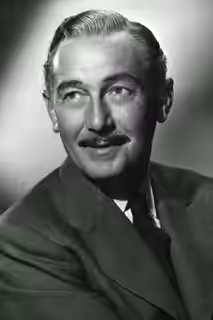
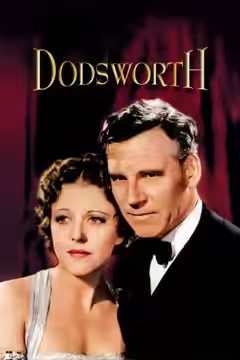
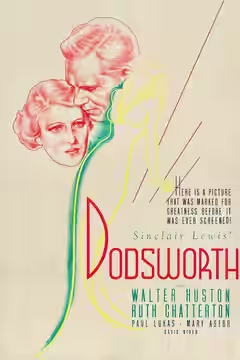
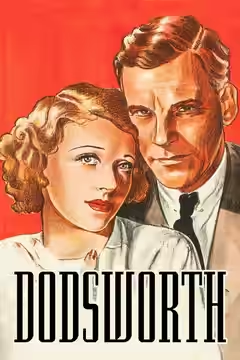
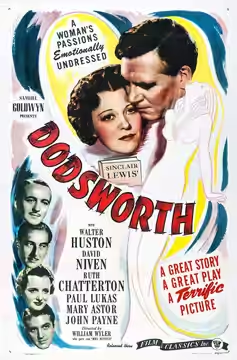
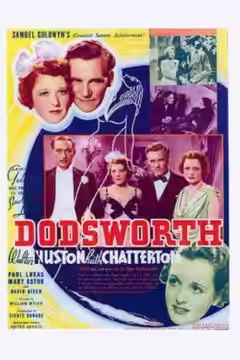
William Wyler’s film of the Sinclair Lewis novel watches a twenty-year marriage come apart in hotel rooms and on ship decks, and it does so without raising its voice. Walter Huston is the reason to see it. Ruth Chatterton is the reason some people cannot.
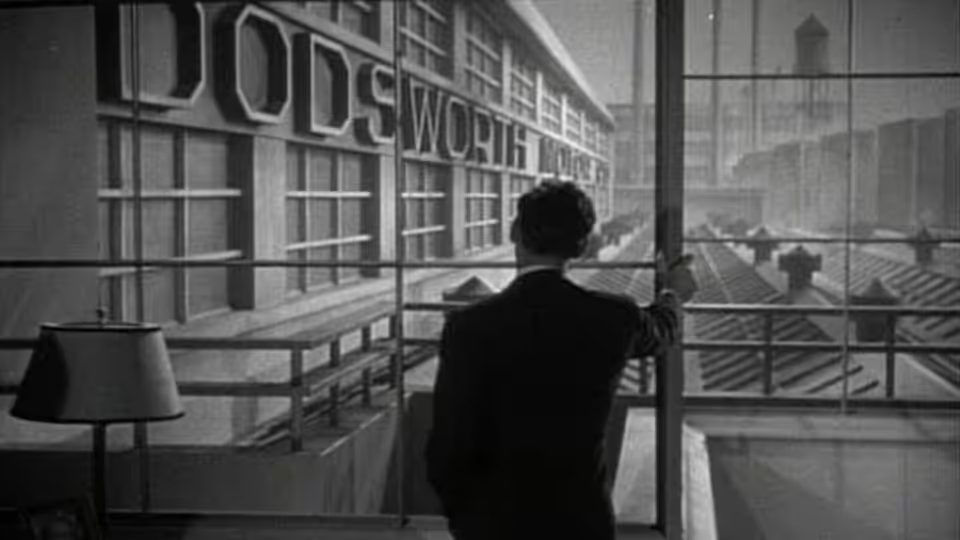
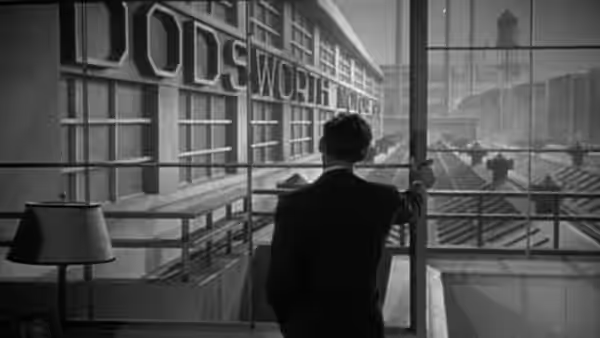
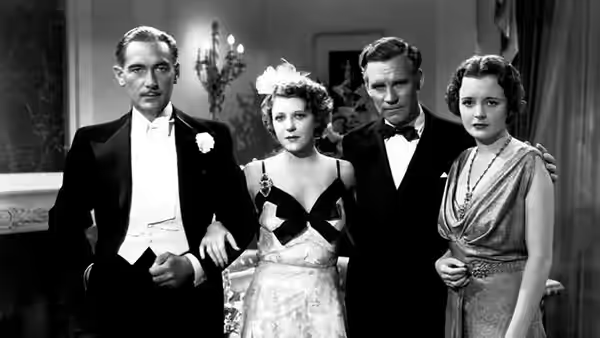
Sam Dodsworth (Walter Huston) has built cars in Zenith for twenty years, and in the first scene of Dodsworth he sells the company, shakes a few hands, and stands outside the gates with the rest of his life in front of him. His wife Fran (Ruth Chatterton) has planned that life for him. It is in Europe, and it involves her being taken for thirty. William Wyler’s film, adapted by Sidney Howard from the Sinclair Lewis novel, follows them across the Atlantic and spends 101 minutes watching what happens when a man who has always been busy has nothing to do but look at his marriage. It is a film about grown-ups, made for grown-ups, and there were not many of those coming out of Hollywood in 1936.
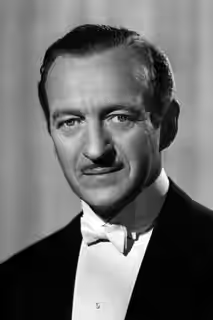
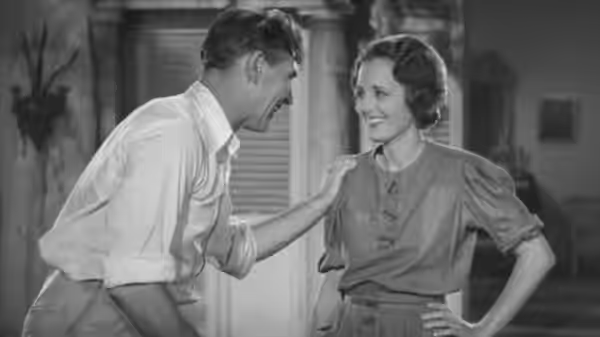
The scene that told us what kind of film it would be comes on the ship. Sam is at the rail at night, waiting for the first light off the English coast, and when it appears he calls for Fran like a boy who has spotted something. She is not interested. She is below, being charming to Captain Clyde Lockert (David Niven), who is charming back. Wyler puts husband and wife in the same frame, one lit up and one bored, and holds it long enough for us to see both. It moved us more than we were ready for, because Huston plays that happiness so plainly and Chatterton plays that boredom so plainly, and neither of them is wrong about the other.
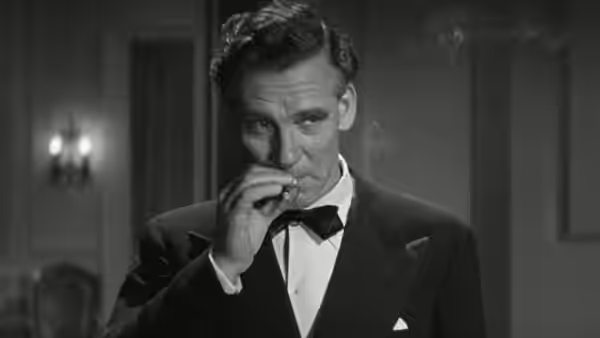
Huston is the film. He walks with his hands in his pockets, talks slowly, and never once asks us to feel sorry for him, which is why we do. He is a man who has been good at one thing and is now being told, politely, in Paris and Vienna, that it was not the right thing. Fran moves on from Lockert to Arnold Iselin (Paul Lukas), a banker with a flat and no obvious job, and later to Baron Kurt Von Obersdorf (Gregory Gaye). Omar Kiam dresses her more elaborately at each stop, so that by the time the Baron appears she is wearing her whole argument.
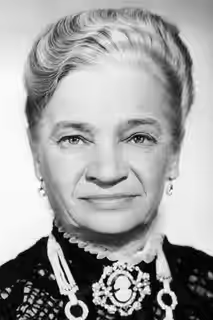
Chatterton divides people, and we understand why. She pitches Fran high and keeps her there, and she is hard to be in a room with. We think that is the part, not the actress, and there are moments, in a hotel corridor and at a dressing table, when she lets us see how frightened Fran is of the mirror. But the film gives Sam his quiet scenes and gives her almost none, and when Maria Ouspenskaya arrives as the Baron’s mother for a single drawing-room scene, the cruellest in the film, Fran has nowhere to stand. We will not describe what is said. It is the one place where Wyler’s fairness fails, and it fails against the woman.
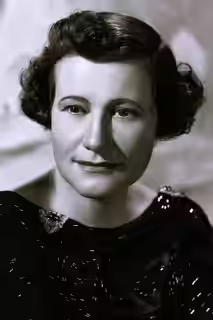
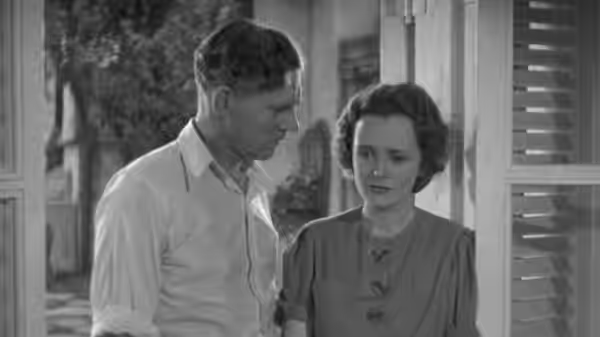
Mary Astor, as Edith Cortright, is doing the opposite of Chatterton. She sits still, speaks slowly, and lets Sam finish his sentences, and the scenes between them on the ship and later in Italy are the calmest in the film. Astor gets less screen time than either lead and makes more of it, which several critics have noticed and which we found true.
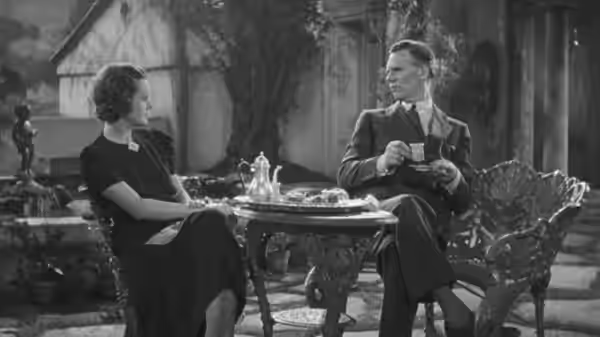
Rudolph Maté shoots the staterooms and hotel suites in depth, so that arguments happen across furniture and through doorways, with one person in the foreground and the other half a room away. Wyler blocks the marriage as space: who walks out, who stays, who is left standing by a door. Daniel Mandell cuts without fuss, ending scenes on a look rather than a line. Alfred Newman’s music is used sparingly; long stretches have none, and the arguments are the better for it. For a studio picture of its year it is startlingly direct about adultery, about divorce, and about a woman’s fear of no longer being wanted.
The Zenith scenes are broader than the European ones. Tubby and Matey Pearson (Harlan Briggs and Spring Byington), the old friends from home, are written as a warm-up act, and the Dodsworths’ daughter Emily (Kathryn Marlowe) and her husband Harry (John Payne) are there to be waved off. The last ten minutes move faster than anything before them, and we would have given them another five.
Watch it with someone you have been married to for a long time, and do not talk over the deck scene.