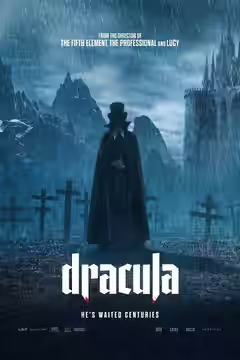
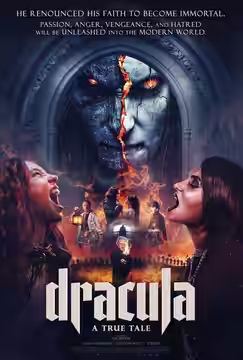
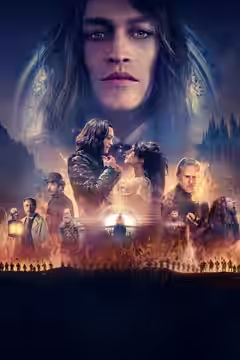
Luc Besson’s Dracula is a lovesick widower in a handsome, silly and almost bloodless romance that never once frightens. Caleb Landry Jones and Christoph Waltz are worth the evening on their own; the script around them is not.
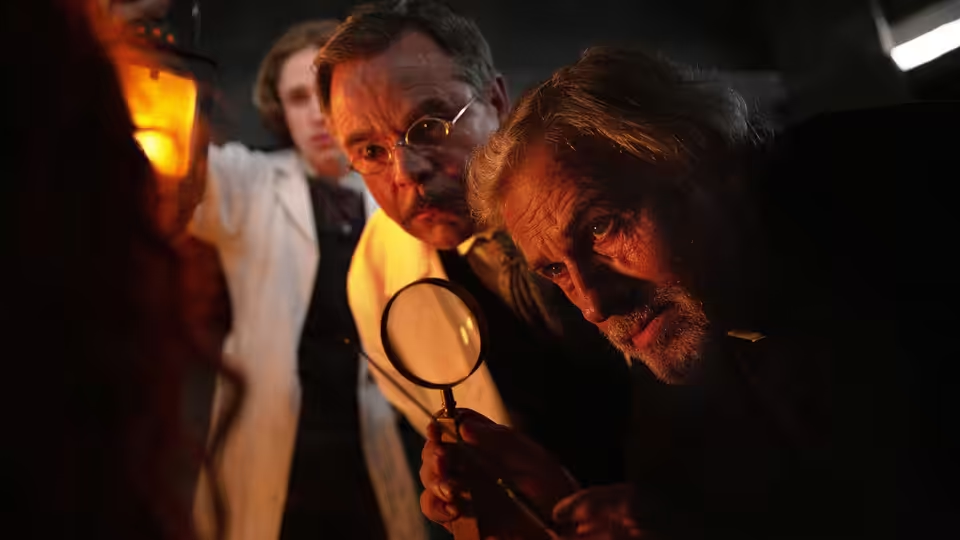
Luc Besson has been circling Bram Stoker’s novel for most of his career without naming it: nearly every film he has made is about a strange, isolated person who loves one other person too much. So it is no surprise that his Dracula is a romance first and a horror film a distant second. Besson writes and directs, and his script keeps the shape of the old story while turning its villain into its widower. Vlad (Caleb Landry Jones) loses his wife Elisabeta (Zoe Sidel), renounces his faith and is made immortal for it; centuries later, in Paris, he finds a woman with her face. Francis Ford Coppola built his 1992 version on the same idea. Besson takes it further and with a straighter face.
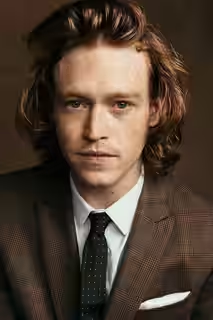
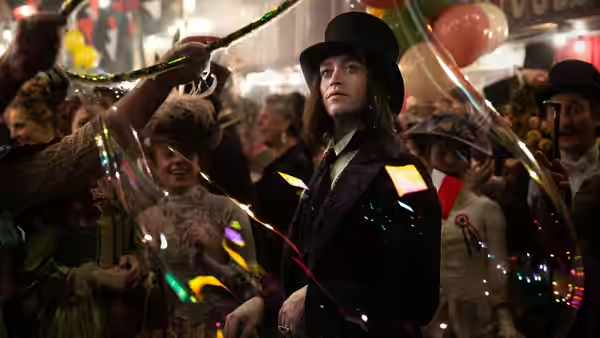
Jones is the reason the film holds together for as long as it does. He plays Vlad as a man who has been grieving for centuries and has stopped pretending it looks dignified: he pouts, he swoons, he weeps in public, and he means every bit of it. It is a mannered, slightly fey performance, and it would be unbearable if it were winking. It is not. We were touched by him more than once, to our surprise, and the reason is that Jones never treats the love story as a joke even when the film around him does.
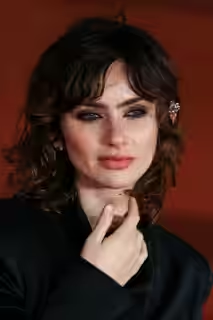
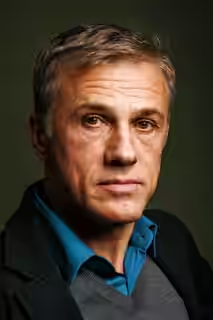
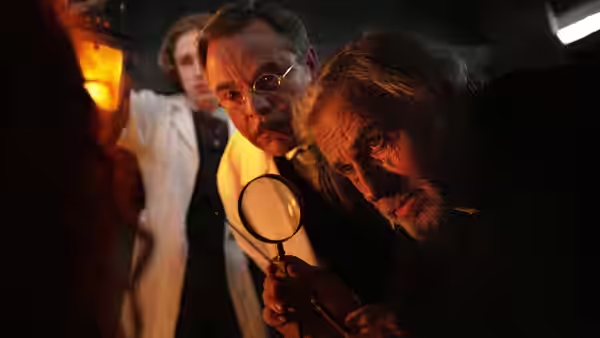
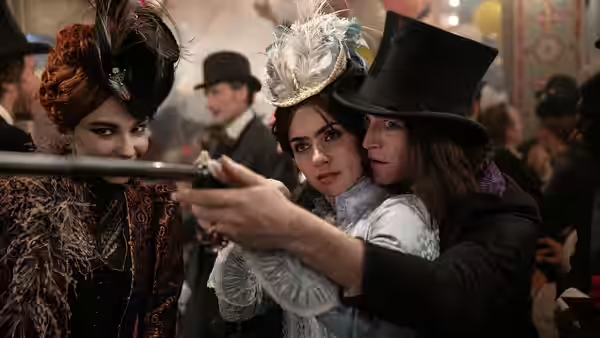
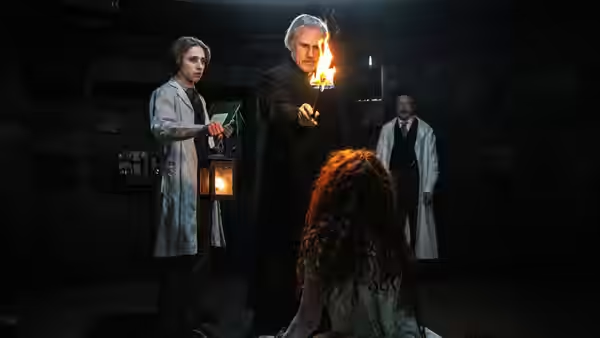
Christoph Waltz plays the priest who takes the Van Helsing role, and he plays it as if he has read the book and found it a little vulgar. He underplays everything, which is a relief, and the film is at its best when he and Jones share a room. Sidel does what she can with a part that is mostly a face. Ewens Abid’s Jonathan Harker and Guillaume de Tonquédec’s Dumont are given scenes rather than characters, and Matilda De Angelis, as Maria, appears to be having the most fun of anyone in the cast.
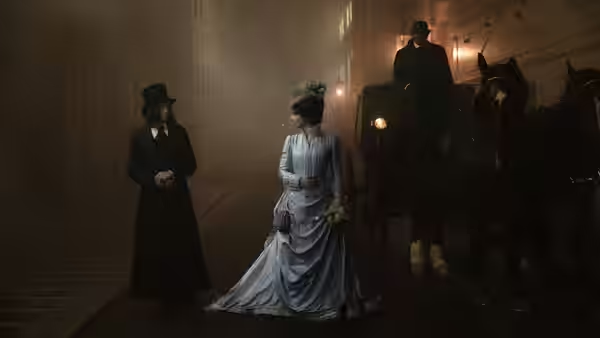
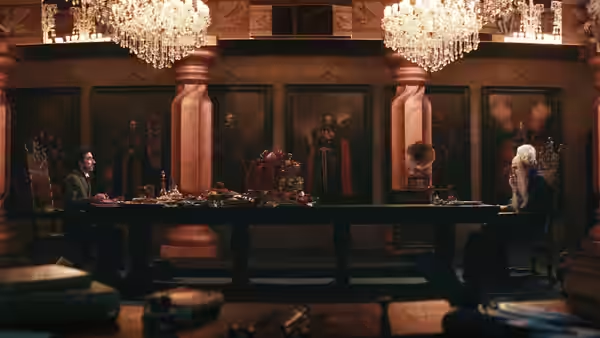
The money is on the screen, at least where the money went on things you can touch. Hugues Tissandier’s Paris interiors and Corinne Bruand’s costumes are handsome and plentiful, and Colin Wandersman shoots them in a warmer, brighter light than vampire films usually allow, so the whole thing looks more like an opera set than a crypt. Danny Elfman’s score sighs along underneath and rises when asked. The best passage is a late attack by an army, staged at real scale and cut by Lucas Fabiani so that you can follow who is where, and it is the one stretch in which Besson the action director takes over from Besson the romantic. The computer-generated work elsewhere is another matter: the more Vlad does, the less he seems to weigh.
Then there is the perfume. Besson has Dracula concoct a scent and describe it to camera in the manner of an advertisement, and for a stretch the hunt for him turns on tracing it. We laughed out loud, then spent a moment unsure whether we had been meant to, and decided Besson probably did not mind either way. It is the most memorable thing in the film and also the moment it stops being possible to take the horror seriously, if it ever was. We were never frightened, not once in 130 minutes, and the 15 certificate is barely troubled.
The script is the trouble underneath all of this. It keeps leaving the present for Vlad’s past in flashbacks that interrupt the one story we care about, and it hands the supporting cast exposition where it should hand them motives. Things happen because the plot needs them to happen. Besson’s best films, The Fifth Element among them, are every bit as silly as this one, but they move; this one is sincere, handsome and oddly still.
The reviews so far have split much as we have, most of them somewhere between fond and exasperated, and we think that is about right. If a vampire love story with the lights up and the fangs mostly sheathed sounds like your evening, Jones and Waltz will see you through it. If you want to be frightened, look elsewhere; this Dracula would rather be forgiven.