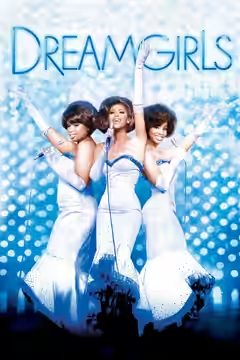
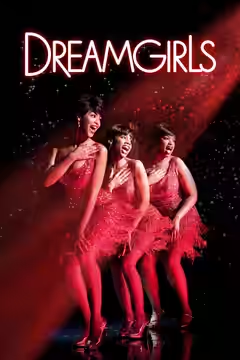
Bill Condon’s film of the Broadway musical is handsome, well cast and about half as good as its best five minutes. Jennifer Hudson and Eddie Murphy are the reasons to see it; the songs around them are the reason it is not better.
Bill Condon, who wrote the screenplay for Chicago (2002), writes and directs this film of the 1981 Broadway musical by Tom Eyen and Henry Krieger, about a Detroit girl group and the car salesman who turns them into stars. The story is officially not about the Supremes and Berry Gordy, and anyone who has heard of either will spend the first half hour ticking off the resemblances. What Condon has made is a handsome, well-cast, 130-minute musical that is decent for most of its length and, for about five minutes, something far better than decent. Those five minutes belong to Jennifer Hudson.
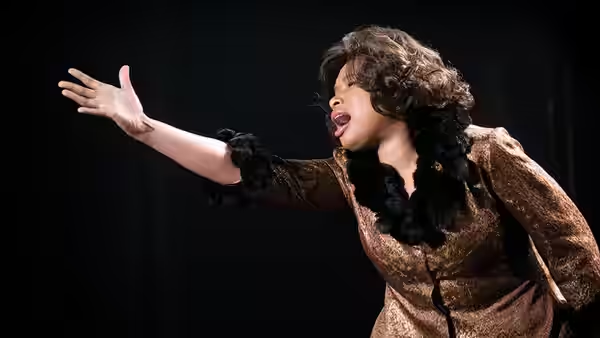
Her number comes a little after the hour, and we will not say what brings it on. What we can say is what it did to us. We had been enjoying the film in a mild, well-disposed way, and then Hudson planted herself in the middle of a half-lit room and sang Effie’s great refusal, the number everyone has heard of, as a quarrel rather than a showpiece, going hoarse at the top, refusing to leave after everyone else had, and we sat forward and stayed there until she had finished. Condon shoots it close, lets Tobias A. Schliessler’s light go hot and amber on her face, and keeps the cutting to a minimum, which is the right call. It is the only time the film and its music are the same size.
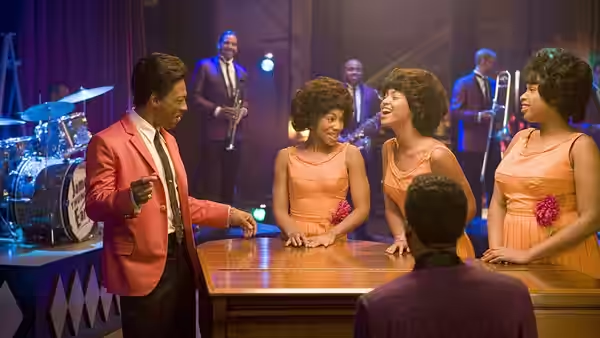
Eddie Murphy is the other reason to go. His James ‘Thunder’ Early is a soul shouter in the James Brown line, all splits and sweat and processed hair, and Murphy plays the comedy of him and then, as the years pass and the style goes out of fashion, the sadness: a man told to stand still and sing ballads when standing still is the one thing he cannot do. It is the best acting he has done in a long while, and he sings it himself. Anika Noni Rose, as Lorrell, the Dreamette who falls for him, is warm and sharp and given too little. Danny Glover’s Marty Madison, the old-school manager who loses his client to a younger man in a better suit, is quietly the film’s conscience.
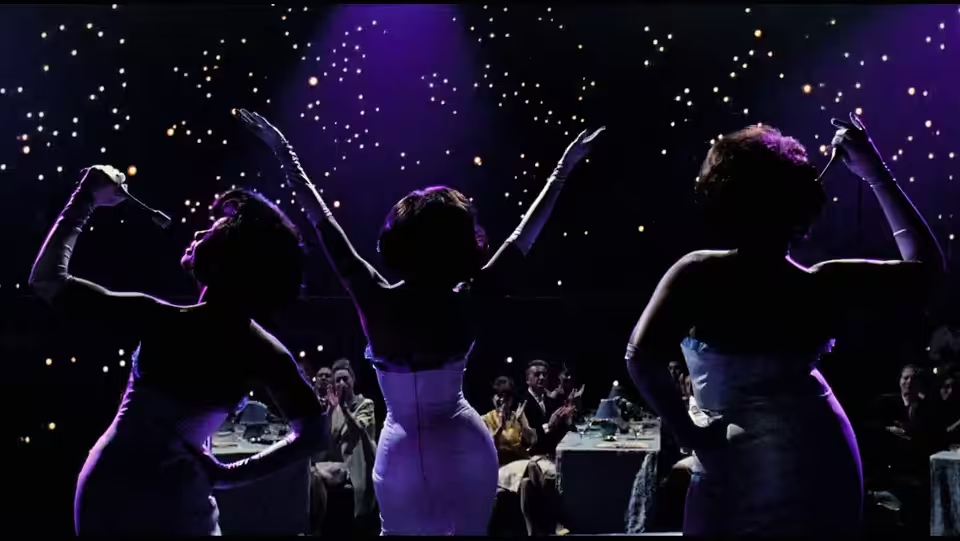
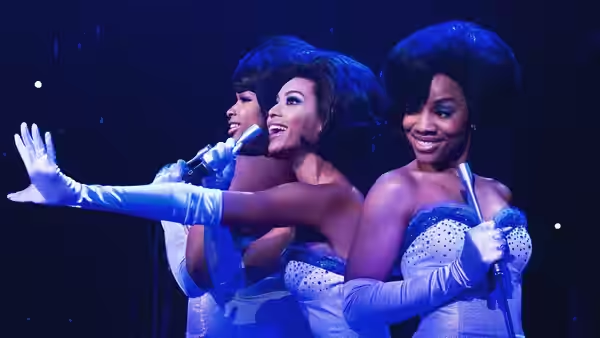
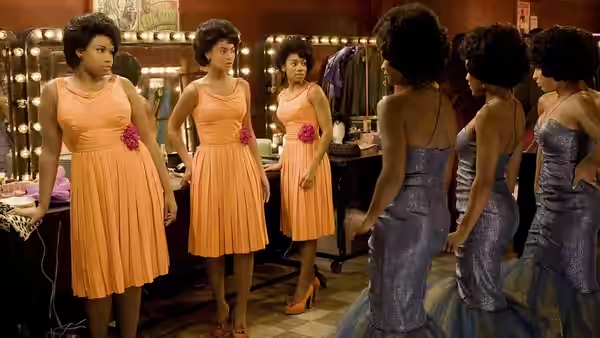
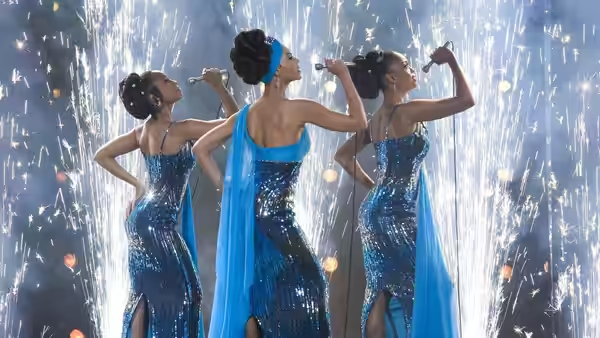
John Myhre’s sets move the group from a shabby Detroit theatre with a bare bulb in the dressing room to Curtis’s record company offices, a Miami hotel ballroom and the chrome and glass of Las Vegas, and they chart the rise more clearly than the script does. Sharen Davis’s costumes do the same job in cloth: matching home-made cotton at the talent contest, then wigs, then sequins, then white. Schliessler shoots the stage numbers in footlight glare and backlit haze, which flatters everyone and suits the material. Virginia Katz, though, is asked to carry too much. Years go by in montage, a calendar page and a costume change, and more than one relationship we are meant to mind about is settled in a cutaway between songs.
The larger trouble is the songs. Krieger’s score is what Broadway in 1981 thought Motown sounded like, and it is not what Motown sounded like; the hooks are approximate, the lyrics announce the theme, and when the plot needs a record to be a hit we are told it is one rather than hearing why. Jamie Foxx plays Curtis Taylor Jr. buttoned tight, a man who is already the mogul he means to become, so we never see the charm that would have got three teenagers into his car outside a theatre. Beyoncé’s Deena is written as a face for most of the running time, which is the point of her, and when the film finally hands her a song of her own, ‘Listen’, it has left the request until the last possible minute.
Chicago solved the oldest problem of the screen musical, why anyone is singing, by putting the numbers in Roxie’s head. Dreamgirls mostly solves it by keeping the songs on stage, where they belong, and it stiffens whenever it lets them off. The sung quarrels, of which there are several, are delivered at full volume by people standing a yard apart in offices and dressing rooms, and at least once we laughed where we were not meant to.
See it, then, for Hudson and Murphy, and go in knowing that the film around them is a well-upholstered 12A that runs 130 minutes and could have lost twenty. It loses little at home; most of it is a stage show anyway, and the one scene that matters works at any size. Most critics have been split down the middle on this one, and we understand both halves.