Film review

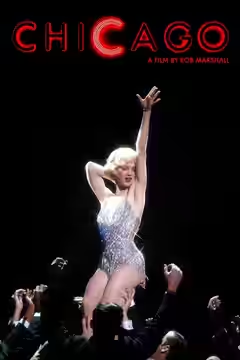
Chicago

2002 · Directed by Rob Marshall · 1h 53m · MPA PG-13

In a sentenceEveryone is guilty, everyone is in sequins, and nobody is allowed to finish a dance step

ComedyCrimeDrama

Chicago in the 1920s. Roxie Hart (Renée Zellweger), a chorus girl who has never got past the audition, watches Velma Kelly (Catherine Zeta-Jones) sing ‘All That Jazz’ at a nightclub and wants the spotlight for herself. Her lover, Fred Casely (Dominic West), has promised her an introduction to the club’s owners; when he admits he made it up, she shoots him. Her husband Amos (John C. Reilly) tries to take the blame and then thinks better of it, and Roxie is sent to the Cook County Jail, where Velma, awaiting trial for a double murder, already rules the women’s block and Matron Mama Morton (Queen Latifah) sells favours for cash. Roxie’s one hope is Billy Flynn (Richard Gere), a lawyer who has never lost a case and charges five thousand dollars to take one.

Plays from YouTube when you press play; nothing loads from them until then.

Fi1m review

Rob Marshall’s film of the Kander and Ebb musical finds the right trick, staging every song inside Roxie Hart’s head, and Catherine Zeta-Jones commands it. Then the editing chops the dancing so fine that the best thing in it is barely visible.

Rob Marshall’s first film as a director takes the Kander and Ebb stage musical, first staged by Bob Fosse in 1975, and solves the problem that kept it off the screen for a quarter of a century: where do the songs come from? Bill Condon’s answer is Roxie Hart’s head. Whenever the world turns ugly, a drum rolls, a bandleader (Taye Diggs) steps to a microphone, and the scene restages itself in a theatre only she can see. It is a good idea, and for 113 minutes the film rides it hard. The result is brassy, well cast and a proper evening out. It also will not hold still long enough to let us watch anybody dance.

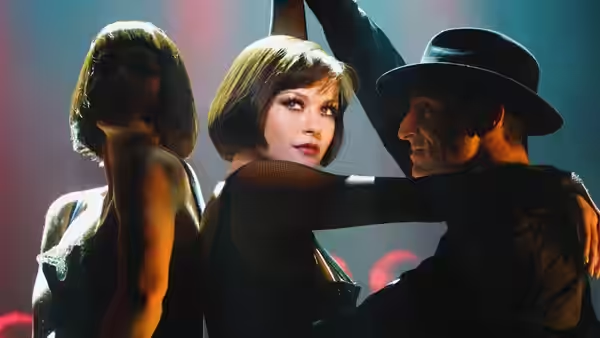
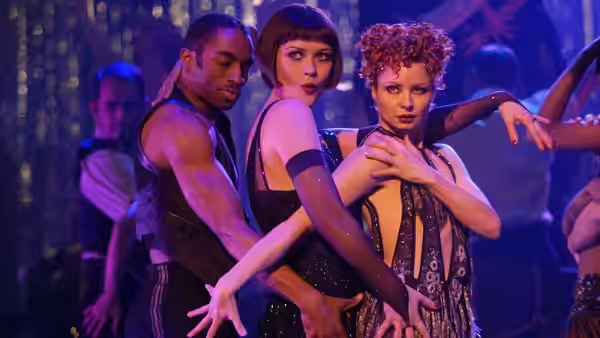
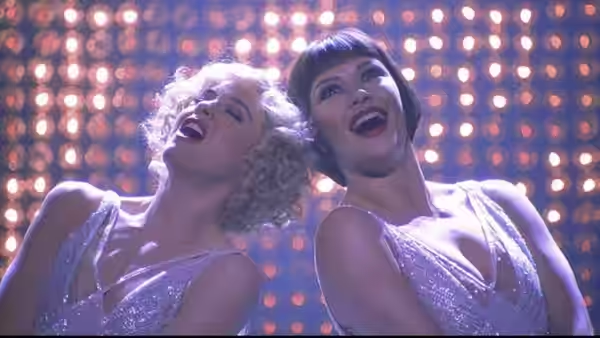
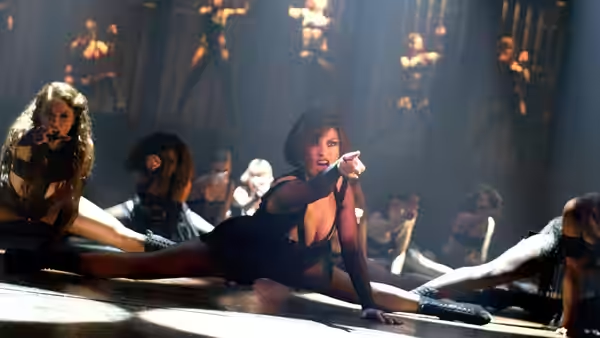
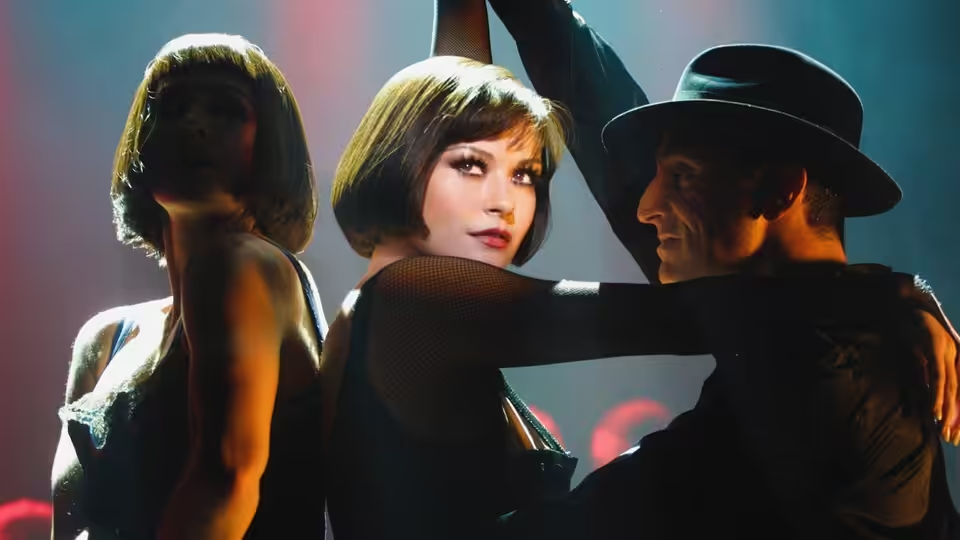
Catherine Zeta-Jones is the reason to buy the ticket. She opens the film with ‘All That Jazz’ in black beads, feet planted, chin up, the only member of the cast who moves like a dancer and sings to reach the back of the stalls. Velma has killed two people and would like the papers to spell her name right, and Zeta-Jones never asks us to like her, which is why we do. Queen Latifah, as the jail matron selling favours in ‘When You’re Good to Mama’, has the same ease. When either of them is on screen the film knows exactly what it is.

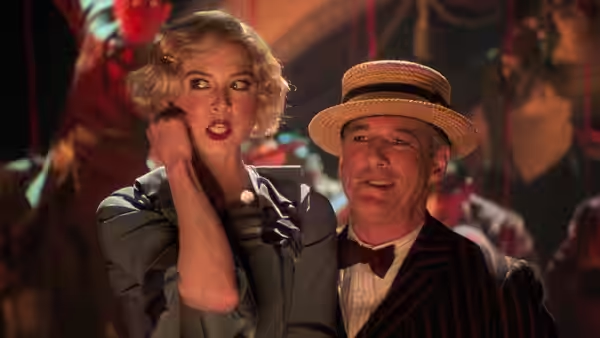
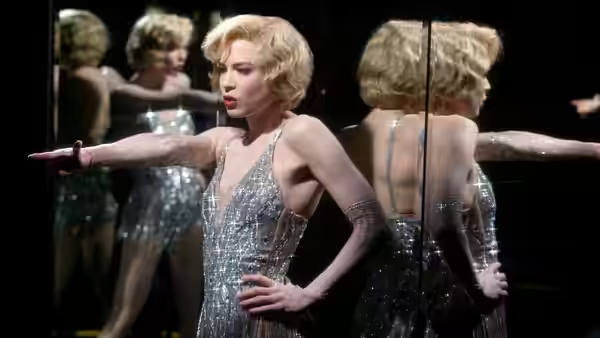
Renée Zellweger has the harder job and does it in a smaller voice. Her Roxie has learned everything she knows about glamour from magazines, and she plays the dramatic scenes with a twitchy, hungry watchfulness that is right for the part. The singing is thin, and in the number named after her, alone on a stage of mirrors, she charms but never takes the stage. Richard Gere talks most of his songs, which suits a lawyer, and his ‘Razzle Dazzle’, with the courtroom turned into a circus ring, is the one big number Marshall lets breathe.

It is handsome to look at. Dion Beebe lights the real Chicago in mustard and brown, the jail in cold grey, and the imagined theatre from below through tobacco smoke, so that Roxie’s fantasies always seem to be happening at two in the morning. John Myhre’s cellblock has bars that slide apart to become the set for ‘Cell Block Tango’. Colleen Atwood puts Velma in black and Roxie in silver so you can tell them apart in silhouette. Danny Elfman’s underscore stays politely out of John Kander’s way.

Then there is the editing, and we must be blunt. ‘Cell Block Tango’ is six women, six chairs, six confessions in rhythm, and Martin Walsh cuts it so fast that we never see two consecutive seconds of any one of them. A leg goes up; cut; a hand slaps a chair; cut; a face. Hoofing depends on our watching the foot hit the floor, and this film almost never shows us the foot. Our own feet were tapping under the seat, and when the number ended we realised we could not have described a single step, and we were irritated on behalf of a cast that had plainly rehearsed for months so that the cutting room could shred the result.

The one number the camera holds still for is ‘Mr Cellophane’, and it is the one that got to us. John C. Reilly, as Roxie’s dim, decent husband Amos, stands under a single bulb in clown make-up and sings about being a man nobody notices, and Marshall does nothing but let him. It is quiet and it is sad, and it is the only point at which the film’s cynicism about fame stops being a pose. There is a later sequence, involving the Hungarian inmate the others call Hunyak (Ekaterina Chtchelkanova), that we will not describe and that stays with us longer than anything in sequins.

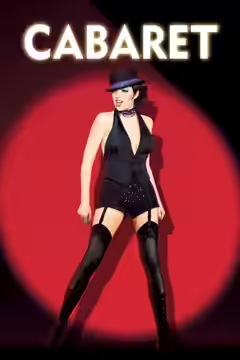
Fosse put the songs of Cabaret (1972) on the stage of the Kit Kat Klub and let the world outside rot while the band played. Chicago borrows the shape and loses the chill; it is as pleased with Roxie’s fame as she is, and the reporters who make a star of a killer, led by Christine Baranski’s Mary Sunshine, are cartoons the film never bothers to examine. Still, it has the tunes, it has Zeta-Jones and it has Reilly under his bulb. See it for those. When the dancing starts, try not to blink; the film will do that for you.

Critical consensus AI synthesised

67
Positive
11
Mixed
4
Negative
2

Most critics enjoy Chicago, and the praise clusters in two places. First, the numbers: Marshall stages the songs inside Roxie’s head, and the majority find this a clever fix for a stagebound show and a lot of brassy fun. Second, Catherine Zeta-Jones, whose Velma is singled out in almost every review, favourable or not. The Kander and Ebb songs and the material’s cynicism about fame and the press are also widely credited with surviving the move to the screen.

The reservations gather around the cutting. Screen Daily, Slant and Time Out all complain that the editing is so fast and choppy that the dancing cannot be seen, and even admirers such as Eye for Film object to Marshall cutting away from the numbers to push the story along. Renée Zellweger divides the reviews: The Independent finds her singing wanting, while Slant calls her the film’s revelation. The spread is wide, from raves to outright disappointment.

Evening Standard
· Alexander Walker
90*

The film is a rowdy, sassy and raunchy burlesque that resurrects the spirit of great Hollywood musicals with flair and showmanship. Marshall stages the numbers triumphantly, and the cast including Zeta-Jones, Zellweger and Gere deliver a totally unexpected treat.

Read the full review →
RogerEbert.com
27 December 2002 · Roger Ebert
90*

The film is a dazzling song-and-dance extravaganza that continues the reinvention of the musical, with songs staged within Roxie's imagination. It delivers big, brassy fun through its cynical, stagy revue style and strong performances, especially from Catherine Zeta-Jones and Queen Latifah.

Read the full review →
The Hollywood Reporter
11 December 2002 · Frank Scheck
90*

The critic calls the film a screen triumph that delivers the sexy razzle-dazzle hoped for by musical fans, crediting Marshall and Condon with solving structural problems effectively. Strong performances from Zellweger, Zeta-Jones, Gere, and others are highlighted alongside top-notch technical credits.

Read the full review →
Total Film
26 December 2002
90*

Chicago is a heady mix of satire, spectacle and sex that revitalises traditional musicals with raw passion and steamy appeal. It stays true to the original while feeling fresh and relevant in a celebrity-obsessed world.

Read the full review →
Radio Times
★★★★ · Brian Pendreigh
80

Praises the spirited adaptation that captures the energy and dark subtext; highlights Zellweger and Zeta-Jones' perfect casting and performances.

Read the full review →
The AV Club
14 March 2003 · Keith Phipps
80*

The review praises Marshall's debut for turning the songs into imaginative asides while preserving the material's cynical satirical bite and mean wit. It notes the film's flair and confidence in realizing the musical numbers and story of celebrity and media manipulation.

Read the full review →

Cast

Awards

Academy Awards, 2003

Nominated
Best Actress
Nominated
Best Cinematography
Nominated
Best Director
Nominated
Best Original Song
Nominated
Best Supporting Actor
Nominated
Best Writing, Adapted Screenplay
Won
Best Costume Design
Won
Best Film Editing
Won
Best Picture
Won
Best Production Design
Won
Best Sound
Won
Best Supporting Actress

Dallas-Fort Worth Film Critics Association Award for Best Film, 2002

Won
Dallas-Fort Worth Film Critics Association Award for Best Film

If you liked this, try…