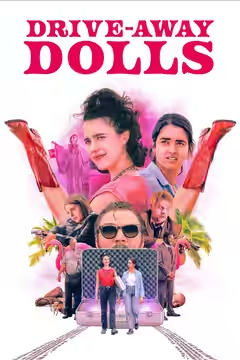
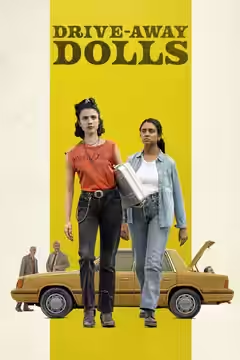
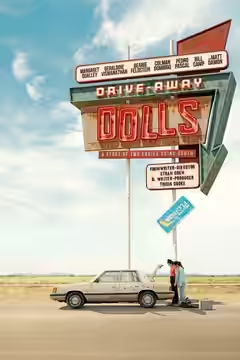
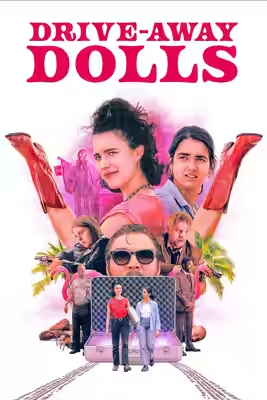
Ethan Coen’s first film without his brother is a brisk, bawdy road comedy with two likeable leads, one loud ex-girlfriend and a plot that would fit on a motel napkin. It is fun for 84 minutes and gone by morning.
Ethan Coen, working for the first time without his brother, has made a road comedy that runs 84 minutes and feels like it. That is meant as praise, mostly. Written with Tricia Cooke, who also edits, Drive-Away Dolls sends two friends from Philadelphia to Tallahassee in a car that was meant for somebody else, with a briefcase in the boot that two hired goons would like back. It is brisk, cheerful, dirty-minded and thin, and 84 minutes is exactly the right length for it.
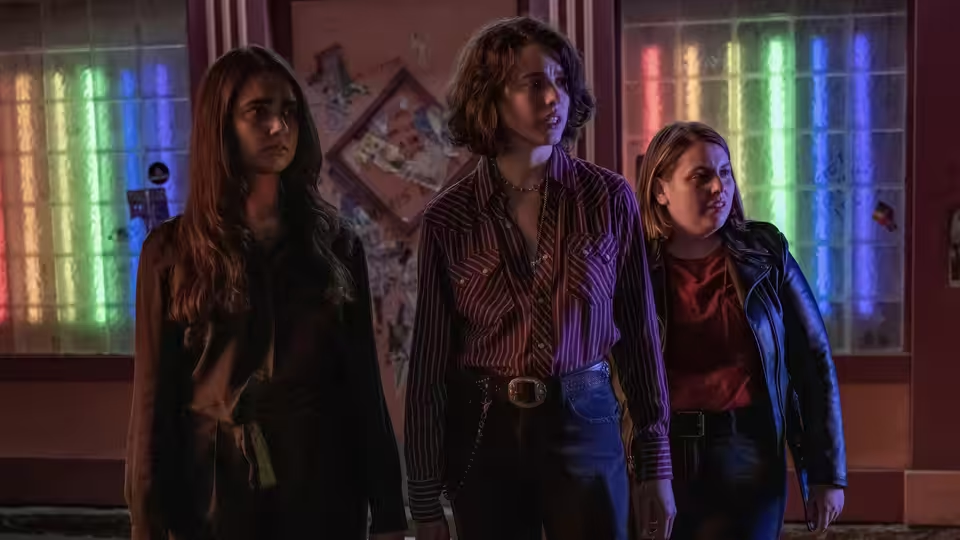
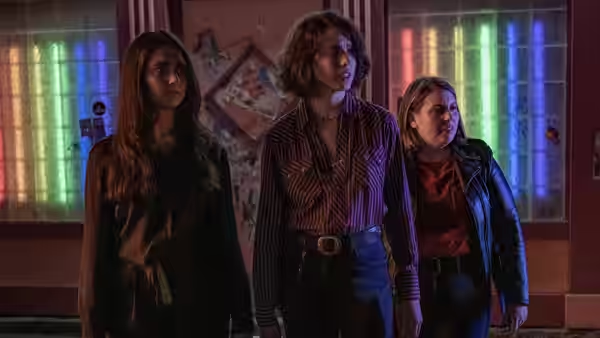
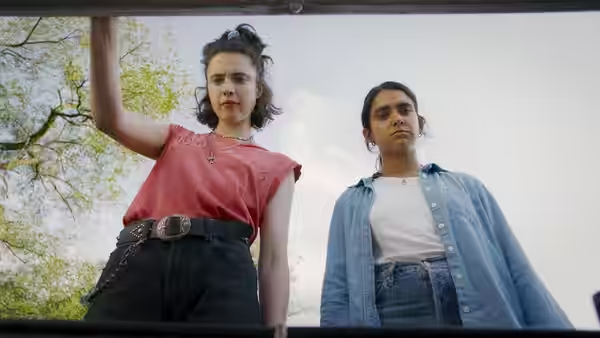
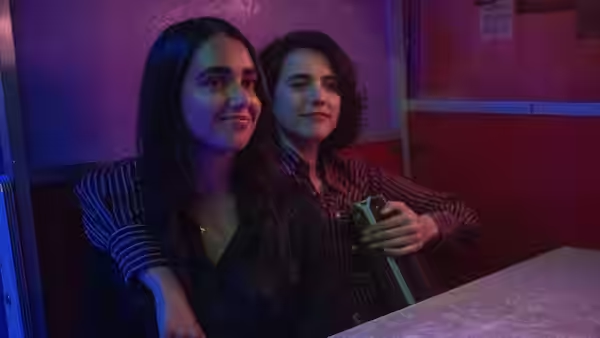
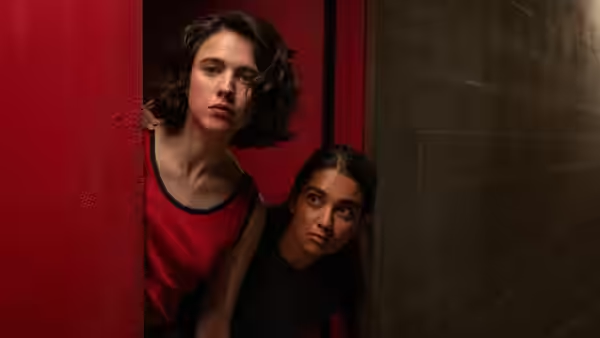
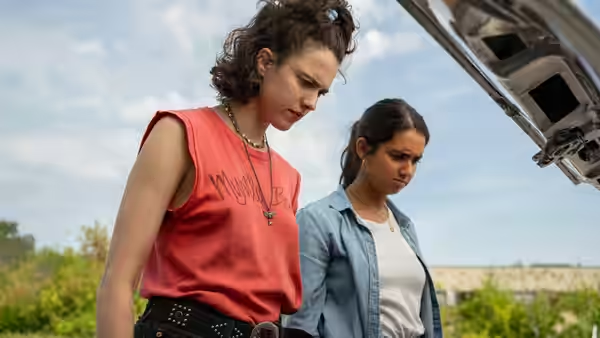
The year is 1999. Jamie (Margaret Qualley) has just been thrown out by her girlfriend Sukie (Beanie Feldstein), a police officer with a temper, and needs to be somewhere else. Marian (Geraldine Viswanathan) is buttoned to the neck, off her sex life, and planning a quiet visit to her aunt in Florida. Jamie talks her way into the passenger seat, they collect a drive-away car from a lot run by Curlie (Bill Camp), and they are handed the wrong keys. By the time the Chief (Colman Domingo) sends his goons (Joey Slotnick and C.J. Wilson) after them, the women are already in a basement bar with a wall of sex toys and no intention of hurrying.
The two leads carry it, and they carry it well. Qualley plays Jamie with a drawl and a swagger that would get her thrown out of most places, and she is funniest when Jamie is certain and wrong. Viswanathan does the harder thing. Marian spends the first half of the film reading in motel beds while Jamie goes looking for company, and Viswanathan makes the reading look like a decision rather than a joke. When she finally puts the book down, the film gets its one scene of tenderness, and it got more from us than we expected from a picture this pleased with its own smut.
Feldstein is the other reason to see it. Sukie has perhaps six scenes and she plays every one at a shout, threatening suspects, colleagues and exes in the same voice, and she wins nearly all of them. We laughed hardest at her, and hardest of all in a police station where she takes out on a stranger everything she would like to say to Jamie.
Ari Wegner shoots the bars and motels in hot, saturated colour, red neon and orange lampshades, so that a Florida diner looks like a postcard of a Florida diner. Lee Yong-ok panels every interior in wood and vinyl, and Peggy Schnitzer keeps Jamie in denim and Marian in collars that loosen as the miles pass. Cooke cuts between scenes with the wipes and spinning frames of a drive-in B-picture, and drops in interludes of soft-focus psychedelia, lava-lamp colours and slow motion, that seem to belong to a different and stranger film. Carter Burwell’s score is light and twangy and never pushes.
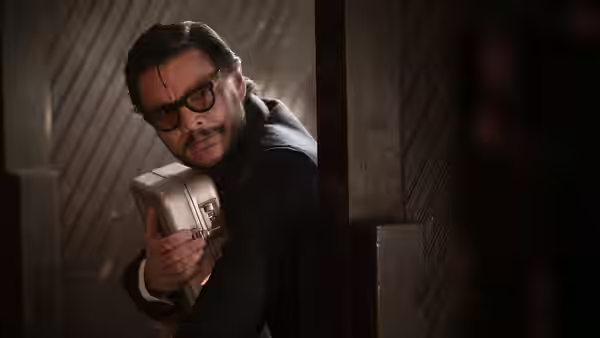
What does not work is the crime. The Chief menaces, the goons bicker, a senator (Matt Damon) turns up late, and Pedro Pascal has a cameo we will not describe. None of it goes anywhere the women’s story was not already going. The goons’ scenes are built on one joke, that they are incompetent and disagree about how, and the joke is told four times. Around the hour mark we noticed we had stopped laughing and were checking how far it was to Tallahassee. The film noticed too, and put its foot down.
The Coens have made this shape before. Raising Arizona (1987) had a baby, a plan and a town full of grotesques with a line each; The Big Lebowski (1998) had a rug and a briefcase and cared about neither. Both had scripts in which every minor character talked like nobody else. Here the goons and the Chief talk like goons and a chief, and the jokes about 1999 are the kind you make about a decade you have already left.
It is a pleasant evening and it will not be a memorable one. Watch it at home, with someone who laughs at a rude word before the sentence is finished, and do not expect it to be about anything. It runs 84 minutes and carries a 15.