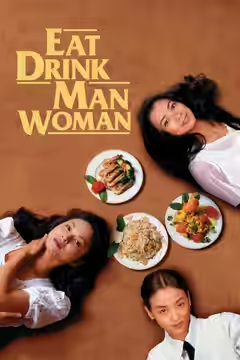
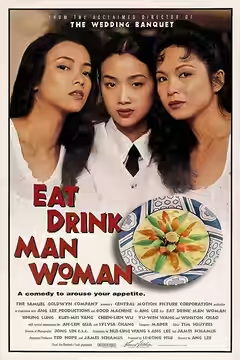
Ang Lee’s comedy about a widowed chef and his three grown daughters is funny, generous and beautifully cooked. The daughters’ love lives get less care than the food, but Sihung Lung at the head of the table makes up most of the difference.
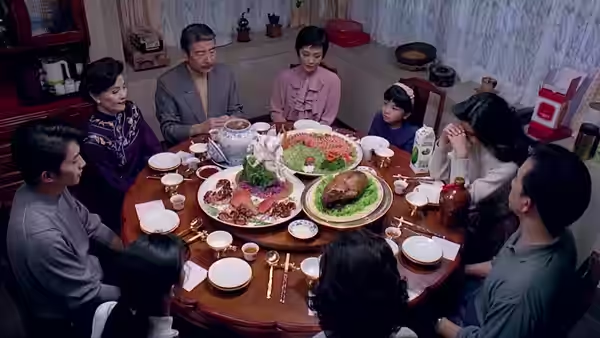
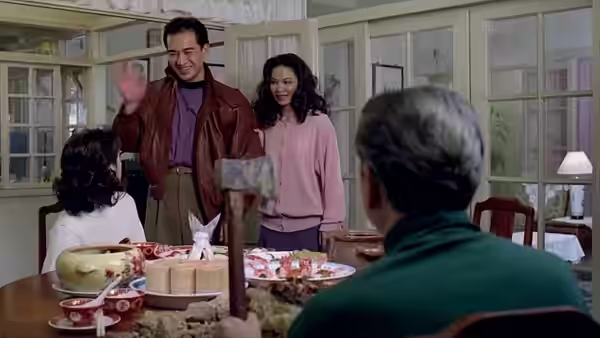
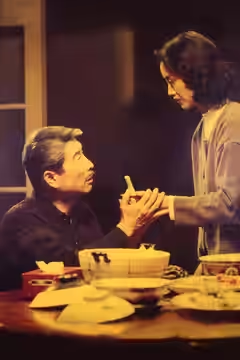
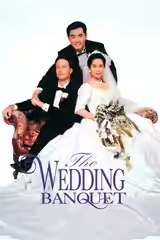
Eat Drink Man Woman is the third film Ang Lee made with Sihung Lung playing a Chinese father who has outlived his usefulness, after Pushing Hands and The Wedding Banquet, and it is the best of the three. Lung is Mr. Chu, a retired master chef who cooks a Sunday banquet every week for three daughters who no longer want to eat it. He has also lost his sense of taste, and has kept that to himself. The film is about a family that can only talk through food, in a house where the one person doing the talking can no longer hear himself. It is warm, it is properly funny, and it treats its daughters’ romances with a tidiness it never shows the cooking.
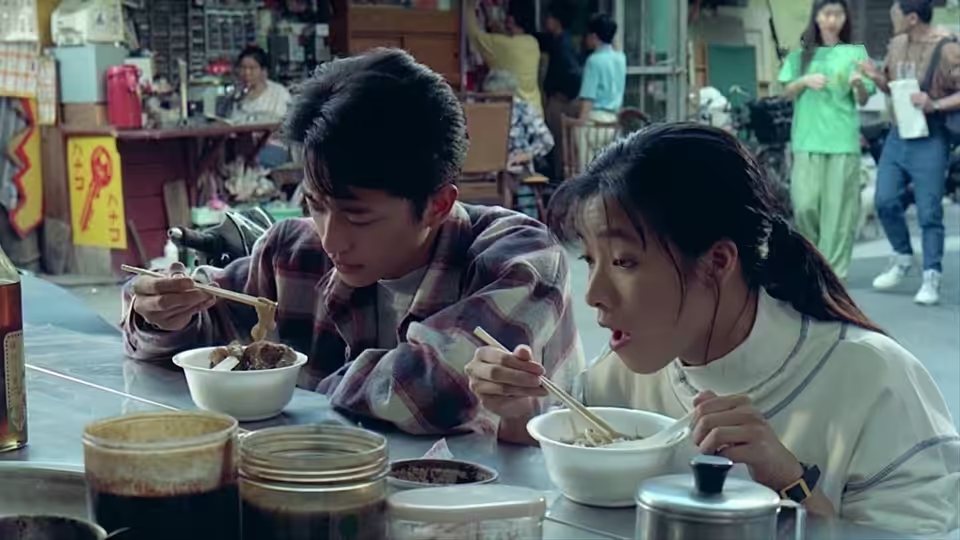
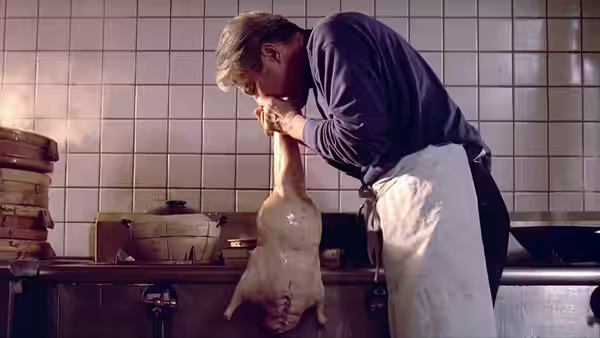
The opening is the thing everybody remembers, and rightly. Jong Lin puts the camera low and close in the kitchen: a live fish scaled and slit, a chicken inflated and hung to dry, dough pleated into dumplings by fingers that have done it ten thousand times, a cleaver coming down on a board with no music over it. Tim Squyres cuts it fast and clean, one movement per shot, so the cooking plays like a fight scene. Then the family sits down and nobody enjoys a mouthful. The daughters pick. One of them tells him the soup is wrong, and he cannot tell.
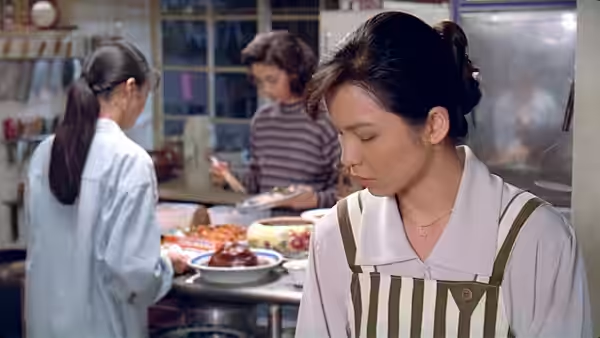
The daughters are drawn with a clear hand. Yang Kuei-mei’s Jia-Jen is the eldest, a chemistry teacher who has given herself to the church and to a story about an old heartbreak, and Yang plays her as a woman who has decided to be dry before anyone can find her dull. Jacklyn Wu’s Jia-Chien is the one with her father’s gift, kept out of the kitchen as a girl and pointed at an airline career instead; Wu gives her a hard, quick intelligence and a flat in another part of town already paid for. Wang Yu-wen’s Jia-Ning, the youngest, works a fast-food counter and watches the other two with an attention the script does not always reward.
Winston Chao is the new colleague Li Kai, Chen Chao-jung is Guo Lun, a boy who turns up at the fast-food counter, and Lester Chan Chit-Man’s Raymond is an old entanglement who has not gone away. Each of these men arrives on cue and does what the structure requires. Some of it is lovely; the scenes between Wu and Chao are the most adult in the film. Some of it is thin, and Jia-Ning’s story in particular resolves as if someone had checked the clock. The second half takes two turns we will not describe. One is the best joke Lee has ever told. The other is a shortcut, and the film knows it and hurries past.
What holds it together is Lung’s face across the dinner table. He says less than anyone and we watched him more than anyone. There is a moment, after a daughter has made an announcement and the others have gone quiet, when he carries on serving, and we were caught out by how much it hurt. Nothing in the frame changes except that he keeps spooning food onto plates nobody wants. Mader’s score is spare and stays out of the kitchen, which is the right decision. Sylvia Chang, as the neighbour Jin-Rong, is quiet and watchful, and Gua Ah-leh as her mother is the film’s loudest and most useful comic instrument, a woman who treats every conversation as a negotiation she intends to win.
Most critics reach for Ozu when they write about this film, and the comparison holds for the still camera at mealtimes and the grown children leaving home. It does not hold for the plotting, which is busier than Ozu would ever have allowed. Lee went straight from this to Sense and Sensibility, and you can see why someone thought of him: this is already a film about three unmarried women, a parent, and the question of who will leave the house first.
Eat before you watch it. The first ten minutes are cruel on an empty stomach, and the rest is better taken slowly, with company who will argue about which daughter is right.