William Oldroyd’s adaptation of Ottessa Moshfegh’s novel is a handsome, slow, funny study of a young woman’s longing, with Anne Hathaway as the object and Thomasin McKenzie doing the longing. The last third changes genre, and then the film stops rather than ends.
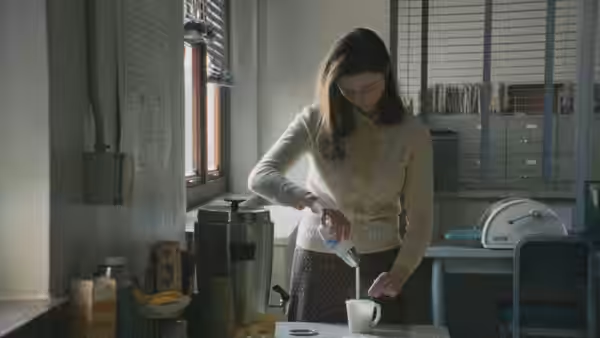
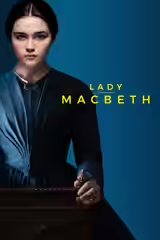
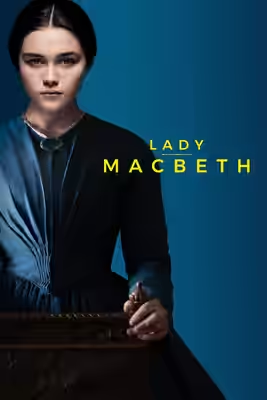
William Oldroyd’s second film, after Lady Macbeth, is another study of a young woman kept in a house she did not choose. Eileen Dunlop (Thomasin McKenzie) types and files at a boys’ prison in New England in the 1960s, drives home through the snow to a father (Shea Whigham) who has stopped washing up and started waving a gun about, and spends her lunch breaks imagining sex and violence in roughly equal measure. Then Rebecca arrives. For an hour the film is patient, sly and often funny about wanting. In its last third it turns into something else, and we do not think it earns the change.
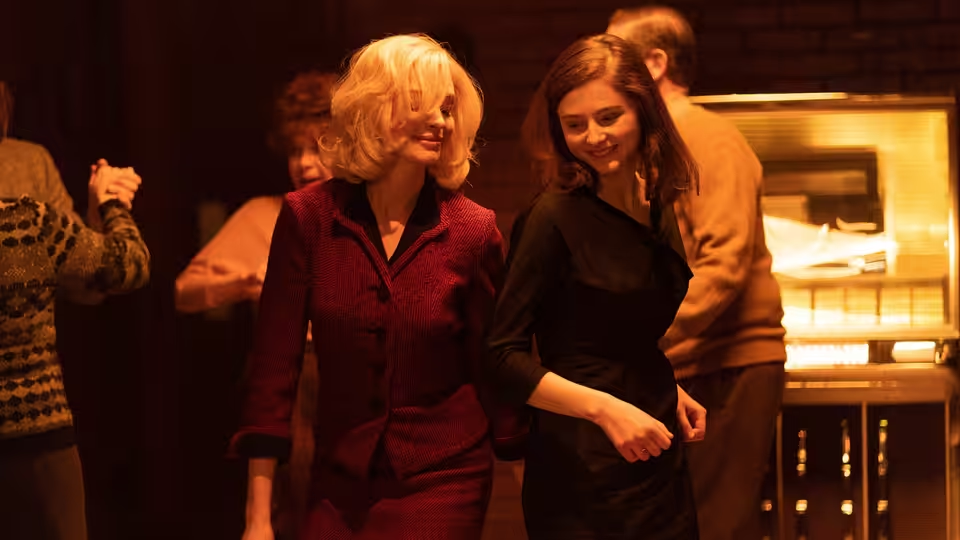
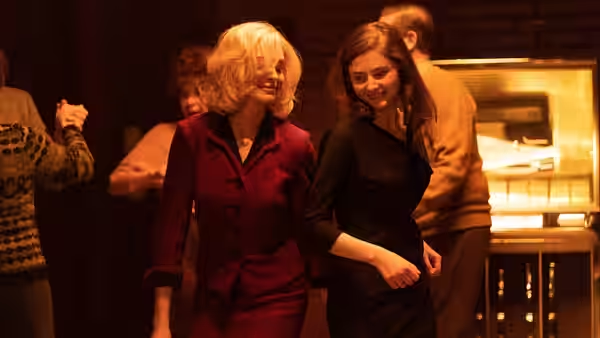
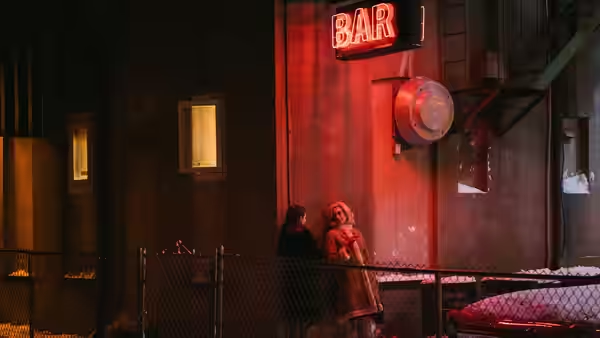
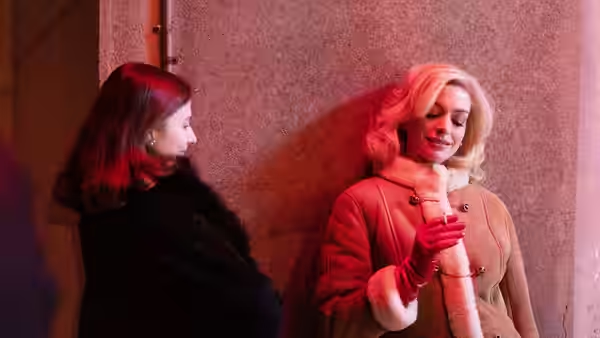
McKenzie plays Eileen as someone who has decided to be invisible and is starting to resent how well it is working. She hunches, she watches, she eats sweets out of a desk drawer, and now and then a look crosses her face that suggests the mouse has plans. Hathaway’s Rebecca is the opposite proposition: a blonde in a good coat who smokes where she likes, says “Eileen” as if it were a compliment and treats the prison’s grey men as a private joke she is prepared to share. The film is careful never to tell us whether Rebecca is remarkable or simply the first person to look at Eileen twice. There is a scene in a bar where the two of them dance, and it is the happiest the film gets.
Ari Wegner shoots all this through what looks like a lifetime of cigarette smoke. The snow is grey, the walls are the colour of weak tea, and the only bright thing in any room is Hathaway’s hair. Craig Lathrop’s Dunlop house is a place where nobody has moved anything in years, and his prison is green paint and radiators. Olga Mill dresses Eileen in wool that fits like it belonged to someone else and Rebecca in clothes cut for a different city. Richard Reed Parry’s score is the surprise: big, swooning strings that belong to a grander romance than the one on screen, so that every time Eileen looks at Rebecca the music takes her side. It is the film’s best joke and also the reason we believed her.
Nick Emerson’s cutting does the other clever thing. Eileen’s daydreams, a hand on a guard’s belt, a gun going off in the kitchen, arrive without warning in the middle of ordinary shots and are snatched away before the scene has noticed. The first time it happened we laughed out loud. By the third we had stopped trusting anything on screen. For that first hour we were with her completely, and when Rebecca walks into the office and McKenzie’s face does something it has not done all film, we felt the lift ourselves.
Then the film takes a turn we will not describe, except to say that it moves to a different house, a different kind of picture and a much smaller cast. Marin Ireland, as the mother of one of the boys, is given one long scene and plays it with a flatness that is the most frightening thing in the film. We sat up for it. But the film has spent an hour teaching us to read Eileen’s face and now asks us to watch her react to other people’s business; the longing that carried the first hour is gone and nothing replaces it. Then it ends, sharply, at a point where we had assumed there were twenty minutes to go.
Lady Macbeth had the same problem the other way round: it knew exactly where it was going and got there a little too neatly. Eileen knows where it is going and, having arrived, does not know what to do. Ottessa Moshfegh and Luke Goebel’s script, from Moshfegh’s own novel, is good on the small humiliations of a shared office and a shared house, and much less good at the mechanics of a thriller. The first hour is a fine piece of work. We only wish someone had made the second.
See it for McKenzie, for Hathaway’s cigarettes and for Parry’s strings, and see it with someone, because you will want to argue about the last twenty minutes on the way home. It runs 98 minutes and carries a 15, and it feels shorter, which for once is not a compliment.