Kelly Reichardt’s frontier story about a cook, a fugitive and a stolen pail of milk is among her best: funny, patient and quietly upsetting. It is slow by design, and once or twice it says its point out loud, but the friendship at its centre is real.
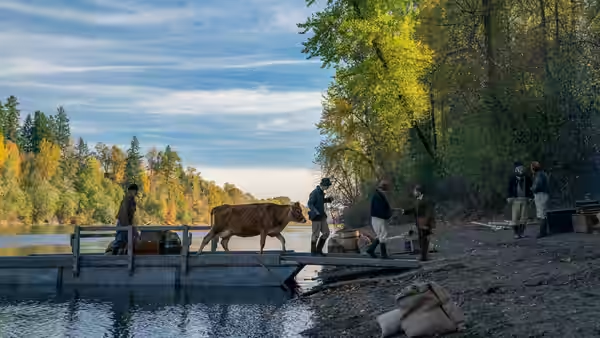
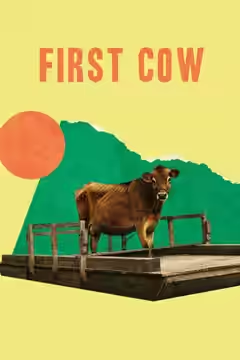
Kelly Reichardt has made several films about people at the edge of the money economy, and First Cow, written with Jonathan Raymond from his own novel, is the one where she goes back to the beginning. The Oregon Territory of the 1820s has a fort, some trappers, a few Chinook families and no history yet. Into it come a cow and two men who see what she is worth. It is a small film about the first customer in America, and we think it is one of the two or three best things Reichardt has made.
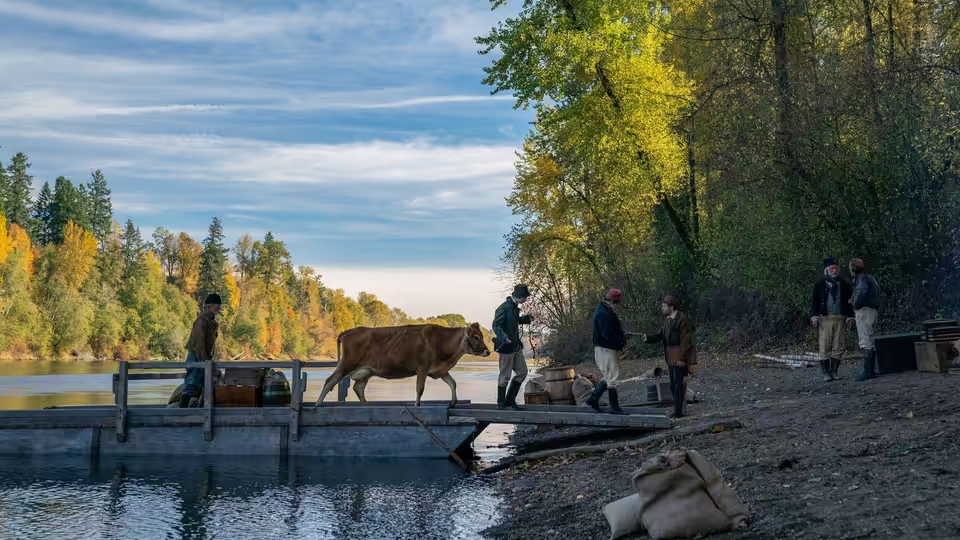
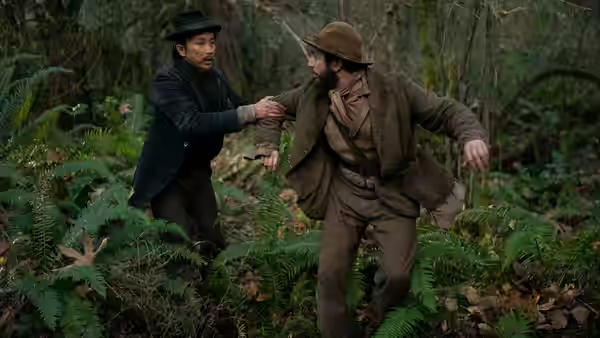
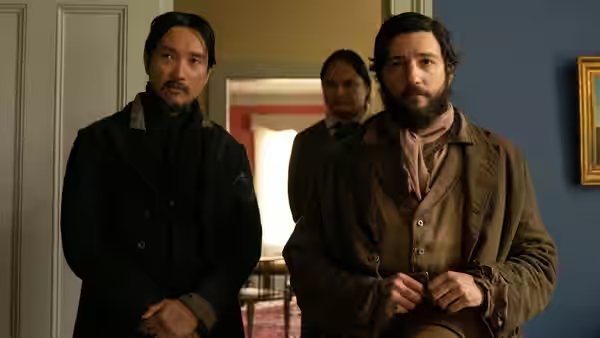
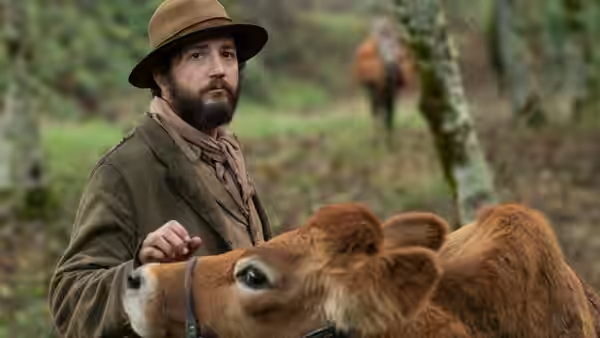
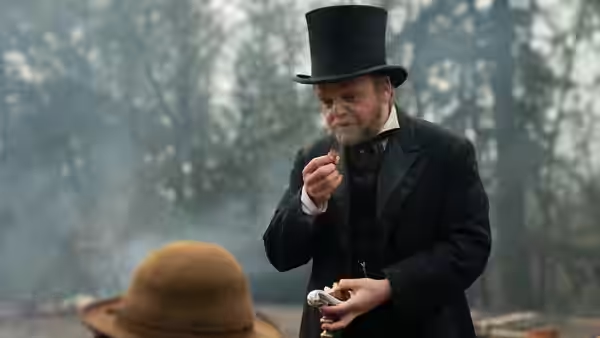
Cookie (John Magaro) is a cook who cannot stand up to anyone, travelling with trappers who take his food and kick his cooking pot. King-Lu (Orion Lee) is a talker with plans, wanted for a killing and short of capital. When the Chief Factor (Toby Jones) brings the territory’s only cow up the river, King-Lu sees an opening and Cookie sees an animal he would like to be kind to. They milk her by lamplight, Cookie fries the milk into cakes with honey and cinnamon, and the fort forms a queue. Reichardt shoots the selling as a heist would be shot, all glances and timing, and we found ourselves gripping the arm of the chair over a bucket.
Christopher Blauvelt photographs it in a boxy, near-square frame, which stops the landscape being scenery and makes it something you have to squeeze through. The greens are wet and the browns are mud, and the night scenes are lit by whatever Cookie is holding. Anthony Gasparro’s fort is boards, rope and a market of planks; nothing in it looks built to last, which is the point. April Napier puts Jones in a felt hat and a coat that cost more than everyone else’s belongings combined, and dresses Cookie in a soft cap and a shirt that has plainly been the same shirt for years. William Tyler’s score is an acoustic guitar, picked slowly, and it comes in only when the two men are alone.
The scene that moved us more than we expected is one where nothing is said. King-Lu chops wood outside his shack. Cookie, inside, unasked, sweeps the floor, shakes out a rug and puts a wildflower in a jar. Reichardt, who edits her own films, holds it long past where most directors would cut, and by the end of it we understood the two men had decided to stay together without either of them having proposed it. Magaro plays Cookie with his shoulders, always slightly turned away, and Lee plays King-Lu with his eyes on the horizon. They are the best-matched pair she has directed.
Around them the fort fills up. Jones is wonderful as a man who talks about the fashions of London while standing in a swamp, and the moment he tastes a cake and looks puzzled by his own pleasure is the funniest thing in the film. Ewen Bremner, as Lloyd, is the first and most devoted customer. Scott Shepherd’s Captain arrives for a dinner that the film treats as a small piece of theatre. Lily Gladstone, as the Factor’s Chinook wife, and Gary Farmer, as Totillicum, share a scene of their own, in their own language, that the film simply lets happen.
It is slow, and we would not have it faster, but we will not pretend the second hour never dragged. Reichardt also lets King-Lu say what the film is about, more than once: that a man here needs capital or a crime, that history has not arrived. The images have already made the point, and the lines land like a teacher tapping the board. The prologue with the skeletons tells you the shape of the ending before the story starts, and some viewers will spend the film waiting for it rather than watching.
Measured against her own Meek’s Cutoff, this is warmer and funnier, and less frightened of the land. Against the Western generally, it is the rare one in which the only weapon that matters is a jar of honey. The last half hour takes the story where the first two minutes promised, and we will say no more than that it did not feel like a trick.
It runs 122 minutes and carries a 12A. Do not put it on tired. Put it on when you have the evening, and let the cow arrive at her own pace.