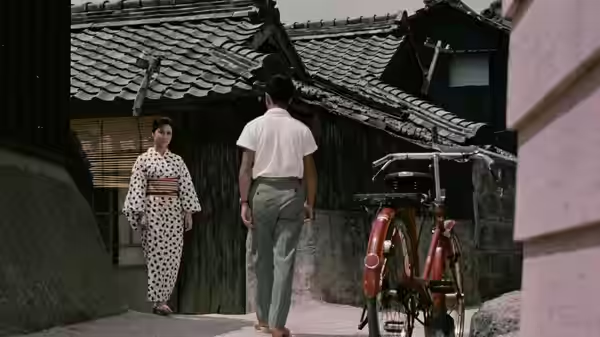
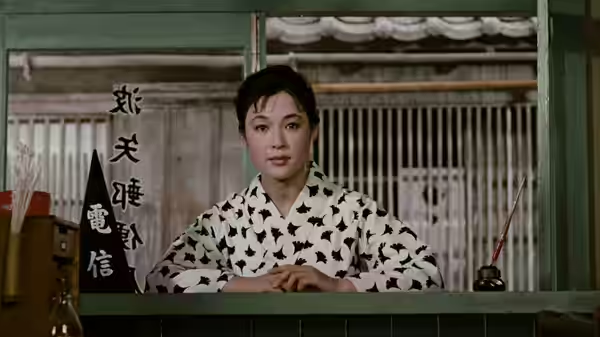
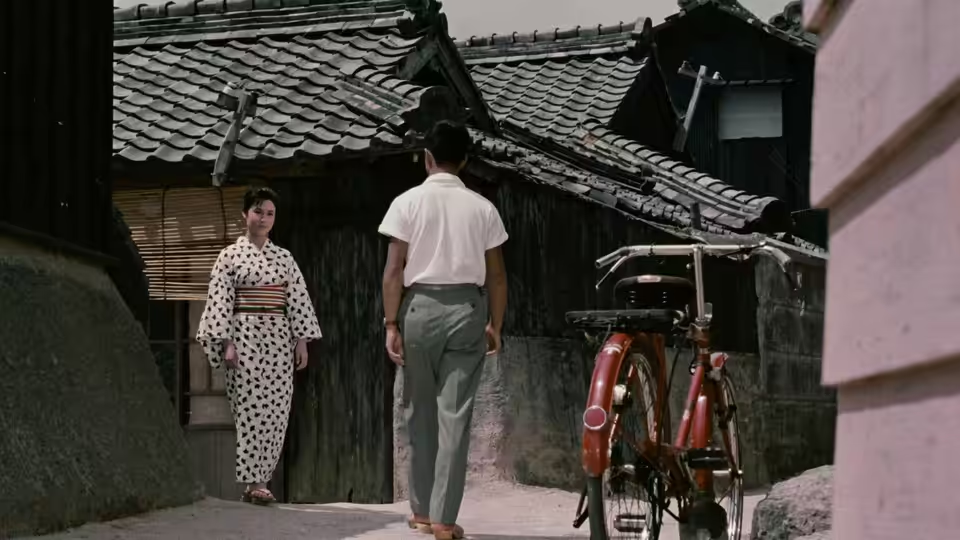
A woman in a patterned kimono faces a man beside a rickshaw outside a tiled-roof house
Film review

Floating Weeds

1959 · Directed by Yasujirō Ozu · 1h 55m

In a sentenceAll that colour, and still nowhere comfortable to put your feelings

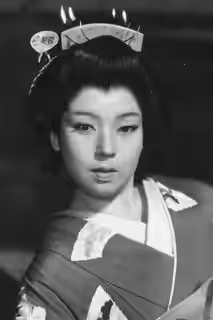
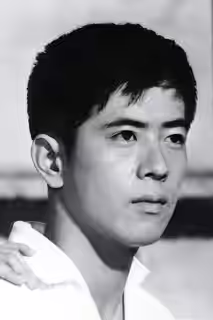
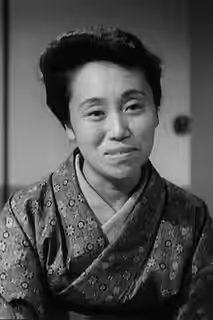
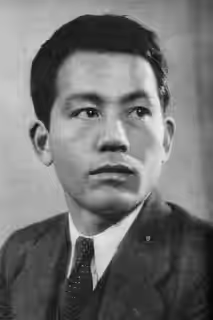
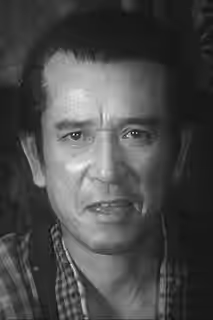
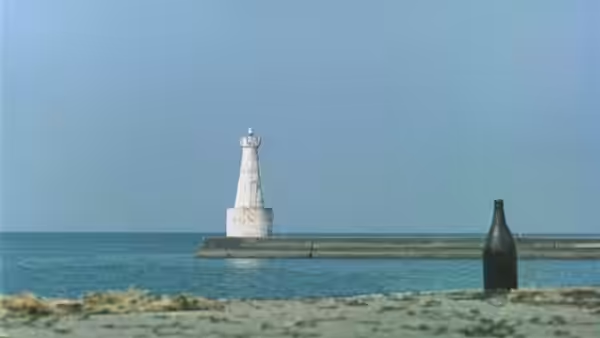
At the seaside, a theatrical troupe forms the centre of a drama involving Komajuro Arashi (Nakamura Ganjirō II), Sumiko (Machiko Kyō), Kayo (Ayako Wakao), Kiyoshi (Hiroshi Kawaguchi) and Oyoshi (Haruko Sugimura). Around them are fellow performers, including Kichinosuke (Kōji Mitsui), and the Theatre Owner (Chishū Ryū). The troupe’s working life shares space with private unhappiness, gentle comedy and a father’s pride in his son. The setting keeps the sea close at hand, while the attention stays on the people gathered there and the feelings they struggle to accommodate.

Plays from YouTube when you press play; nothing loads from them until then.

Fi1m review

Yasujirō Ozu’s seaside drama is patient, colourful and quietly painful. Its still compositions give troubled people time to become understandable, though a few stretches demand more patience than they repay.

Floating Weeds is a moving drama that earns its force slowly, sometimes more slowly than it needs to. Yasujirō Ozu gives the people in this seaside theatrical troupe room to be funny, unhappy and difficult without immediately explaining them away. We recommend it for that generosity, and for the attention it asks us to pay to faces. The pace is a qualification worth stating early: there is little encouragement here for restless viewing.

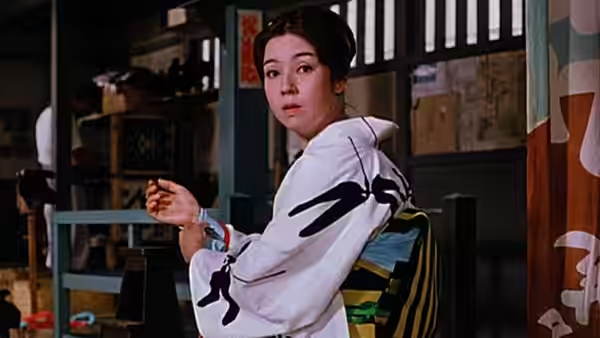
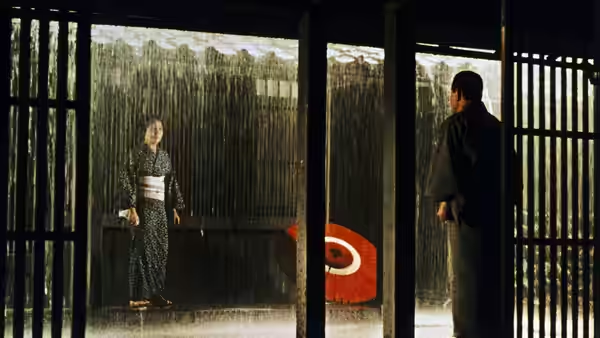
Kazuo Miyagawa’s cinematography makes the first persuasive case for staying. The colour is bright enough to contradict any expectation that a restrained drama must also be a drab one, while the motionless compositions let us examine the people within them. We were moved by the unhappiness held inside those cheerful colours. The pictures do not announce sorrow by draining away everything pleasant, and that makes the feeling harder to dismiss as something manufactured for our benefit.

Ozu’s direction is particularly good at allowing someone to speak, or remain silent, without telling us exactly how to judge them. Nakamura Ganjirō II, Machiko Kyō and Haruko Sugimura benefit from that patience: our attention stays with the person rather than jumping ahead to the next piece of information. The father’s pride in his son is especially affecting because pride is allowed to remain complicated. Affection does not automatically make anyone reasonable, or easy to live beside.

Hideo Matsuyama’s production design contributes to a seaside atmosphere that feels worth spending time in, independently of the troubles unfolding there. Miyagawa’s colour gives those surroundings an immediate appeal, but the compositions prevent them from becoming a distraction. There is pleasure in looking around the frame without being hurried towards its most important feature. That freedom matters in a drama where the people cannot always be understood from what they choose to say.

The reservation concerns duration within scenes rather than the basic decision to proceed quietly. Toyo Suzuki’s editing sustains the measured pace, generally giving a look or a silence enough room to register; occasionally, we have understood before the film is ready to move on. Those passages make the restraint feel practised rather than necessary. Takanobu Saitō’s music is a sympathetic contribution, though the faces and the spacing of the scenes provide the stronger reasons to feel involved.

The screenplay credits belong to Tadao Ikeda, Kōgo Noda and Yasujirō Ozu, and the gentle comedy is important to the drama’s appeal. It lets us spend time with these people without treating every encounter as preparation for suffering. Against the familiar family drama that explains each grievance and assigns responsibility, this seems unusually willing to leave judgement with us. That can be frustrating when we want sharper emphasis, but it also makes the characters harder to dismiss.

There is no need to approach Floating Weeds as an exercise in appreciating solemn cinema. The colour, the humour and the seaside atmosphere offer straightforward pleasures, and the emotional demands grow from spending time with the company. Allow the film its pauses, even if a few seem overlong. This is one to choose when we can give the people on screen our attention without checking how much evening remains.
Critical consensus AI synthesised

73
Positive
6
Mixed
2
Negative
1

Most critics respond warmly to Floating Weeds, finding considerable emotional force beneath Ozu’s restrained style. Praise centres on the carefully composed, motionless shots and expressive use of colour, which the reviews connect to the characters’ turmoil and the film’s melancholy. Several accounts also stress its humanity: the camera allows people to speak or remain silent without pressing a judgement upon them. Gentle comedy and the father’s pride in his son help explain why some critics find it so moving.

The spread of assessments is wide, though the readable reviews offer few detailed objections. Empire provides the clearest dissent, judging it one of Ozu’s weaker works while still finding it worthwhile, particularly for its seaside atmosphere and Kazuo Miyagawa’s photography. The two assessments classed as mixed have no readable review text available, so their reservations cannot be established. The disagreement is therefore clearer in the ratings than in the supplied critical arguments.

The New Yorker
1 February 2012 · Richard Brody
85*

Brody offers an appreciative reading of Ozu’s film and its emotional force. He singles out its unusually bright, flamboyant color palette and the turmoil conveyed beneath its restraint.

Read the full review →
Slant Magazine
21 May 2024 · ★★★★ · Jake Cole
80

Cole praises both films as indispensable, while noting the remake’s especially haunting melancholy. He singles out the gradual fading of color as a powerful expression of the troupe’s defeat.

Read the full review →
The AV Club
3 May 2004 · Keith Phipps
80*

Phipps praises Ozu’s films as humane, quietly absorbing works that benefit from his refined style. He singles out the camera’s generous neutrality for letting characters speak or remain silent without inviting judgment.

Read the full review →
The Guardian
2 August 2003 · Philip French
80*

French gives the film an affirmative assessment, calling it vibrant despite its austere style. He singles out Ozu’s carefully composed, motionless shots and the film’s universal themes.

Read the full review →
The New York Times
25 November 1970
75*

The headline frames the film as a sensitive, elevating work, indicating a positive verdict. It singles out Ozu’s ability to lift the everyday.

Read the full review →
RogerEbert.com
68*

The page appears to be a Great Movies review, but its text is unavailable. The critic’s verdict and any specific praise or complaint cannot be determined.

Read the full review →

Straight answers AI written, from our review

Is Floating Weeds worth watching?
Floating Weeds is worth watching for its quietly painful family drama, bright colour and gentle comedy, and we score it 84 out of 100. We recommend it when we can give its faces and silences our full attention, though some scenes linger after their point is clear.
How long is Floating Weeds, and what is it rated?
Floating Weeds runs 1h 55m. It is a drama film.
Where can I watch Floating Weeds in Chile?
Floating Weeds is not on any streaming or rental service in Chile at the moment. It is available in 3 other countries; change your country at the top of the page to see where. Availability is checked daily.
How does Floating Weeds compare to Late Spring?
Floating Weeds offers more emphasis on colour and a theatrical troupe’s shared life than Late Spring, which centres on a father and daughter. Both are patient Ozu dramas about difficult affection; we recommend Late Spring more strongly for its emotional force, while Floating Weeds suits an evening with room for seaside atmosphere and gentle comedy.
What should I watch after Floating Weeds?
After Floating Weeds, try Late Spring (1949, Fi1m 92): Another patient Ozu family drama, with affection making separation harder to bear. Then The World of Apu (1959, Fi1m 91): Family feeling and everyday detail accumulate into grief without easy consolation.

Cast

If you liked this, try…

  1. Late Spring (1949, Fi1m 92)Another patient Ozu family drama, with affection making separation harder to bear.

  2. The World of Apu (1959, Fi1m 91)Family feeling and everyday detail accumulate into grief without easy consolation.

  3. The Green Ray (1986) · not on Fi1m yetSeaside colour and awkward company surround a woman struggling to connect.

  4. Still Walking (2008) · not on Fi1m yetA family gathering exposes old hurts through meals, silences and small discourtesies.

  5. The Last of England (1987) · not on Fi1m yetFor a less restrained encounter with colour, grief and fractured belonging.

Floating Weeds (1959) review: colour, patience and painful pride (Chile) | Fi1m