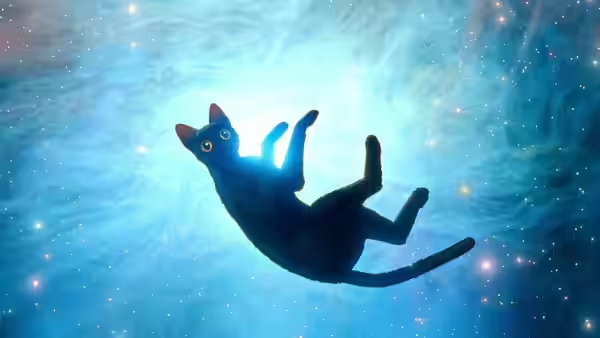
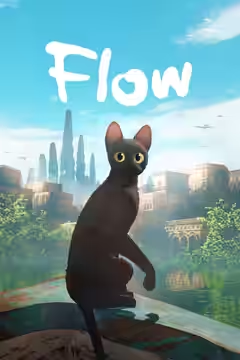
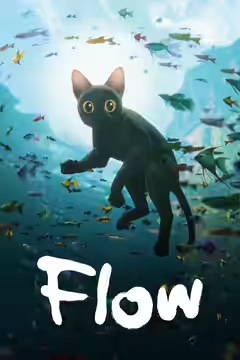
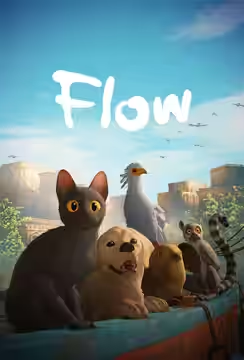
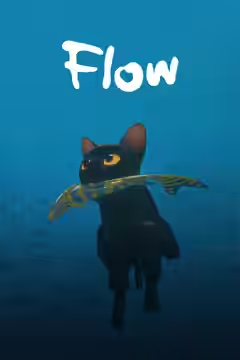
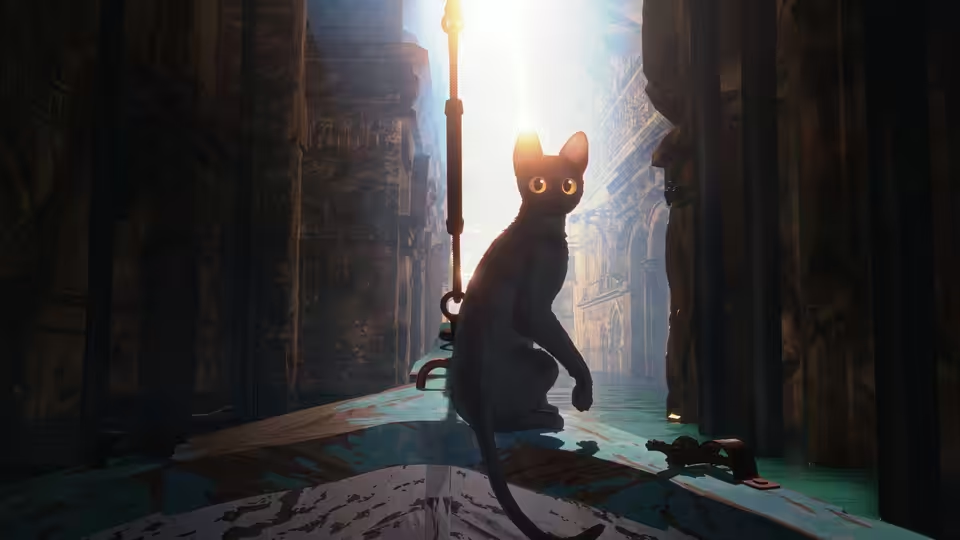
A black cat sits in a flooded, ruined street, facing the light between buildings
Film review

Flow

2024 · Directed by Gints Zilbalodis · 1h 25m · MPA PG

In a sentenceA cat, a capybara and a lemur with a hand mirror survive the end of the world without saying a word

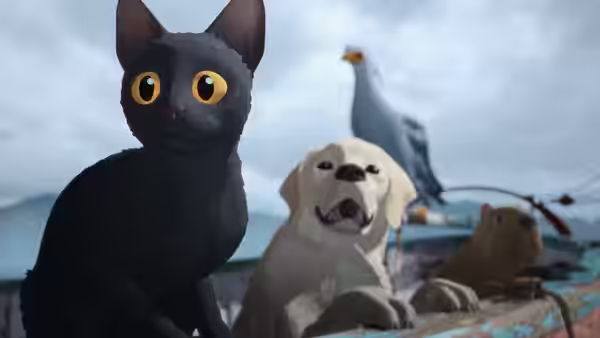
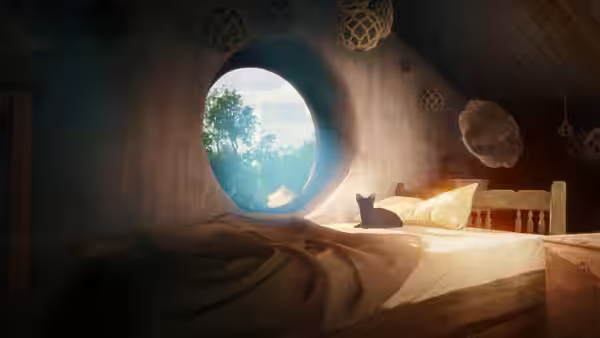
A dark grey cat lives alone in a house in a forest, in a film written by director Gints Zilbalodis with Matīss Kaža and scored by Zilbalodis and Rihards Zaļupe. Whoever built the house has gone, leaving drawings of the cat on the walls and stone cats in the garden, one the size of a barn. Then a herd of deer crashes through the trees, the water follows, and within minutes the forest floor is a seabed. Clinging to the head of the statue, the cat is passed by a sailing boat with a capybara asleep on board and jumps. The boat drifts across a drowned world, picking up a ring-tailed lemur hoarding trinkets, a secretary bird cast out by its flock and a yellow Labrador. Nobody speaks.

Plays from YouTube when you press play; nothing loads from them until then.

Fi1m review

Gints Zilbalodis’s wordless film about a cat adrift on a rising sea is patient, exact and more frightening than its U certificate suggests. It drifts in the middle and its ending reaches further than it grasps, but we recommend it, adults included.

A dark grey cat lives alone in a house in a forest. Someone else lived there once, because there are drawings of the cat pinned up inside and stone cats in the garden, one of them the size of a barn. Then the deer come running, the water comes after them, and within a few minutes the forest floor is a seabed and the cat is clinging to the head of a statue. Gints Zilbalodis’s film has no dialogue, no narrator and no people, and it never explains where they went or why the sea is rising. It runs 85 minutes and it is one of the better animated films we have seen in some while.

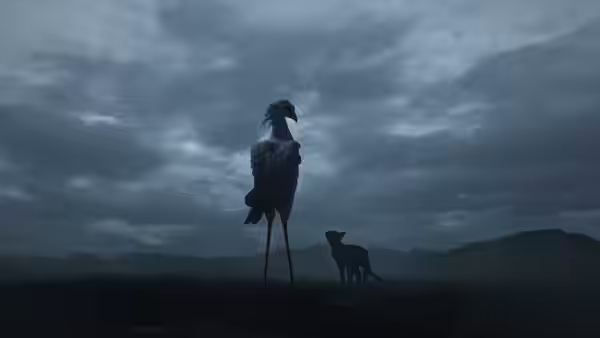
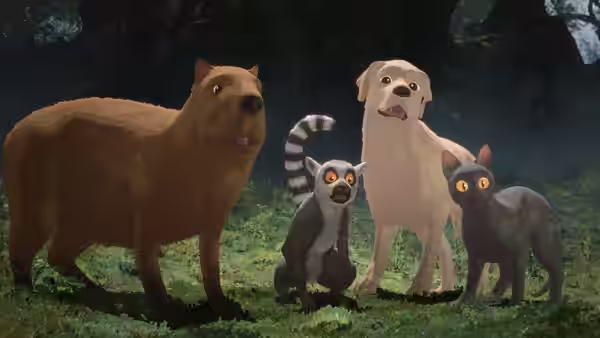
A sailing boat drifts past with a capybara asleep in it, and the cat, with no other option, jumps. Over the next hour the boat collects a ring-tailed lemur who hoards trinkets and will not be parted from a hand mirror, a secretary bird thrown out of its flock, and a yellow Labrador who has never met a situation it could not be pleased about. They do not become friends in the way an American cartoon would arrange it. They tolerate each other, steal each other’s fish and slowly work out that the boat has a rudder and someone had better hold it.

Zilbalodis is credited as director, cinematographer and editor, wrote the script with Matīss Kaža and composed the music with Rihards Zaļupe. You can feel one set of hands on it. The camera stays low, at the cat’s eye line, and moves in long unbroken drifts, following it under a table, up a tree and along a gunwale without a cut. The water is a heaving grey-green mass with light coming through it in bars, and the film keeps finding new things for it to do: lap at the bottom of a staircase, turn a street of ruined stone into a canal, go still at dawn so the boat seems to hang in the sky. The score is mostly low pulsing synths and something like a heartbeat, and it knows when to stop.

The cat hates water. Early on it falls in and thrashes, and we thought it might drown, and that was when we realised how completely the film had us: we were frightened for a rendered cat. Later, when a whale rises beside the boat at night with its eye level with the cat’s, we felt something we do not often feel in a cinema now, which is awe with nothing asked of us in return. Nothing swells on the soundtrack. The whale looks, the cat looks, and Zilbalodis holds the shot.

The animals move like animals, which is rarer in animation than it should be. The cat’s ears go back before its body does. The capybara does nothing at all, magnificently, for whole scenes. The dog shakes itself dry over everyone. They sound like animals too: the cat mews and hisses, the capybara makes a low contented rumble, and nobody has been given a voice or a quip. Whatever we know about them we know from watching.

It is not without faults. The middle stretch has a sameness to it, another squall, another quarrel over a fish, another fall overboard, and we looked at our watch once, around the hour. The dog’s old pack turns up for a broad chase that belongs in a louder film. The lemur’s greed is underlined every time it picks something up, so that a gag becomes a small lecture on possessions. The rendering is not flawless either: the water sometimes has the flat, even sheen of a screensaver and the fur sits on the animals like felt. And in the last twenty minutes the film takes a turn towards the mystical that we will not describe. It is done with conviction, and we admired it, and we are still not sure it means anything.

Zilbalodis made his previous film, Away (2019), almost entirely by himself, and it had the same virtues and worse faults: a wandering camera, a mute hero, a story that was really a list of places. Flow is the same method with more discipline. It keeps its U certificate honestly, though the first quarter of an hour is as frightening as anything with that certificate has a right to be.

Take a child if you have one, and sit with them through the flood. They will want to know where the people went. Tell them the film does not know either, and that this is allowed.
Critical consensus AI synthesised

82
Positive
18
Mixed
2
Negative
0

The reviews lean strongly positive: eighteen of twenty recommend it, and none dismiss it. The praise clusters almost entirely on the animation of the animals themselves: how the cat and its companions move, how much feeling their faces and bodies carry without a line of dialogue, and how the film resists turning them into people. Several critics also single out the low, cat-height camera and the sense of scale in the flooded world.

The reservations, where they appear, concern the look and the tone rather than the story. Variety finds the animation technically rough in places; Vulture thinks its beauty can tip into something synthetic; Collider has similar doubts about the style and some of the more fantastical moments. The AV Club feels the slapstick sits awkwardly against the seriousness of the flood. The spread is narrow, running from warm to admiring, and no critic argues against seeing it.

Time Out
20 March 2025 · ★★★★★ · Phil de Semlyen
100

The review calls the film mysterious, magical and worthy of Studio Ghibli. It praises the film’s timelessly beguiling quality.

Read the full review →
Empire
3 March 2025 · John Nugent
95*

Nugent finds Flow a mesmerising, wondrous showcase for animation and a thoughtful story about collaboration. He especially praises its cinematic craft and lifelike animal movement, which make the wordless characters deeply affecting.

Read the full review →
IndieWire
21 November 2024 · A · Christian Blauvelt
95

Blauvelt calls Flow a moving, groundbreaking animated film that feels both radical and widely accessible. He praises the animals’ lifelike movements and quiet, wordless portrayal, especially the cat’s expressive behavior.

Read the full review →
The Hollywood Reporter
24 May 2024 · festival review · David Rooney
94*

Rooney calls the film a deeply affecting, joyful animated adventure and praises its emotional storytelling. He especially singles out the vivid, hand-crafted-looking animation and the animals’ expressive movement.

Read the full review →
Los Angeles Times
22 November 2024 · Robert Abele
90*

Abele calls “Flow” an enchanting, poignant triumph and praises its generous vision of animals learning to persevere together. He especially singles out the film’s fluid, shimmering imagery and behaviorally authentic animal characters.

Read the full review →
Slant Magazine
19 September 2025 · ★★★★½ · Steven Scaife
90

Scaife praises the film as an immersive, wordless animated story that finds emotional depth without anthropomorphizing its animal characters. He especially commends how their expressions convey feeling and how the film’s images retain mystery without explanatory dialogue.

Read the full review →

Straight answers AI written, from our review

Is Flow worth watching?
Flow is worth watching, for adults as much as children, and we scored it 83. Gints Zilbalodis's wordless film about a cat adrift on a rising sea is patient and exact, and its flood and its night-time whale had us frightened and then in awe. The middle stretch drifts and the mystical ending reaches further than it grasps, but the 85 minutes are well spent.
How long is Flow, and what is it rated?
Flow runs 1h 25m and is rated PG by the MPA in the US. It is an adventure and animation film.
Where can I watch Flow in the US?
Flow is available to rent from Amazon Prime Video and Apple TV from $2.99. Availability is checked daily; the links above go straight to each service.
How does Flow compare to Spirited Away?
Flow and Spirited Away are both animated fantasies that ask for patience and reward it, but they are different in kind. Miyazaki's film has a child at its centre, a crowded spirit world and a full story; Zilbalodis's has no people, no dialogue and a boatful of animals who never explain themselves. Spirited Away is the richer film; Flow is the sparer and quieter, and the better choice if you want the sea and not the bathhouse.
What should I watch after Flow?
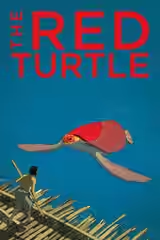
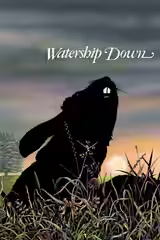
After Flow, try Away (2019, Fi1m 92): Zilbalodis’s first film, made alone: rougher, stranger, and recognisably the same eye. Then The Red Turtle (2016, Fi1m 84): Another wordless castaway story, drawn by hand, patient about weather and loss; and Watership Down (1978, Fi1m 81): Animals fleeing catastrophe, for children who can take it, and many could not.

Awards

Gaudí Award for Best European Film, 2026

Won
Gaudí Award for Best European Film

Academy Awards, 2025

Nominated
Best International Feature Film
Won
Best Animated Feature

Lumière Award for Best Animated Film, 2025

Won
Lumière Award for Best Animated Film

BAFTA Film Awards, 2024

Nominated
Best Children's & Family Film

Critics' Choice Awards, 2024

Nominated
Best Animated Feature

European Film Award for Best Animated Feature Film, 2024

Won
European Film Award for Best Animated Feature Film

European Film Award for Best Film, 2024

Nominated
European Film Award for Best Film

Gan Foundation Award for Distribution, 2024

Won
Gan Foundation Award for Distribution

If you liked this, try…

  1. Away (2019, Fi1m 92)Zilbalodis’s first film, made alone: rougher, stranger, and recognisably the same eye.

  2. The Red Turtle (2016, Fi1m 84)Another wordless castaway story, drawn by hand, patient about weather and loss.

  3. Gunda (2020) · not on Fi1m yetA documentary about a sow and her piglets that trusts you to watch.

  4. Watership Down (1978, Fi1m 81)Animals fleeing catastrophe, for children who can take it, and many could not.

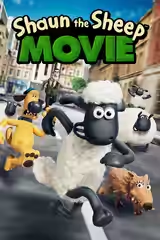
  5. Shaun the Sheep Movie (2015) · not on Fi1m yetProof that no dialogue and a clear boat-load of animals can be funny.