George MacKay gives Paul Wright’s coastal drama a painful immediacy that survives its stylistic excesses. The imagery sometimes overstates the grief, but the performances make it worth the discomfort.
For Those in Peril is a moving, uneven drama whose actors make its more elaborate passages worth tolerating. Writer-director Paul Wright tries to show grief changing how a person experiences the world, with coastal Aberdeenshire providing the setting and myth entering everyday life. That is a sensible ambition for a story about a man whose mind is unsettled by loss. The difficulty is that the director sometimes gives us several ways of understanding a feeling we have already understood.
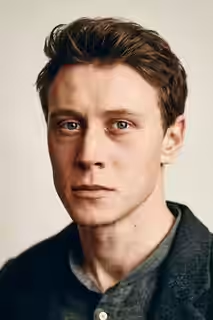
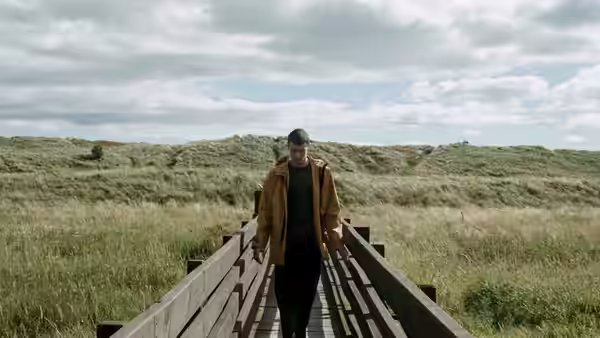
George MacKay, as Aaron, supplies the reason to keep watching when that happens. His restraint allows the character’s distress to remain difficult to read, without making him remote or merely a case to be explained. We felt painfully on edge during the pub scene, because George MacKay makes Aaron’s discomfort seem so hard to conceal. It is the sort of scene in which another expressive image would only get in the way, and the performance needs no such assistance.
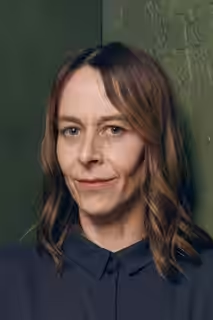
The connection between Aaron and his brother’s girlfriend is another point where the film becomes easier to care about. Shared grief can make such relationships feel like a screenwriting exercise, but there is an awkward emotional closeness here that resists neat explanations. Kate Dickie, as Cathy, also gives the suffering a force that does not depend on our accepting every stylistic choice. The direction is most convincing when it lets these performances establish how difficult it is for people to reach each other.
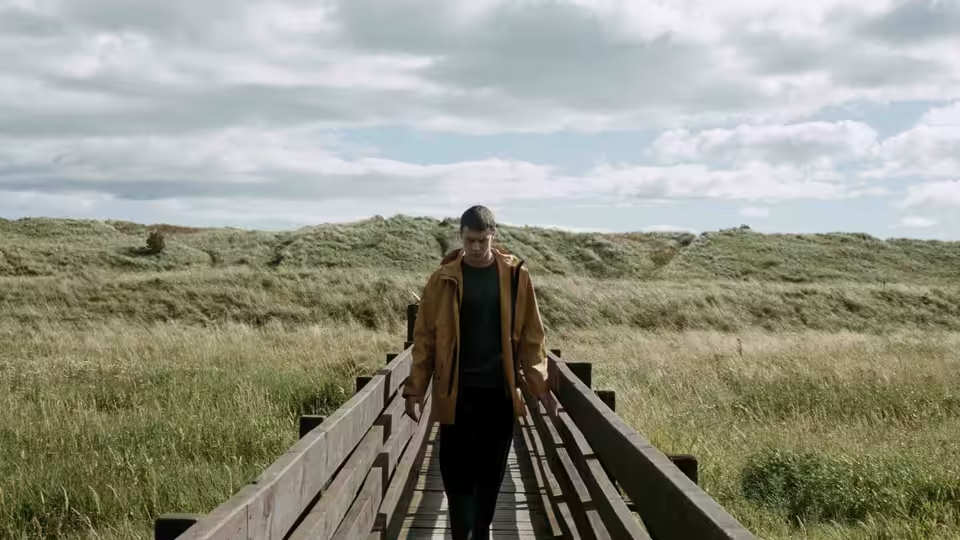
Benjamin Kračun’s cinematography gives the Aberdeenshire coast an unsettling presence. The landscape feels bound up with Aaron’s distress, and the mixture of realism and myth can make familiar surroundings seem uncertain. The documentary-style footage is especially effective at making the lost young lives feel immediate, giving the grief something specific to attach to. Elsewhere, the visual invention becomes too noticeable: we start considering what an image means when we ought to be watching Aaron.
Michael Aaglund’s editing has to bring the documentary-style material and the more poetic imagery into the same film, and the joins do not always feel necessary. There are passages where the changes of approach seem to be doing work the actors have already done. Across 93 minutes, that insistence becomes wearing, though the film never loses our interest entirely. Paul Wright could have trusted the performances to carry more of these passages without so much help.
Erik Enocksson’s music contributes to the unease, although this is hardly a film in need of extra emotional prompting. Simon Rogers’s production design is most persuasive in the everyday settings, particularly the pub, where ordinary surroundings give the tension somewhere credible to develop. Neither department is responsible for the tendency to press too hard. That comes from Paul Wright’s writing and direction, which sometimes treat another layer of meaning as an improvement in itself.
Grief dramas can settle into a routine of pain followed by reassurance, and the willingness to let realism become strange is welcome here. George MacKay and Kate Dickie keep us interested in people we might otherwise start treating as clues to be decoded. That is enough to make the unevenness worth accepting, though viewers who prefer a straightforward story may find the interruptions wearing. Save it for an evening when being unsettled is an acceptable outcome.