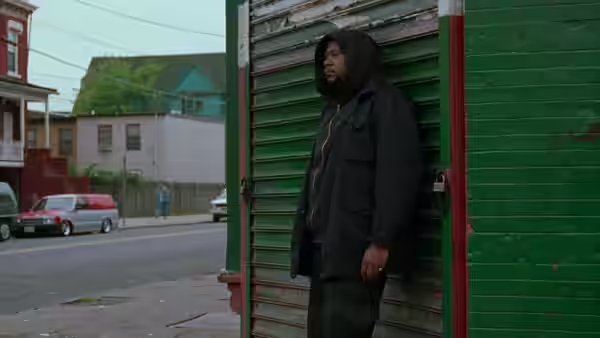
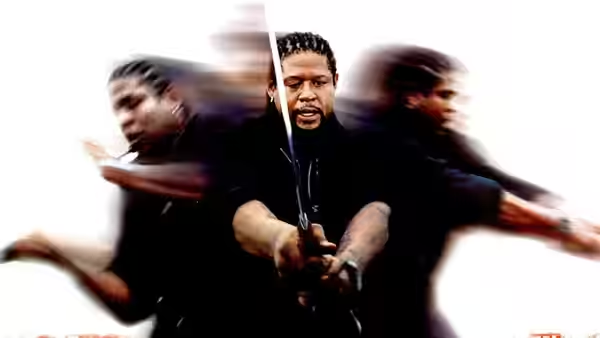
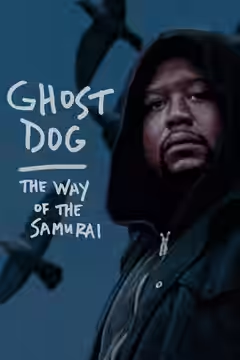
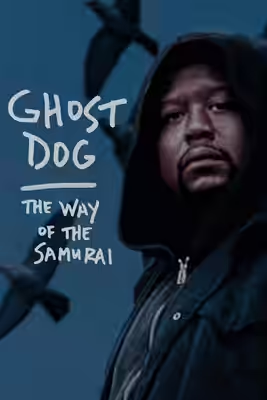
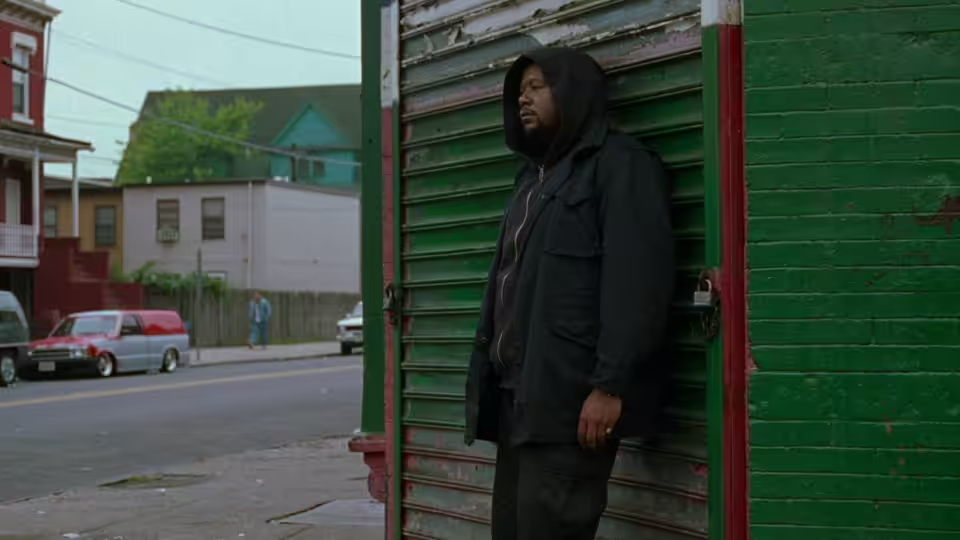
Ghost Dog (Forest Whitaker) leaning against a green metal shutter on a street
Film review

Ghost Dog: The Way of the Samurai

1999 · Directed by Jim Jarmusch · 1h 57m

In a sentenceA samurai hitman waits patiently for the Mafia to stop being ridiculous

Forest Whitaker plays Ghost Dog, an assassin who follows a samurai code in his dealings with the Mafia. Jim Jarmusch’s crime drama follows a man who treats killing as a profession governed by rules, while the gangsters around him have their own customs and loyalties. John Tormey plays Louie, Henry Silva plays Ray Vargo and Cliff Gorman plays Sonny Valerio. The story makes room for philosophical pauses and encounters alongside the hitman’s work, with hip-hop music accompanying its mixture of gangland business, samurai tradition and absurd comedy.

Plays from YouTube when you press play; nothing loads from them until then.

Fi1m review

Forest Whitaker makes Jim Jarmusch’s samurai hitman funny and unexpectedly touching, with considerable help from RZA’s music. The gangster caricatures wear thin, but this patient crime film rewards the time spent watching its leading man think.

Jim Jarmusch’s Ghost Dog: The Way of the Samurai is a funny, quietly moving crime film, provided we do not ask it to behave like a thriller. Forest Whitaker plays an assassin devoted to a samurai code, taking his profession seriously in the company of gangsters who often seem absurd. Jarmusch wants us to spend time with this man and consider the rules he has chosen to follow. The film gives the pauses between acts of violence considerable space.

Whitaker makes that invitation easy to accept. His expressive stillness keeps the pauses from turning into dead air, and he gives Ghost Dog enough gravity that the combination of hitman and philosopher seldom looks like a writer’s amusing idea for a character. We were moved by Whitaker’s face in those quiet passages: the seriousness with which he regards his chosen way of life makes him seem painfully alone. He allows us to care about Ghost Dog without requiring us to endorse his beliefs or his profession.

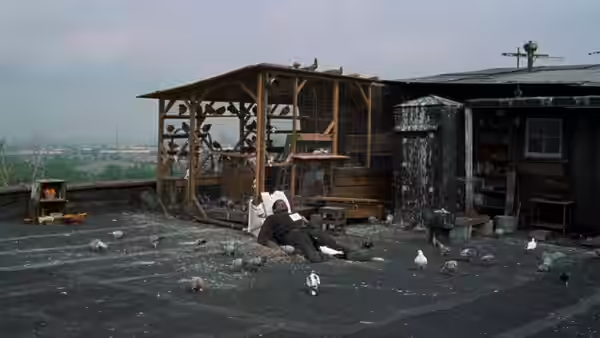
Robby Müller’s cinematography gives us something worth watching even when little is happening, particularly in the bird footage. The time spent looking at birds is a welcome break from the gangsters and their business, and Jarmusch is right to make room for it. Production designer Ted Berner’s world feels oddly empty to us, which suits Whitaker’s self-contained presence. We could have used a stronger sense that these gangsters had lives beyond the scene immediately in front of us.

Editor Jay Rabinowitz allows Whitaker’s stillness to count, giving the pauses enough room for us to study his face. The approach does cost the film momentum when the supporting characters cannot sustain the same interest. RZA’s hip-hop score supplies a firmer pulse and makes the mixture of Mafia comedy and samurai discipline feel less strained than it might sound on paper. His music is a substantial part of the pleasure, especially when the dramatic business has become a little thin.

Jarmusch’s writing is funny about the gangsters, and Henry Silva’s Ray Vargo belongs comfortably among these comic figures. Yet their broadness is also the film’s clearest weakness: too often a familiar Mafia type is expected to be funny simply by being there. The collision of cultural codes gives Jarmusch plenty to work with, but he does not always examine what those codes demand of the people following them. Some supporting scenes settle for eccentric behaviour when they need another thought. Whitaker is doing more detailed work at the centre.

As a variation on the hitman film, this benefits from being interested in a killer’s habits of thought as well as his competence. Its violence is ritualised, and suspense is not Jarmusch’s chief concern. That will be a sizeable obstacle for anyone expecting the plot to tighten with each encounter, particularly across its 117 minutes. We recommend it with that reservation, and with some patience for the gangsters when the jokes begin to repeat. Choose an evening when nobody is going to keep asking when the thriller starts.

Critical consensus AI synthesised

67
Positive
6
Mixed
3
Negative
1

Most critics respond warmly to Jarmusch’s offbeat hitman film, praising its dry humour and unusual combination of Mafia culture, samurai codes and hip-hop. Forest Whitaker is the clearest point of agreement: the reviews repeatedly single out his stillness, gravity and presence as reasons to care about an otherwise absurd character. The music also draws praise, while the more enthusiastic accounts find wit and affection in the film’s treatment of honour and professionalism.

The reservations concern how much these eccentricities add up to, with responses ranging from warm appreciation to outright disappointment. Several critics find the storytelling thin or uneven, and Sight and Sound argues that the cultural themes receive lazy treatment through stereotypes. Variety is the strongest dissenter, finding charm in individual scenes but little dramatic depth in the whole; the broader divide is over whether the playful mixture offers insight or merely sustains an amusing conceit.

The Guardian
28 April 2000 · Peter Bradshaw
80*

Jarmusch's serio-comedy is an enjoyable and distinctive take on cinema gangland that mixes martial codes with mafia culture in a whimsical, sui generis way. The critic singles out the playful yet serious tone and the guarded respect it establishes between different cultural codes of honour.

Read the full review →
Time Out
10 September 2012 · GA
80*

Jarmusch's offbeat hitman variation grafts moods, motifs and gags onto the story of a samurai-code assassin, creating a funny, insightful and highly original tribute to honour and professionalism that proves his wit and invention intact. Praises the camerawork, score and bird footage.

Read the full review →
Empire
1 January 2000 · Kim Newman
75*

The critic finds wry amusement in Jarmusch's absurd take on the hitman genre, which piles oddity on a conventional plot in an empty parallel universe. Whitaker's expressive stillness in the pauses is singled out as the real draw amid the stifled hilarity and quirky supporting turns.

Read the full review →
IndieWire
3 March 2000
75*

The film successfully blends mafia, samurai, and hip-hop elements into an engaging whole. The critic highlights the inventive cultural mash-up as a key strength.

Read the full review →
RogerEbert.com
17 March 2000 · Roger Ebert
75*

The critic argues that understanding the protagonist as quietly insane deepens appreciation of the film. He praises Forest Whitaker's poignant performance and Jarmusch's risky stylistic mix.

Read the full review →
Evening Standard
10 April 2012
60*

The film is likened to a Looney Tunes cartoon made flesh, with the hitman-as-philosopher conceit delivering clever moments and cool killings but ultimately reducing to absurdity without much illumination. Whitaker's gravity and the hip-hop soundtrack provide some weight and whimsy amid the minimalist Tarantino vibe.

Read the full review →

Straight answers AI written, from our review

Is Ghost Dog: The Way of the Samurai worth watching?
Ghost Dog: The Way of the Samurai is worth watching for anyone who enjoys a slow, deadpan crime film built around one man thinking, and we scored it 80. Forest Whitaker is funny and unexpectedly touching as the samurai hitman, and RZA's music carries a good deal of the pleasure. Viewers waiting for the plot to tighten into a thriller will grow restless across its 117 minutes.
How long is Ghost Dog: The Way of the Samurai, and what is it rated?
Ghost Dog: The Way of the Samurai runs 1h 57m. It is a crime and drama film.
Where can I watch Ghost Dog: The Way of the Samurai in India?
Ghost Dog: The Way of the Samurai is not on any streaming or rental service in India at the moment. It is available in 11 other countries; change your country at the top of the page to see where. Availability is checked daily.
How violent or frightening is Ghost Dog: The Way of the Samurai, and is it suitable for children?
Ghost Dog: The Way of the Samurai carries a UK 15 certificate and is not suitable for children. It is a film about a professional assassin, and the killings are shown, though the violence is ritualised and unhurried rather than frightening or suspenseful. Older teenagers with patience for long quiet passages and a taste for dry gangster comedy should be fine.
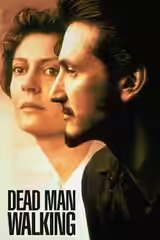
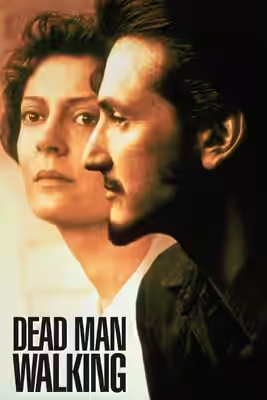
How does Ghost Dog: The Way of the Samurai compare to Dead Man Walking?
Ghost Dog: The Way of the Samurai is the stranger and funnier of the two, while Dead Man Walking is the more emotionally direct. Both follow a solitary figure through violence towards questions of how to live and die, but Jarmusch treats the material as deadpan crime comedy, and Tim Robbins treats it as a serious capital-punishment drama. Choose Ghost Dog for mood and music, Dead Man Walking for performances that hit harder.
What should I watch after Ghost Dog: The Way of the Samurai?
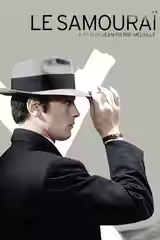
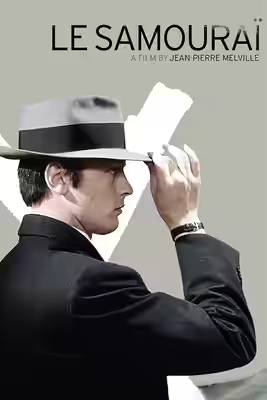
After Ghost Dog: The Way of the Samurai, try Le Samouraï (1967, Fi1m 88): Another solitary killer whose routines become as absorbing as his dangerous work. Then Dead Man (1995, Fi1m 84): Jarmusch takes another solitary traveller through violence, deadpan humour and spiritual questioning.

Cast

If you liked this, try…

  1. Le Samouraï (1967, Fi1m 88)Another solitary killer whose routines become as absorbing as his dangerous work.

  2. Branded to Kill (1967) · not reviewed yetFor a stranger, sharper assault on the hitman film’s professional self-importance.

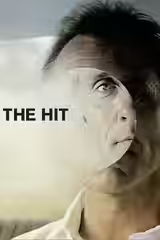
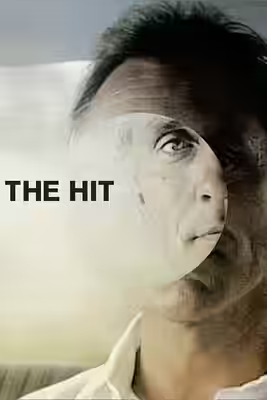
  3. The Hit (1984) · not reviewed yetCriminal business slows into uneasy conversation, with room for fear and foolishness.

  4. Dead Man (1995, Fi1m 84)Jarmusch takes another solitary traveller through violence, deadpan humour and spiritual questioning.

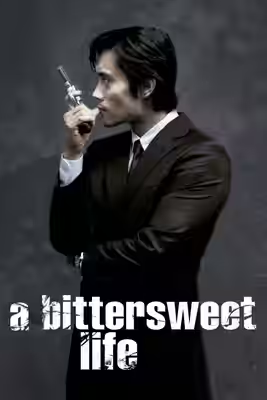
  5. A Bittersweet Life (2005) · not reviewed yetA more forceful crime film about loyalty taken far too seriously.

Free account

Know what to watch tonight

Two lists that know where things are streaming, collections you can share, your own score beside ours, and Discover that remembers what you have seen.

  • Want to see, sorted by what is streaming now
  • Seen, with your score out of ten
  • No adverts, ever