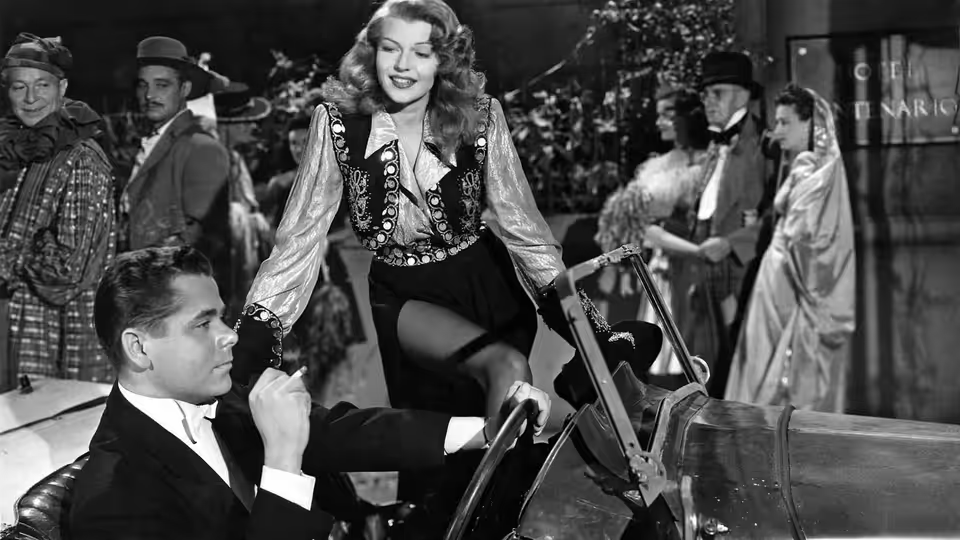
Rita Hayworth makes Gilda worth seeing, and Rudolph Maté’s shadows give its glossy surfaces an unsettling depth. The plotting is strained and the direction sometimes stiff, but the attraction between these people remains difficult to dismiss.
Gilda is worth seeing for Rita Hayworth, though Charles Vidor does not give her a story as compelling as her presence. The film wants romance to feel dangerous, and for much of its running time it succeeds. Desire makes these people anxious, suspicious and occasionally absurd. We can accept quite a lot of overheated behaviour in a romantic thriller; the difficulty here is accepting the plotting that goes with it.
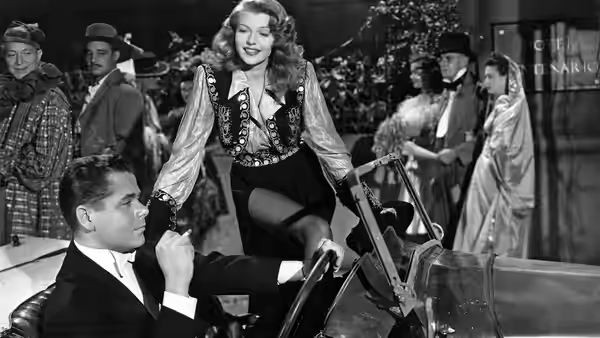
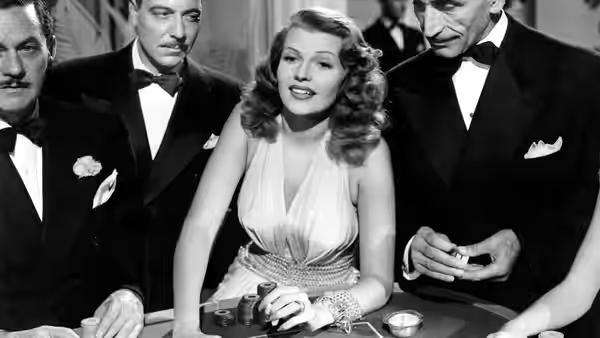
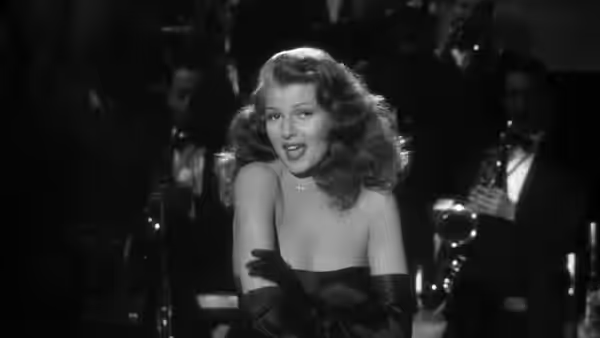
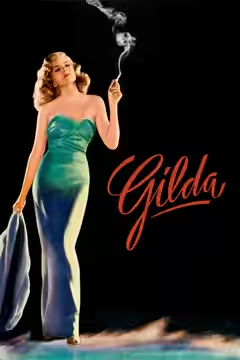
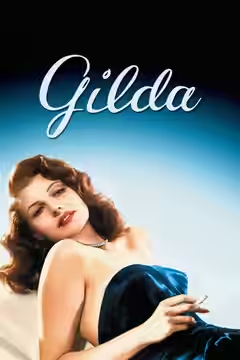
Rita Hayworth’s introduction explains why the film can survive so much of that trouble. We were caught off guard by her entrance: her confidence makes the unease surrounding her immediately more interesting. She gives Gilda enough assurance to hold our attention without making her easy to read. The pleasure is in trying to work out how much of that assurance to believe, and the performance gives us good reason to keep looking.
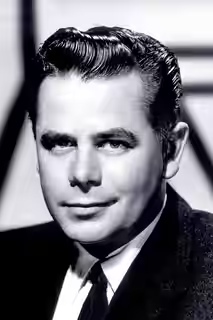
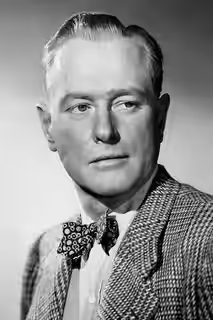
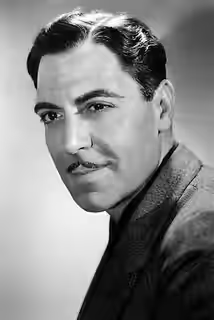
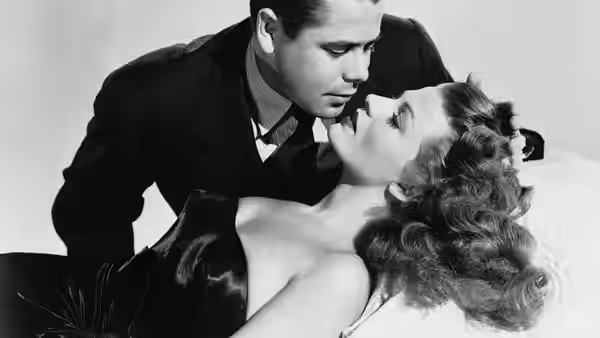
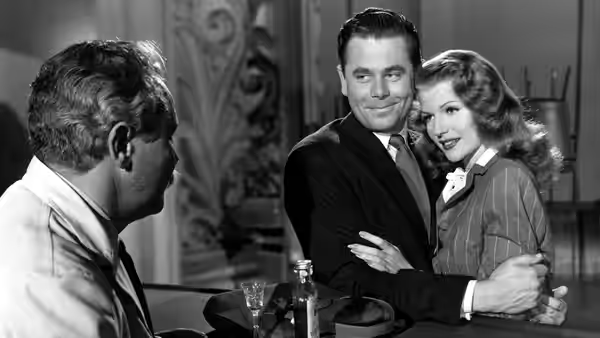
Glenn Ford makes Johnny Farrell a difficult companion, which helps the film more than an easier charm would. Opposite George Macready’s Ballin Mundson, that difficulty becomes part of the attraction: everyone seems too alert to what somebody else might mean. The suggestive dialogue is effective because it gives the actors something to leave unresolved. These exchanges hold us more securely than the efforts to explain who is doing what and why.
Rudolph Maté’s cinematography understands the appeal of all this discomfort. Deep shadows interrupt the gloss, keeping the polished image from becoming merely decorative; the darkness gives the attraction an edge that the plotting cannot consistently provide. Jean Louis’s costume design helps Rita Hayworth command attention, although her ease matters more than anything she wears. The director is less reliable at keeping a scene alive once attention moves away from her, and the handsome photography cannot disguise every stationary stretch.
Marion Parsonnet’s screenplay asks for more indulgence than we are always willing to give. The plotting feels strained, and explanations do not necessarily make the behaviour more persuasive. Charles Nelson’s editing does not disguise the stretches in which the direction becomes static, leaving us time to question complications that might have survived a brisker telling. Hugo Friedhofer’s music cannot give those complications the force that the central attraction already has. There are passages where the film seems convinced that agitation will be enough to sustain our interest.
It is tempting to read all the anxiety around Gilda as evidence of her power, but that lets the men off too easily. We grew impatient when suspicion started to repeat itself, because the agitation stopped changing our understanding of the people involved. Rita Hayworth remains interesting through these passages, without making them necessary. This is where the film falls short of the romantic thriller at its sharpest: attraction ought to complicate our judgement, rather than merely prolong the quarrel.
At 110 minutes, the film asks for some tolerance of that repetition. We would not choose it for an evening devoted to unpicking a clever mystery, though its uncomfortable relationships offer plenty to discuss afterwards. Choose it when a difficult attraction sounds more appealing than a tidy explanation.