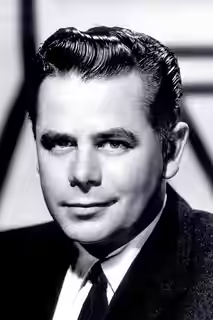
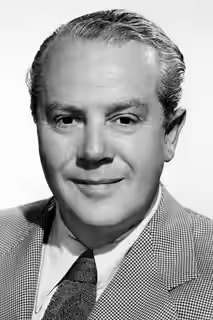
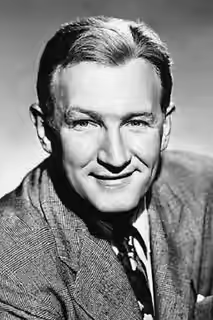
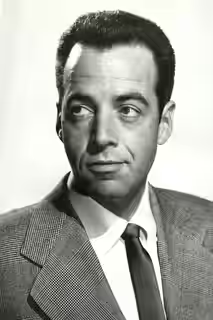
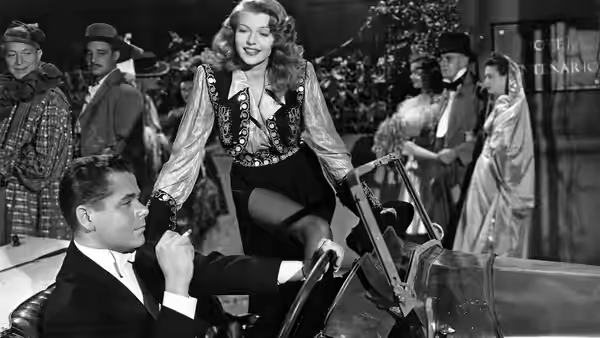
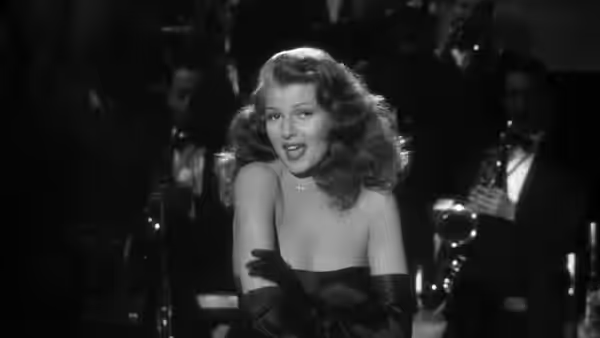
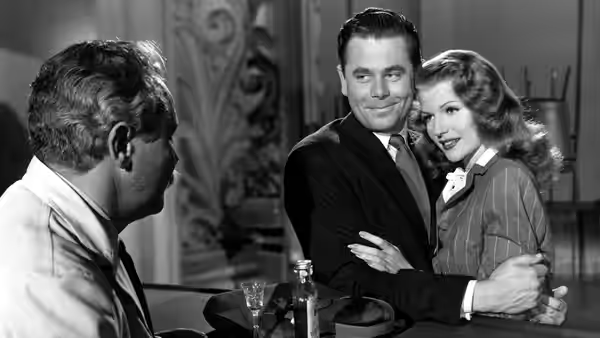
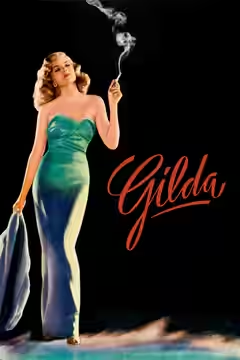
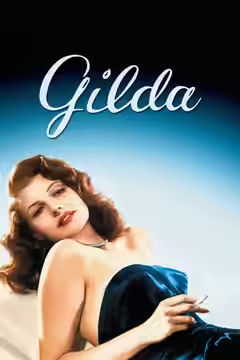
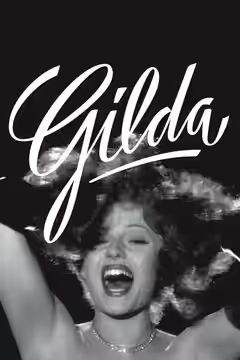
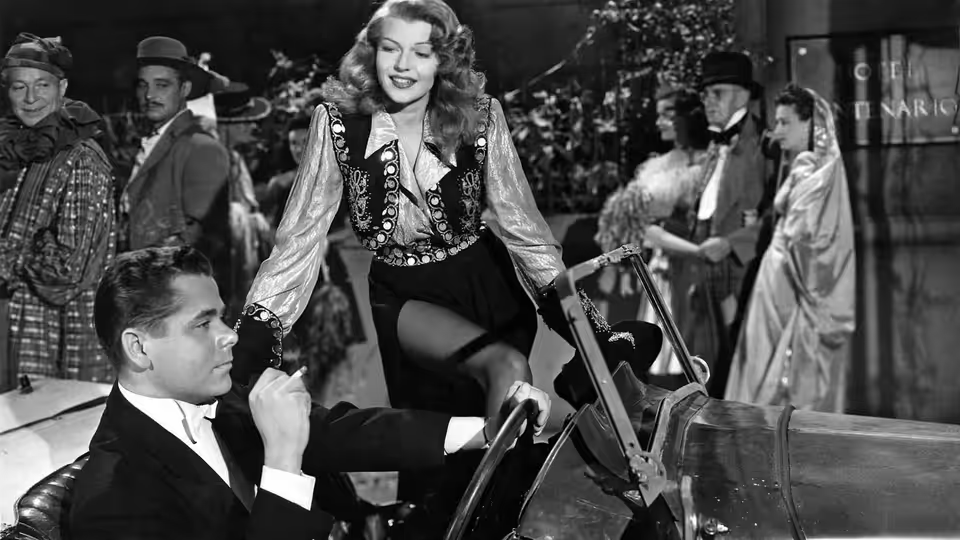
Gilda (Rita Hayworth) stands beside Johnny Farrell (Glenn Ford) in a nightclub
Film review

Gilda

1946 · Directed by Charles Vidor · 1h 50m

In a sentenceWe would happily watch Rita Hayworth again without anyone explaining the plot

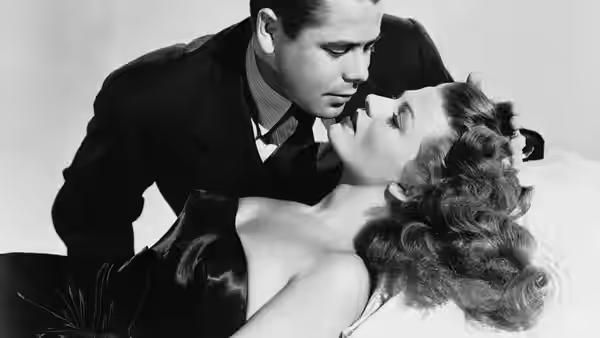
Gilda (Rita Hayworth) attracts attention and unsettles the people around her, including Johnny Farrell (Glenn Ford) and Ballin Mundson (George Macready). The relationship between the three is charged with desire, but attraction brings anxiety rather than reassurance. Their exchanges carry suggestions that are not always spoken plainly, and intimacy comes with the possibility of hostility. As Gilda enters this uneasy company, the question is what each person expects from the others, and how much they are prepared to admit. Romance and suspicion occupy the same conversations.

Fi1m review

Rita Hayworth makes Gilda worth seeing, and Rudolph Maté’s shadows give its glossy surfaces an unsettling depth. The plotting is strained and the direction sometimes stiff, but the attraction between these people remains difficult to dismiss.

Gilda is worth seeing for Rita Hayworth, though Charles Vidor does not give her a story as compelling as her presence. The film wants romance to feel dangerous, and for much of its running time it succeeds. Desire makes these people anxious, suspicious and occasionally absurd. We can accept quite a lot of overheated behaviour in a romantic thriller; the difficulty here is accepting the plotting that goes with it.

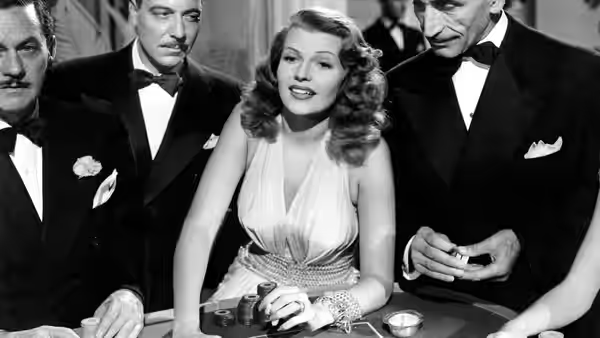
Rita Hayworth’s introduction explains why the film can survive so much of that trouble. We were caught off guard by her entrance: her confidence makes the unease surrounding her immediately more interesting. She gives Gilda enough assurance to hold our attention without making her easy to read. The pleasure is in trying to work out how much of that assurance to believe, and the performance gives us good reason to keep looking.

Glenn Ford makes Johnny Farrell a difficult companion, which helps the film more than an easier charm would. Opposite George Macready’s Ballin Mundson, that difficulty becomes part of the attraction: everyone seems too alert to what somebody else might mean. The suggestive dialogue is effective because it gives the actors something to leave unresolved. These exchanges hold us more securely than the efforts to explain who is doing what and why.

Rudolph Maté’s cinematography understands the appeal of all this discomfort. Deep shadows interrupt the gloss, keeping the polished image from becoming merely decorative; the darkness gives the attraction an edge that the plotting cannot consistently provide. Jean Louis’s costume design helps Rita Hayworth command attention, although her ease matters more than anything she wears. The director is less reliable at keeping a scene alive once attention moves away from her, and the handsome photography cannot disguise every stationary stretch.

Marion Parsonnet’s screenplay asks for more indulgence than we are always willing to give. The plotting feels strained, and explanations do not necessarily make the behaviour more persuasive. Charles Nelson’s editing does not disguise the stretches in which the direction becomes static, leaving us time to question complications that might have survived a brisker telling. Hugo Friedhofer’s music cannot give those complications the force that the central attraction already has. There are passages where the film seems convinced that agitation will be enough to sustain our interest.

It is tempting to read all the anxiety around Gilda as evidence of her power, but that lets the men off too easily. We grew impatient when suspicion started to repeat itself, because the agitation stopped changing our understanding of the people involved. Rita Hayworth remains interesting through these passages, without making them necessary. This is where the film falls short of the romantic thriller at its sharpest: attraction ought to complicate our judgement, rather than merely prolong the quarrel.

At 110 minutes, the film asks for some tolerance of that repetition. We would not choose it for an evening devoted to unpicking a clever mystery, though its uncomfortable relationships offer plenty to discuss afterwards. Choose it when a difficult attraction sounds more appealing than a tidy explanation.

Critical consensus AI synthesised

79
Positive
5
Mixed
2
Negative
0

Most critics respond warmly to Gilda, with praise clustering around Rita Hayworth’s screen presence and the erotic tension between the characters. Her introduction and musical performance draw particular attention, while even the less enthusiastic reviews find her a compelling central attraction. The cinematography also earns praise, with reviews of restored versions noting how the shadows alter the impression of the film’s glossy visual style. Its suggestive innuendo and unsettling postwar atmosphere provide further sources of interest.

The disagreement centres on how much the surrounding film supports Hayworth. Empire finds an overwrought muddle, though it remains entertaining and her presence provides a saving grace. Variety is more resistant, describing the plotting as trite and far-fetched and the direction as static, while still praising Hayworth. The spread therefore runs from strong enthusiasm to qualified enjoyment, with no wholly negative assessment among these seven reviews.

Radio Times
★★★★★ · Tony Sloman
100

The review celebrates the film as a memorable star vehicle. It singles out Rita Hayworth’s iconic introduction and glove-striptease, along with the charged relationship between the characters.

Read the full review →
Slant Magazine
5 April 2026 · ★★★★½ · Clayton Dillard
90

The critic praises Criterion’s 4K upgrade for showcasing the film’s striking cinematography. The deeper shadows and added texture in Rita Hayworth’s iconic musical number stand out.

Read the full review →
Los Angeles Times
29 January 2016 · Andy Klein
80*

Klein presents the film favorably, saying its restored cinematography changed his view of its glossy visual style. He singles out the film’s suggestive innuendo and the new interview with Eddie Muller for praise.

Read the full review →
Time Out
19 July 2011 · ★★★★ · Trevor Johnston
80

The review presents Gilda as a fascinating classic Hollywood film. It singles out Rita Hayworth’s memorable presence as the film’s central attraction.

Read the full review →
The Guardian
21 July 2011 · Peter Bradshaw
75*

Bradshaw calls the film a real 1940s Hollywood treat, while noting its irrational panic and hysteria. He singles out its woozy, unsettling postwar atmosphere and erotic tension.

Read the full review →
Empire
1 January 2000 · David Parkinson
65*

Parkinson finds the film an overwrought muddle but ultimately entertaining. He singles out Rita Hayworth’s screen presence as its saving grace.

Read the full review →

Straight answers AI written, from our review

Is Gilda worth watching?
Gilda is worth watching for Rita Hayworth and its uneasy romantic chemistry; we score it 78 out of 100. We recommend it when dangerous attraction and shadowy photography appeal more than a clever mystery, with a caveat for strained plotting, repeated suspicion and stretches of stiff direction.
How long is Gilda, and what is it rated?
Gilda runs 1h 50m. It is a romance and drama film.
Where can I watch Gilda in New Zealand?
Gilda is not on any streaming or rental service in New Zealand at the moment. It is available in 24 other countries; change your country at the top of the page to see where. Availability is checked daily.
How violent or frightening is Gilda, and is it suitable for children?
Gilda carries a UK 12 certificate, so it is not a choice for younger children; its discomfort comes from desire, suspicion and hostility between adults. We would steer older children and teenagers towards it only if tense romantic relationships interest them, rather than assume its certificate promises either strong violence or sustained scares.
How does Gilda compare to Notorious?
Gilda is the less consistent choice beside Notorious, which we recommend more readily for its tense combination of cruel romance and spy thriller. Both make suspicion part of intimacy, but Gilda relies more heavily on Rita Hayworth’s presence to sustain interest through strained plotting; choose it when the attraction matters more than the explanations.
What should I watch after Gilda?
After Gilda, try Notorious (1946, Fi1m 92): Another troubled attraction in which suspicion makes every intimate exchange harder. Then The Earrings of Madame de... (1953, Fi1m 87): Polished surfaces and wounded pride, with firmer control of the plotting; and Phoenix (2014, Fi1m 68): A woman’s identity becomes inseparable from the part someone wants her to play.

Cast

If you liked this, try…

  1. Notorious (1946, Fi1m 92)Another troubled attraction in which suspicion makes every intimate exchange harder.

  2. In a Lonely Place (1950) · not on Fi1m yetFor the same discomfort when romantic attraction starts to feel dangerous.

  3. The Earrings of Madame de... (1953, Fi1m 87)Polished surfaces and wounded pride, with firmer control of the plotting.

  4. Phoenix (2014, Fi1m 68)A woman’s identity becomes inseparable from the part someone wants her to play.

  5. Decision to Leave (2022) · not on Fi1m yetDesire and investigation become entangled, with more patience for the details.

Gilda (1946) review: Rita Hayworth makes the muddle worth seeing (New Zealand) | Fi1m