Masaaki Tezuka’s sequel gives Godzilla, Mothra and the robot Kiryu ninety minutes of hand-built Tokyo to break, and the monsters earn the evening. The people standing under them do not; the script gives most of them little to do beyond salute.
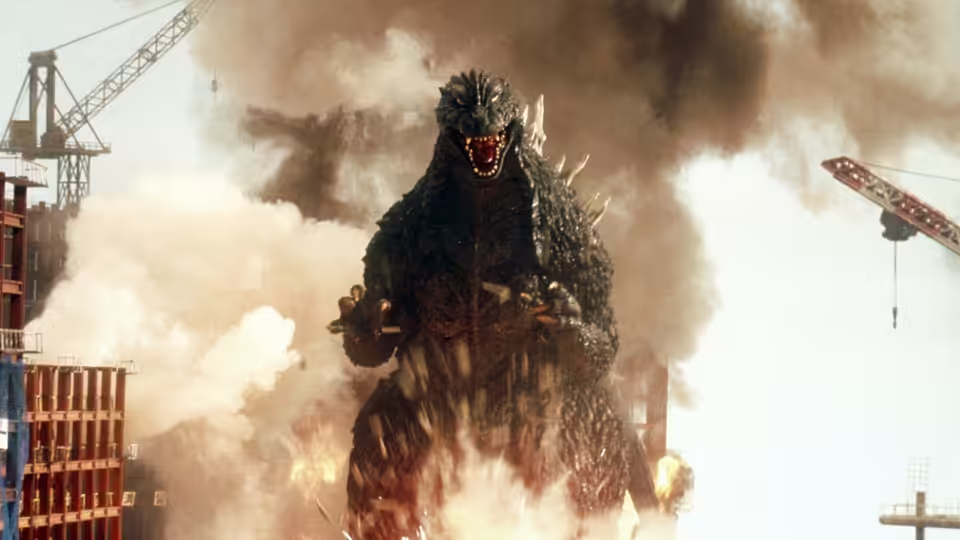
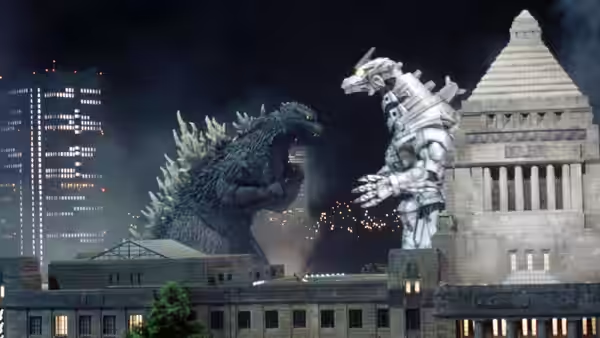
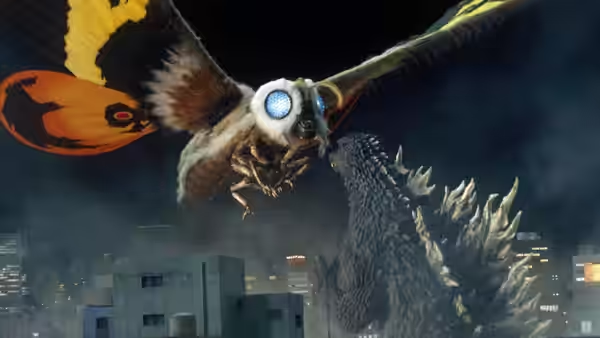
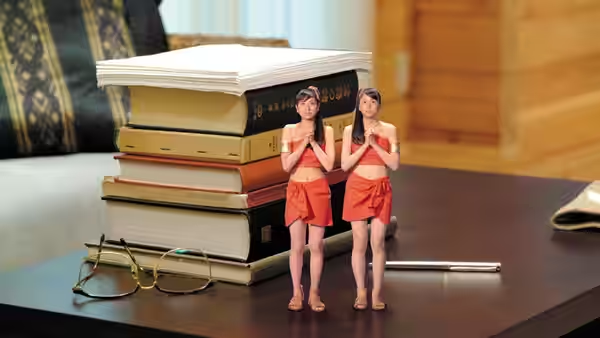
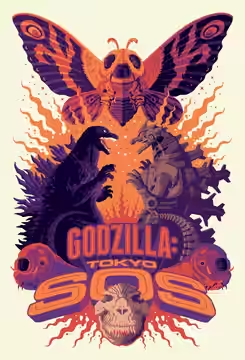
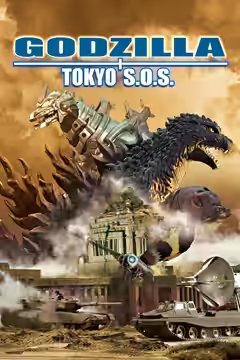
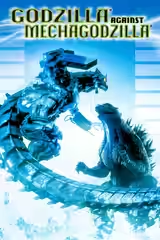
Masaaki Tezuka’s Godzilla: Tokyo S.O.S. picks up a year after his Godzilla Against Mechagodzilla (2002) and asks a question the earlier film had been careful not to. Kiryu, the robot Japan built to fight Godzilla, has the skeleton of the first Godzilla, the one from 1954, inside it. Mothra’s twin fairies arrive in a retired scientist’s living room to say that the dead should not be used this way, and that if the bones go back to the sea, Mothra will guard Japan instead. The government says no. Godzilla comes ashore. That is the whole film, and at 91 minutes it has the good manners not to pretend otherwise.
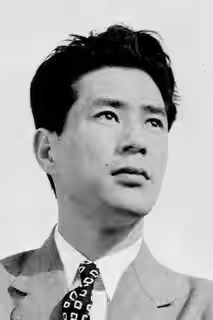
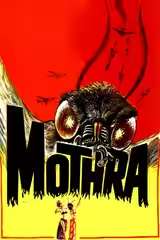
The scientist is Dr. Shin’ichi Chûjô, played by Hiroshi Koizumi, who met the same fairies as a young man in Mothra (1961) and is now white-haired, courteous and still faintly astonished by them. Tezuka and his co-writer Masahiro Yokotani have the wit to make the returning actor the film’s conscience rather than its explainer. When the twins stood on his table, no taller than a teapot, and sang the old song, we felt a lump in the throat we had not expected from a film about a robot fighting a lizard, and we felt it because Koizumi listens to them as if they were real. It is the one scene in which a person is more interesting than a monster, and the film returns to him whenever it needs to be taken seriously.
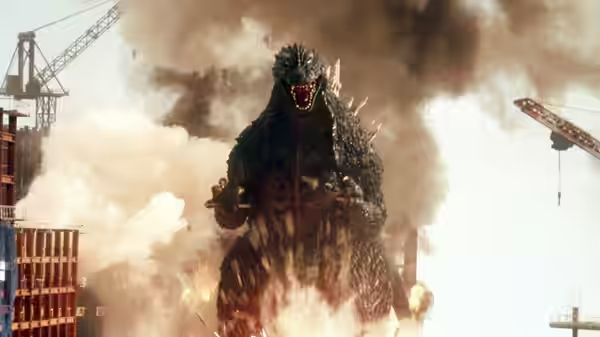
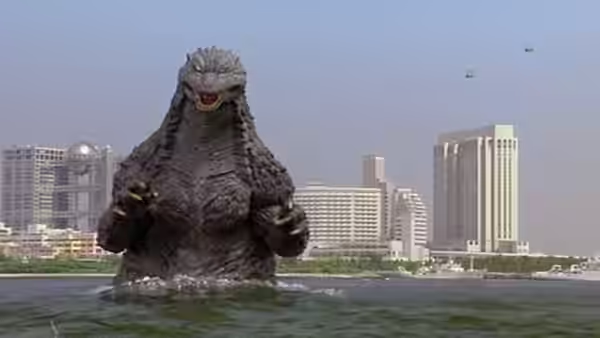
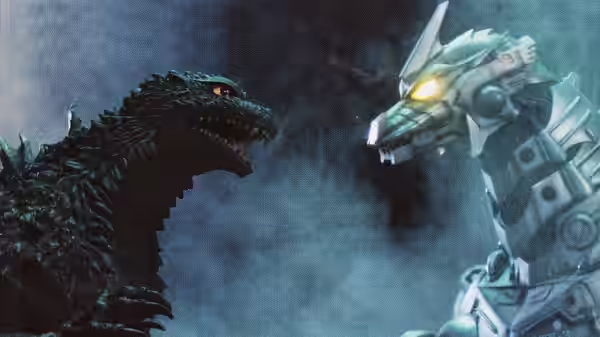
The monsters, in fairness, are worth being interested in. Yukiharu Seshimo’s production design gives Tezuka a miniature Tokyo of the old school, office towers that shear rather than explode and roads that fold, and Yoshinori Sekiguchi shoots it low and slightly wide so that the suits read as heavy rather than as men in costumes. Shinichi Wakasa’s costumes, which in this kind of film means the creatures themselves, give Godzilla a longer, meaner head than the older designs and give Kiryu a chrome finish that catches every fire it starts. Tsutomu Kitagawa, inside Godzilla, and Motokuni Nakagawa, inside Kiryu, do the real acting: a stumble, a shoulder dropped before a charge, a robot turning its head a second late as if it had remembered something.
Michiru Oshima’s score is the best thing the film has. Her brass march for Kiryu is loud and square and proud of itself, her Godzilla theme is a low churn under it, and when Mothra arrives she steps aside for Yūji Koseki’s song, sung by the twins, and lets the orchestra simply hold a chord underneath. It does more for the film’s idea about the dead and the living than any line of dialogue.
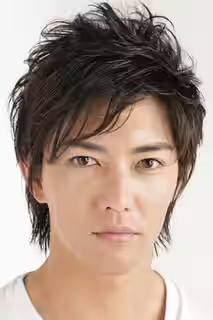
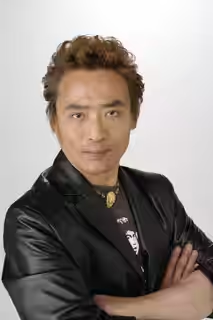
The dialogue is where it falls down. Noboru Kaneko plays Yoshito Chûjô, the doctor’s nephew and a mechanic on the Kiryu repair crew, and the script gives him a spanner, a crush and nothing to decide until the last reel. Miho Yoshioka’s pilot Azusa Kisaragi and Mitzuki Koga’s operator Kyôsuke Akiba have a rivalry the film sets up and then forgets. Akira Nakao’s Premier Igarashi refuses the fairies’ offer in one meeting and is not asked to think about it again. Shin’ichi Fushima cuts the briefing rooms briskly, which is a mercy, but there are a great many briefing rooms, and by the third one we were restless and looking at the clock, which a 91-minute film should not allow.
Against the standard of the series this sits in the respectable middle. It does not have the grief of the 1954 original, but it has a clear idea about who owns the dead and it holds onto it to the end, which puts it ahead of most of its neighbours. The fights are staged in daylight and at length, and you can always see who is hitting whom.
If you like this sort of thing you know it already. If you do not, this is a fair place to find out: short, handsome in a hand-built way, with one old man and two small women who make the whole enterprise briefly feel as though it matters. Sit through the people; the monsters and the music are worth it.