Good Fortune has a funny angel in Keanu Reeves and too much explaining to do. Aziz Ansari’s fantasy comedy is decent company, but its earnest talk about money repeatedly gets in the way of the jokes.
Aziz Ansari writes and directs Good Fortune, a decent, uneven comedy that keeps interrupting its own jokes to explain why money matters. Angelic interference and life-swapping give it a serviceable fantasy premise, and some of the jokes about gig work are sharp enough to make the earnest passages unnecessary. He nevertheless keeps returning to those passages, anxious that nobody should miss his sympathy for people struggling to get by. The cast makes the repetition easier to sit through, especially when Keanu Reeves is allowed to be foolish.
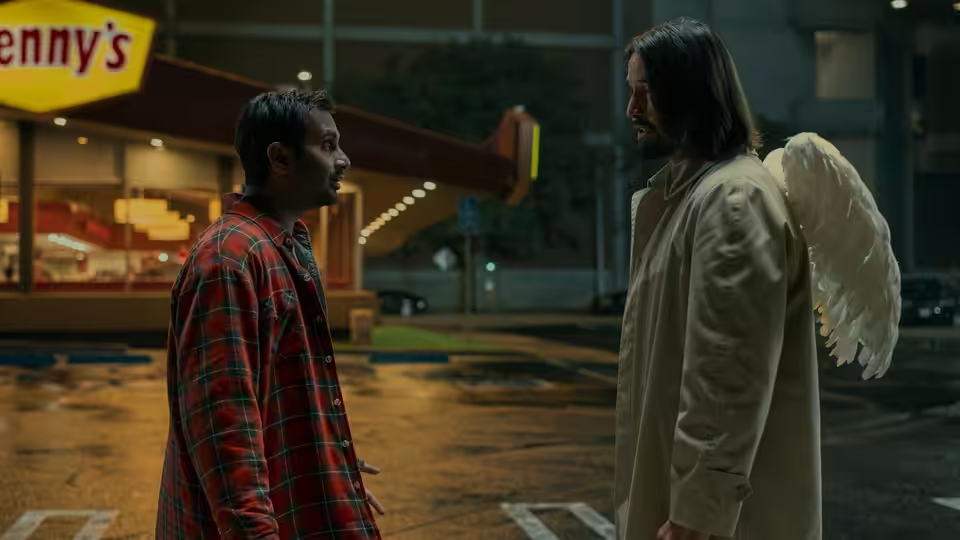
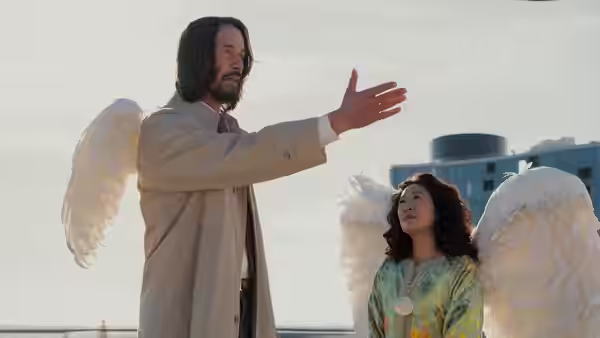
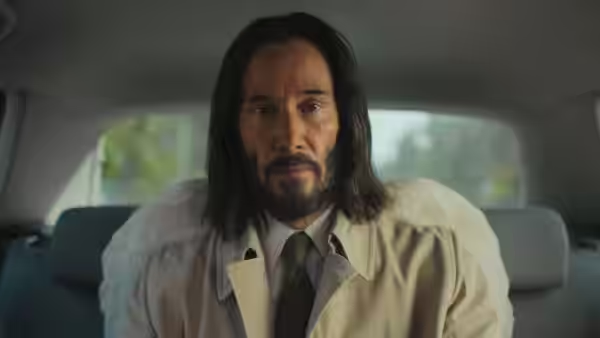
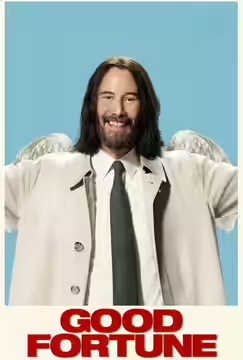
Keanu Reeves plays Gabriel, an angel whose good intentions exceed his competence, with a deadpan that gives the film its most reliable laughs. He allows the foolishness to register without making the character smug about it, and his occasional smiles have an appealing awkwardness. We laughed at Gabriel’s inept attempts to help because his performance gives them such unembarrassed sincerity. He is also touching in a modest way, keeping the angel’s desire to be useful apparent even when his judgement is plainly inadequate.
Aziz Ansari plays Arj, Seth Rogen plays Jeff and Keke Palmer plays Elena, and their company remains a substantial part of the appeal. Her performance is particularly welcome, giving the human side of the story enough warmth to hold our interest when the fantasy becomes cumbersome. The dialogue is less dependable, with some exchanges so explicit about inequality that there is little left for the actors to suggest. Their charm keeps these scenes tolerable, though it cannot always make them sound like conversations people would choose to have.
Adam Newport-Berra’s cinematography provides some visual pleasure, although the direction is less assured about how long to let a comic situation run. The uneven pacing matters in a film built around a premise that needs complications to keep producing fresh jokes. Carter Burwell’s music has little room to help when the dialogue already tells us so firmly how to feel. The stretches devoted to explaining the theme slow down a film that runs only 97 minutes.
The comedy is most persuasive when it stays close to the practical pressures of work, where an observation can be funny without requiring a speech afterwards. The screenplay recognises those pressures, but grows vague when it tries to say what might change them. There is nothing objectionable about wanting an audience to leave a comedy feeling kindly towards other people. The disappointment is how readily that wish softens the sharper questions about wealth, leaving the film less curious about inequality than its premise initially promises.
We do not need a fantasy comedy to provide an economic programme, and a few well-aimed jokes would be quite enough. Too often, the dialogue carries a seriousness that the story has not earned, and the performers have to restore the easy mood. There is still pleasure in their company, and Keanu Reeves in particular rewards anyone prepared to accept a gentle comedy with an over-explaining habit. Choose it for the angel, with modest expectations of what the humans have to say.