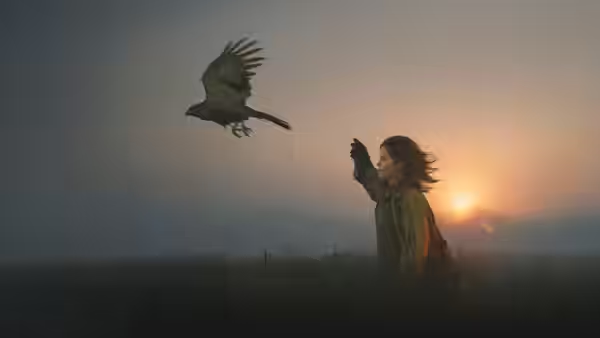
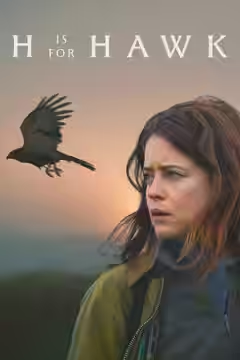
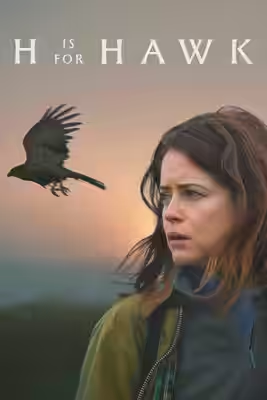
H Is for Hawk poster

H Is for Hawk

2025 · Directed by Philippa Lowthorpe
2h 00mDrama12A
64
Fi1m score
66
Critics · 10
Audience · not yet

Where to watch in the UK

Checked 10 September at 22:28. Prices and availability change; the service’s page is the last word.

Plays from YouTube when you press play; nothing loads from them until then.

Synopsis

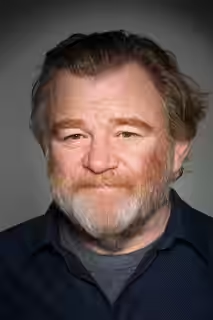
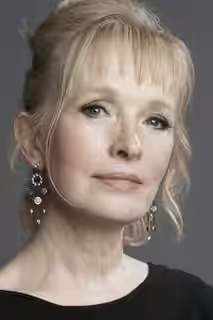
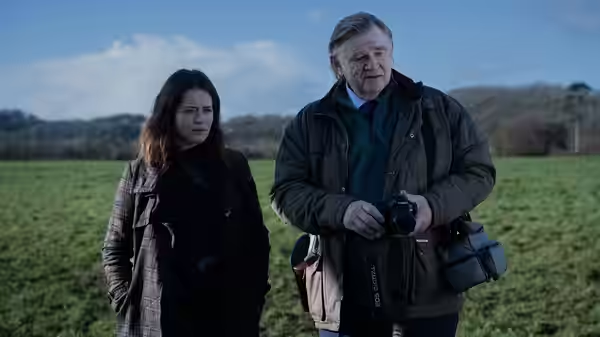
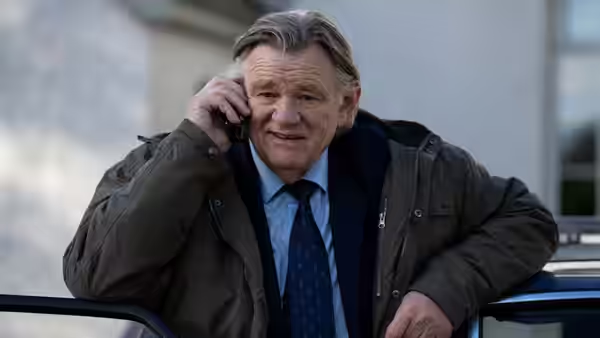
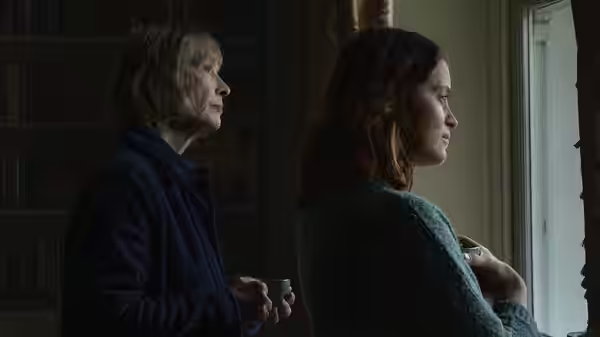
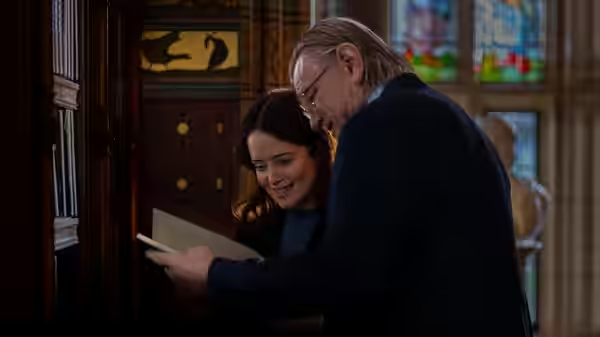
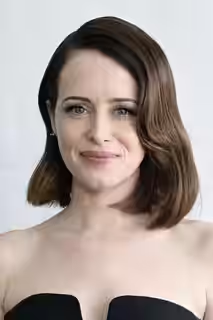
Helen is an academic whose father dies without warning. Rather than talk to the people who love her, she drives to a breeder, buys a young goshawk, brings it back to her flat and shuts the curtains. Training the bird, which she names Mabel, becomes the whole of her days, and the friends and falconers around her have to decide how long to leave her to it. Claire Foy plays Helen, Brendan Gleeson her father in flashback and Lindsay Duncan her mother. Philippa Lowthorpe directs from Emma Donoghue’s script, adapted from Helen Macdonald’s memoir. It runs 120 minutes and carries a 12A certificate.

Fi1m review

In a sentenceClaire Foy and a goshawk out-glare each other for two hours; the humans in between barely register

Claire Foy and the bird are worth the evening, and Brendan Gleeson gets to us in about four scenes. Around them Philippa Lowthorpe has made a careful, tasteful film about grief that runs half an hour long and is too polite to hurt.

Helen Macdonald’s memoir has been filmed by Philippa Lowthorpe from a script by Emma Donoghue, and it keeps the two things everyone remembers from the book: a woman undone by her father’s sudden death, and the goshawk she buys instead of grieving. Claire Foy plays Helen. A bird plays Mabel. Between them they hold up a film that runs 120 minutes and would have been better at ninety, and that treats mourning with a good manners the book never had. It is decent. Foy is a good deal more than that.

The setup is quick. Helen, a Cambridge academic, loses her father (Brendan Gleeson) with no warning and no chance to say anything. She goes to a breeder (Sean Kearns) and comes home with a young goshawk, moves it into her flat, and stops answering the door. The idea, the book’s and the film’s, is that teaching a wild animal to trust one person is a way of not having to trust anyone else. Donoghue pares the memoir down to that single line and follows it.

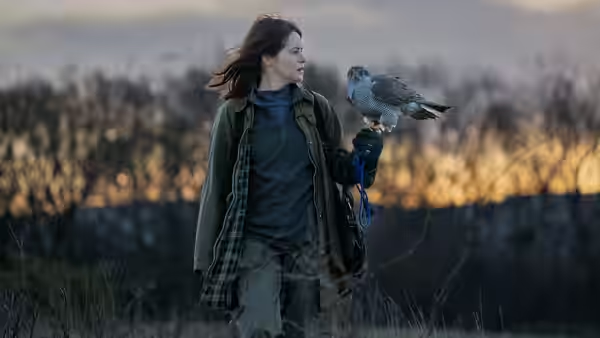
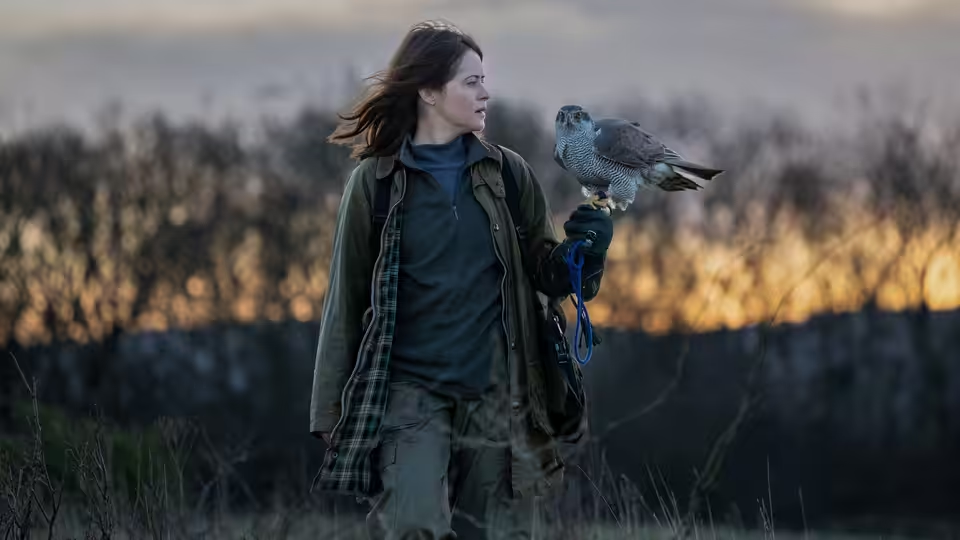
Foy handles the bird herself and it shows. Her arm is steady, her voice drops to a murmur, and when the hawk bates off the glove she lets it hang and waits without a flicker of the actor wanting to look competent. She plays Helen as short-tempered and not asking for sympathy; the grief does not come out as tears but as a hardness around the mouth and a habit of leaving rooms. The scenes with Mabel are the best in the film because nobody in them is explaining anything, and there are a lot of scenes in this film where somebody is explaining something.

Charlotte Bruus Christensen shoots the outdoors in the flat grey light of an English autumn, hedgerows the colour of wet cardboard and the bird’s eye the one bright thing in the frame. Indoors she lets the flat go darker week by week as the curtains stay shut. Sarah Finlay fills that flat with the kit of hawking, perch and scales and glove, while the washing-up piles round it, and Amy Roberts keeps Foy in the same jumper for what feels like a month. Emilie Levienaise-Farrouch’s score is mostly low strings and it has the sense to keep out of the bird’s way.

Here is what got us. The film cuts back to Helen as a child (Eden Hamilton) out with her father, and Gleeson plays him as a patient, unhurried man who takes a small girl’s questions seriously. One of these scenes, the two of them standing still in a field waiting for something to show itself, moved us more than we expected, and it is because Gleeson does almost nothing and Lowthorpe lets him. Then the flashbacks come round again. And again. Nico Leunen cuts back to them so regularly that they stop being memory and become punctuation, and the fourth time we felt our own response being managed.

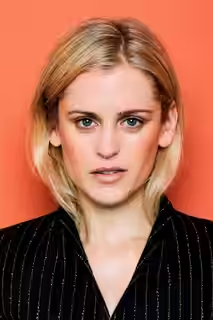
The other trouble is the living. Christina (Denise Gough), the falconers Stuart and Mandy (Sam Spruell and Emma Cunniffe), James (Josh Dylan) and Amar (Arty Froushan) are written as reasons for Helen to leave the flat and say a line about how she is coping. Lindsay Duncan has two or three scenes as her mother and is wasted in all of them. A scene with the Master (William Chubb) shows us Helen being rude to the wrong people and then moves on. Somewhere around the ninety-minute mark we were restless, and we do not think we were meant to be; the film had made its point and was making it again, more gently.

The memoir is angry, funny and odd, and it lets grief make its author unpleasant company. The film keeps the oddness and files off the anger. Lowthorpe, whose Misbehaviour had the same clean, considerate surface, directs with taste, and taste is the one thing this story did not need. It needed a woman with a dead bird in her freezer and no interest in being liked.

See it for Foy, for the hawk, and for Gleeson’s four scenes. Anyone who has read the book should go in knowing this is a quieter, kinder thing than the one on their shelf. It is a 12A and it runs two hours, and the second one drags.
Critical consensus AI synthesised

66
Positive
6
Mixed
2
Negative
2

Most critics agree on Claire Foy and on little else. Her performance as Helen, dry, irritable and physically convincing with the goshawk, is praised in nearly every review, and several single out her handling of the bird as the film’s surest element. The wildlife photography draws steady admiration too. The reservations gather in two places. One is length: a good share of the reviews find the film slow and repetitive, with a third act that drifts and blunts the ending. The other is the adaptation itself, with a run of critics arguing that Philippa Lowthorpe smooths away the memoir’s grit and interior complexity and leaves something tidier than the book. The i Paper goes furthest, calling the result bloodless and closer to a children’s wildlife documentary, and IndieWire finds the book’s essence lost in translation. The spread is wide, from warm raves to outright dismissal, with most settling on cautious approval.

The New York Times
22 January 2026 · Alissa Wilkinson
80*

The adaptation centers on Claire Foy as Helen, who turns to training a goshawk to process her father's death and finds unexpected solace in nature. The film explores grief's disorienting effects and offers a message of eventual healing.

Read the full review →
RogerEbert.com
23 January 2026 · Isaac Feldberg
75*

Foy delivers a heartbreaking, restrained performance as the grieving Helen, conveying sorrow beneath a stoic exterior while finding solace in the goshawk. The film is overly long-winded with repetitive scenes that undercut its emotional payoff.

Read the full review →
Variety
1 September 2025 · festival review · Peter Debruge
75*

Lowthorpe pares the memoir to focus on Helen's eccentric choice of a goshawk as emotional escapism after her father's death. Foy is compelling as the irritable, anti-social protagonist, and the film movingly depicts cross-species connection and healing.

Read the full review →
The Hollywood Reporter
30 August 2025 · festival review · Angie Han
60*

The film offers a sensitive portrayal of grief through a woman's bond with a goshawk after her father's death, with strong appreciation for the birds and nature. However, it is hindered by a slow, overlong runtime that dilutes its emotional impact.

Read the full review →
Empire
20 January 2026 · Miriam Balanescu
55*

The film is a graceful but uneven adaptation that fails to fully convey the emotional toll of mourning despite strong performances. It praises the palpable chemistry between Claire Foy and the hawk Mabel while criticizing the script's tweeness and lack of depth in exploring grief.

Read the full review →
IndieWire
2 September 2025 · festival review · David Ehrlich
40*

Philippa Lowthorpe’s adaptation of the memoir fails to capture the essence of the source material, resulting in a grief story that never fully takes flight despite Claire Foy's performance. The film loses much of what made the book special in its translation to screen.

Read the full review →

Cast

Stills

If you liked this, try…

Kes poster

Kes

1969 · A Barnsley boy and a kestrel; the bird is the only one who treats him fairly

The Rider poster

The Rider

2017 · A hurt young man and his horses, shot on the plains with real people

Kestrel's Eye poster

Kestrel's Eye

1998 · A year with a pair of falcons in a Swedish church tower, no narration

The Eagle Huntress poster

The Eagle Huntress

2016 · A Kazakh girl trains a golden eagle; the handling is the drama

Aftersun poster

Aftersun

2022 · A daughter sifts holiday video for the father she lost; quieter and sharper