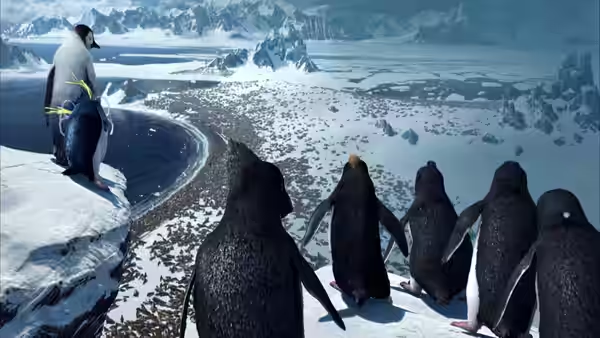
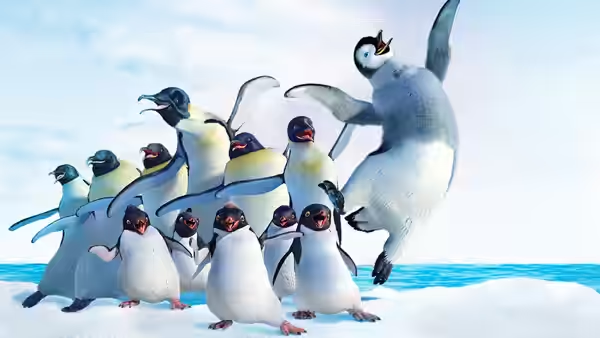
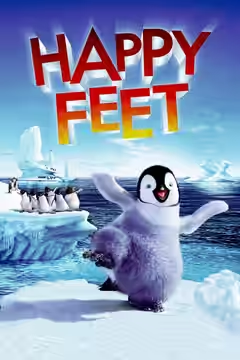
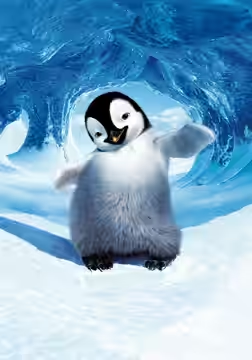
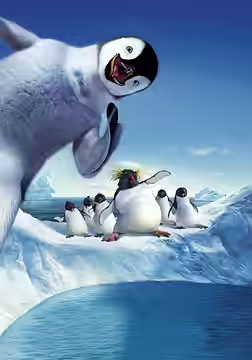
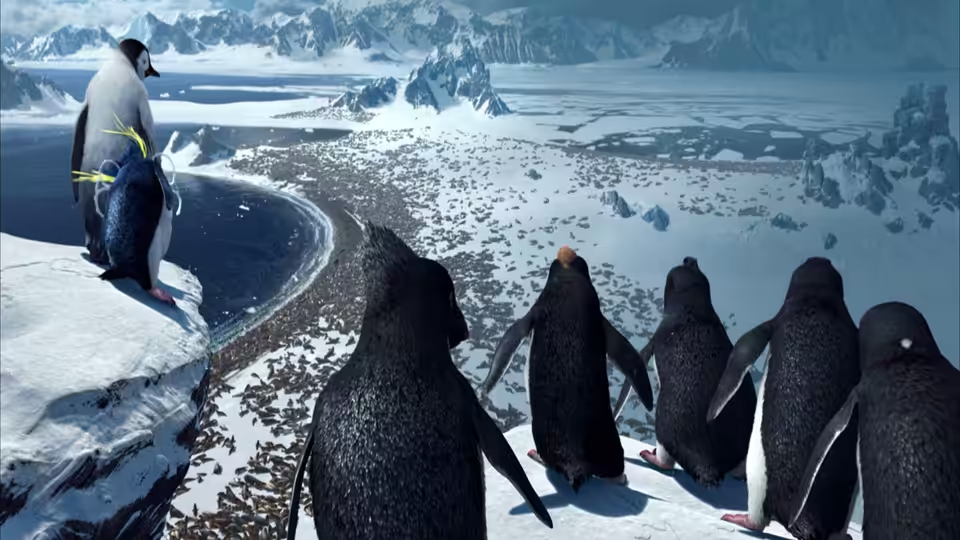
A group of penguins gathers on a snowy ridge above a frozen Antarctic coastline
Film review

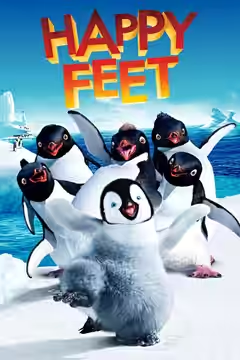
Happy Feet

2006 · Directed by George Miller · 1h 48m · FSK 0

In a sentenceAn hour of tap-dancing penguins, and then George Miller remembers he has something to say about fish

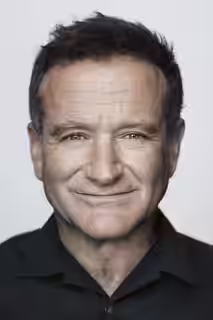
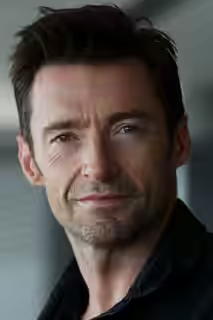
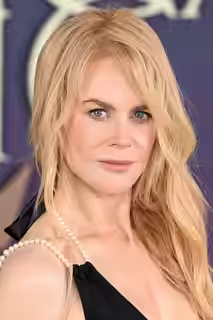
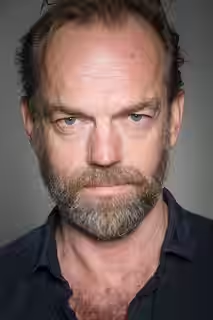
In the emperor penguin colony of Antarctica, every bird finds a mate by singing its heartsong. Mumble (Elijah Wood) hatches late from an egg his father Memphis (Hugh Jackman) let roll across the ice, and he cannot hold a note. What he can do is tap-dance, which delights his mother Norma Jean (Nicole Kidman) and offends Noah (Hugo Weaving), the elder who treats song as religion. Lessons with Mrs. Astrakhan (Miriam Margolyes) fail, a skua (Anthony LaPaglia) nearly eats him, and the fish are growing scarce. Grown, Mumble watches Gloria (Brittany Murphy), the colony’s finest voice, draw a crowd of suitors. When the elders turn on him he leaves the colony and falls in with Ramon (Robin Williams) and a gang of small Adelie penguins who like his feet a great deal.

Plays from YouTube when you press play; nothing loads from them until then.

Fi1m review

George Miller’s penguin musical is strange, handsome and often funny for an hour, then grows a conscience it does not quite know how to carry. Worth a family evening, with a warning about where the second half goes.

George Miller has spent a career putting unlikely creatures through ordeals, and Happy Feet is the one where the creature tap-dances. It is a musical set among emperor penguins in Antarctica, written by Miller with Judy Morris, John Collee and Warren Coleman, about a chick who cannot sing in a society where singing is how you find a mate and keep your god. That is the most familiar children’s story there is. What Miller does with it is odd, handsome and funny for an hour, and then it becomes a different film, which we will come to. We liked it, with reservations about the last third.

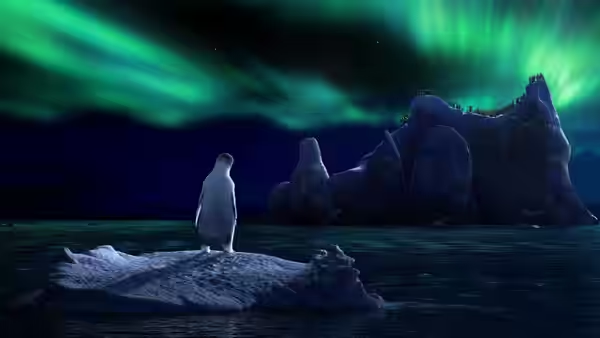
The picture is the first thing. David Peers, Andrew Lesnie and Steve Newman are credited with the cinematography, and the virtual camera they built behaves like a real one on a long crane: it swoops off a cliff, drops through the water with a diving bird and comes up under the ice with the light arriving in green sheets. Mark Sexton’s production design keeps Antarctica blue, white and grey, with no sunset pink to sweeten it. When winter comes and the males stand in a huddle with eggs on their feet, taking turns on the cold outside of the circle, the blizzard tears at them and nothing on the soundtrack tells you what to feel. It is the loneliest image we can remember in an animated film for children.

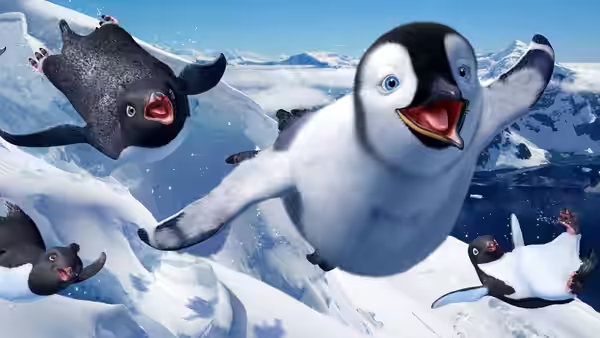
The songs are pop standards sung by the cast, and the gimmick wears thin faster than the dancing does. Hugh Jackman’s Memphis courts Nicole Kidman’s Norma Jean in an Elvis drawl, Brittany Murphy’s Gloria has the big voice, and the mash-ups that follow are clever in the way a good wedding band is clever. John Powell’s score is better than the karaoke: he folds the old tunes into the orchestra and lets the tap itself, sharp and percussive, carry the big numbers. Margaret Sixel and Christian Gazal cut the dances long, so you can see the feet, which is more than most live-action musicals manage.

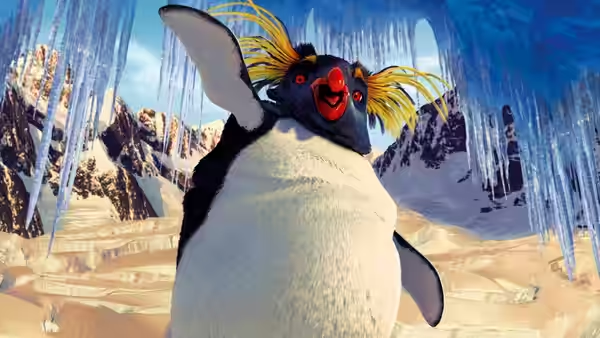
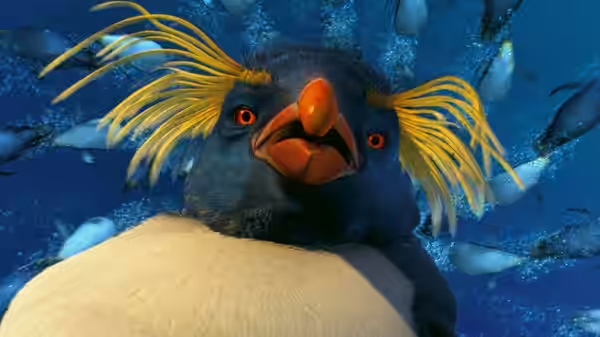
Elijah Wood plays Mumble as earnest and slightly dim, and it works because the bird is drawn with eyes too large for his head. Hugo Weaving’s Noah, the elder who blames the fish shortage on Mumble’s feet, is a sermon in a collar of feathers and a pleasure every time he opens his beak. Robin Williams is in it twice, as Ramon, the smallest and loudest of the Adelie gang who adopt Mumble, and as Lovelace, a rockhopper who dispenses wisdom in exchange for pebbles. The Ramon material is a run of accents and ad-libs that the children at our screening laughed at and we found tiring inside ten minutes. Lovelace, slower and sadder, is the better part, and Williams knows it.

The frightening scenes are properly frightening. Anthony LaPaglia’s Boss Skua comes down on the chick with three friends and the camera stays at chick height, so the beaks are enormous. We flinched, in a U certificate film, and then noticed what the bird has clamped round its leg: a yellow plastic tag, which it explains as the work of aliens. Miller plants these things early, a tag here, a ring of rubbish round Lovelace’s neck there, a shortage of fish nobody can account for. He is building towards something.

What he builds towards is where the film divides people, and we will not describe it beyond saying that the second half leaves the colony and changes its subject. We admire him for trying it. The shift from a tap-dancing comedy to a film with a point to make about the sea is handled with less tact than the first hour led us to expect: the point is made once in pictures, which is enough, and then again in a stretch of plot that plays like an afterthought. Several of the reviews so far have found the tone of the last act disconcerting; we found it rushed, which is a different complaint. At 108 minutes the film is not long, but the last twenty feel made by someone watching the clock.

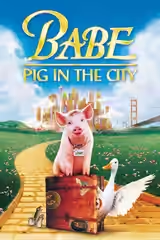
Set against Miller’s own work it sits beside Babe: Pig in the City, in which he took a children’s story somewhere dark and did not apologise. That film was braver and held together; this one is prettier and loses its nerve at the end. Watch it with children if you have them. They will want to dance during the first hour, and they will have questions about the second, which is more than most films with singing animals leave behind.
Critical consensus AI synthesised

74
Positive
6
Mixed
4
Negative
0

Most critics like Happy Feet, and none dismiss it. The praise gathers around the look of the thing: the computer-animated Antarctic, which several reviews find convincing enough to carry weight, and the tap-dancing set pieces, which nearly every critic picks out. The camerawork draws particular notice, with Variety singling out Miller’s elegant camera movement and expansive sense of space. A good number also credit the film with more ambition than the average children’s cartoon, reading its outsider penguin as a story about identity, scapegoating and the environment.

The reservations are about tone and message rather than craft. Empire finds the late shift into darker material disconcerting, and Digital Spy thinks the environmental argument grows heavy-handed and the ending lets the film down. Variety calls the story conventional and some song choices tiresome; The Guardian says it starts poorly before improving. The spread runs from the warm to the merely satisfied, roughly 60 to 90, with no outright hostility.

The Hollywood Reporter
12 November 2007 · Kirk Honeycutt
85*

The critic finds that the film’s ambitious spiritual story works while still entertaining younger viewers. He especially praises the musical choreography and the richly textured Antarctic landscapes.

Read the full review →
Variety
10 November 2006 · Todd McCarthy
85*

McCarthy praises the film as an unusually accomplished, visually striking animated musical, while noting its conventional story and occasionally tiresome song choices. He singles out its direction, especially the elegant camera movement and expansive sense of space, for praise.

Read the full review →
Radio Times
★★★★ · Sloan Freer
80

The review praises the film as a fabulous family adventure, blending a simple story with striking animation and music. It especially singles out the jaw-dropping computer animation and the mix of contemporary and classic tunes.

Read the full review →
Slant Magazine
14 November 2006 · ★★★/4 · Ed Gonzalez
75

Gonzalez finds the film politically resonant and creatively ambitious despite some conspicuous missteps. He particularly praises Miller’s use of Mumble’s difference to explore identity, scapegoating, and political change.

Read the full review →
The Guardian
23 March 2007 · Rob Mackie
65*

Mackie says the film starts poorly but improves into an entertaining, ambitious children’s cartoon. He praises the dancing-penguin set pieces and the energetic virtual Antarctic camerawork.

Read the full review →
Screen Daily
13 November 2006 · Steven Rosen
64*

The review's verdict cannot be determined from the accessible page. Its specific praise or criticism is also unavailable in the paywall shell.

Read the full review →

Straight answers AI written, from our review

Is Happy Feet worth watching?
Happy Feet is worth a family evening, and we scored it 71. George Miller’s penguin musical is odd, handsome and often funny for an hour, with dances cut long enough to see the feet, before the second half leaves the colony and takes up a point about the sea that feels rushed. Children will want to dance during the first half and ask questions about the rest.
How long is Happy Feet, and what is it rated?
Happy Feet runs 1h 48m and is rated 0 by the FSK in Germany. It is an animation and comedy film.
Where can I watch Happy Feet in Germany?
Happy Feet is available to rent from Apple TV from €3.99. Availability is checked daily; the links above go straight to each service.
How does Happy Feet compare to Singin' in the Rain?
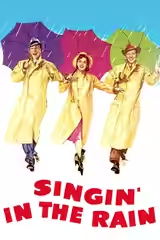
Happy Feet and Singin' in the Rain are both tap musicals, but the older film is the better one and the standard the penguins are chasing. Donen and Kelly’s picture has sharper comic timing and performers who dance for the joy of it, while Miller’s has a lonelier, stranger look and a late turn towards a message it does not quite carry. Take the children to the penguins; keep the Kelly for yourself.
What should I watch after Happy Feet?
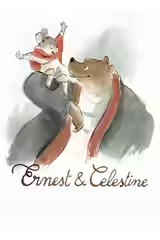
After Happy Feet, try Singin' in the Rain (1952, Fi1m 93): If the tap is what you came for, here is the standard the penguins are chasing. Then Ernest & Celestine (2012, Fi1m 84): A French bear and mouse cross a line their societies draw; gentler, and quieter about it; and Fantastic Mr. Fox (2009, Fi1m 84): Another animal who will not do what his community expects, with better jokes and worse weather.

Cast

Awards

Academy Awards, 2007

Won
Best Animated Feature

BAFTA Film Awards, 2007

Won
BAFTA's Children & Young People Award - Feature Film

Kids' Choice Award for Favorite Animated Movie, 2007

Won
Kids' Choice Award for Favorite Animated Movie

Annie Award for Best Animated Feature, 2006

Nominated
Annie Award for Best Animated Feature

Critics' Choice Awards, 2006

Nominated
Best Animated Feature

If you liked this, try…

  1. Babe: Pig in the City (1998) · not on Fi1m yetMiller’s other children’s film that goes somewhere dark, and this one keeps its nerve.

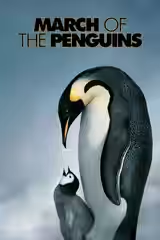
  2. March of the Penguins (2005) · not on Fi1m yetThe real emperors, the real huddle, and no singing; the winter is harder to watch.

  3. Singin' in the Rain (1952, Fi1m 93)If the tap is what you came for, here is the standard the penguins are chasing.

  4. Ernest & Celestine (2012, Fi1m 84)A French bear and mouse cross a line their societies draw; gentler, and quieter about it.

  5. Fantastic Mr. Fox (2009, Fi1m 84)Another animal who will not do what his community expects, with better jokes and worse weather.